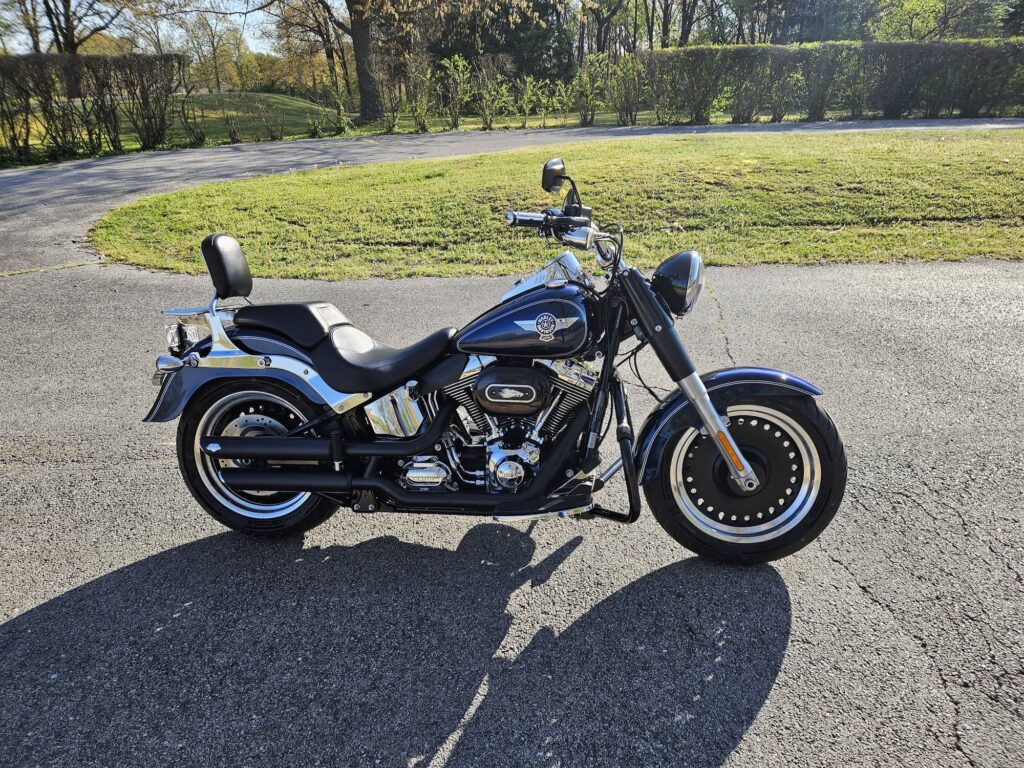
2015 Harley Davidson FatBoy
Project: Star
The Story Behind the Build
My wife used to ride motorcycles when she was younger—think small displacement bikes like the Honda Shadow 250. But after a really long break, she started riding again as a passenger behind me.
One day, after a ride together, she said she felt ready to get her own bike. So we started her off with a Harley-Davidson Iron 883. She put about 6,000 miles on it, and eventually she was ready to move up to something bigger. That’s when we found a deal on a 2012 Harley-Davidson Fat Boy, and she rode that for quite a while.
Fast forward a few years—we’re out riding together on a hot day, probably somewhere in the high 90s, motoring along the Columbia River Gorge just outside Vancouver, Washington returning home from a multi-state ride. She kept complaining that the bike felt like it was on fire—burning her legs and radiating heat like a space heater on overdrive. And yeah, I know Twin Cam 103s run warm, but this one was running extra spicy. Something just didn’t seem right.
So I figured maybe it was time to move her into something newer. It was 2017, and Harley had just dropped the new Milwaukee-Eight engines in the touring bikes. Since we were doing a lot of long-distance rides—cross-country type stuff—I suggested she look into a touring model. I told her the Street Glide was probably the best-riding touring bike I’d ever ridden. I love how it sits, I love the fairing—it just feels natural to me.
Back when Harley still offered rentals (they don’t anymore), I’d rent Street Glides any time I flew somewhere and wanted to ride the area. It was my go-to. So I told her, “Go to the dealership and take one for a test ride.”
She did. But while she was there, the salesperson somehow talked her into test-riding a Road King as well. Now personally, I’ve never been a fan of the Road King. I get that it’s a minimalist touring bike—but to me, it’s always felt a little top-heavy. Great on the highway, sure, but in parking lots and garages? Feels like wrangling a refrigerator on wheels.
Well, she rode the Road King and fell in love with it. Brought it home, rode it like crazy—put about 6,000 miles on it in just a few months. She even rode it from Vancouver, Washington to Sturgis and back. It was clear she and that bike were clicking.
Then one day, our church group had a short ride—maybe 15 miles, just a casual cruise to go grab lunch. Barely a ride at all. As we’re pulling out of the parking lot to make a turn, I hear it—CRUNCH. I look in my mirror and there she is, right in the middle of the intersection, Road King laid over, and her leg pinned underneath.
She was going maybe 2 or 3 miles per hour, but the damage was surprisingly bad—for both her and the bike. She hurt her leg and didn’t ride again for over a year. She went to the hospital and the bike went into my operating room. Neither faired very well that day.
Many weeks later post repairs on the Road King, I asked her what she wanted to do with the bike. She just said, “She hurt me. I don’t want it anymore. I want my Fat Boy back.”
Perfect. This was around 2018, and Harley had just launched the new Softail line with Milwaukee-Eight engines. I suggested the new Fat Boy with the 107 or 114 engine. But she shook her head and said, “Nope. I don’t want anything that powerful. I want my old Fat Boy.” She had it in her mind that the 107 on the Road King was to fault for her accident due to better throttle response with TBW (Throttle-By-Wire) or electronic throttle control. I believe as she was taking off she accidentally goosed it which threw the bike and made her lose her balance. Since the Road King is so top heavy it was inevitable.
So I started hunting. Not an easy task. I find a lot of FatBoy owners just hang onto their bikes forever. Loyal following. There were a few Twin Cam 103 Fat Boys still floating around out there, but they were either beat up, heavily modified, or came with zero maintenance records—big red flags for me.
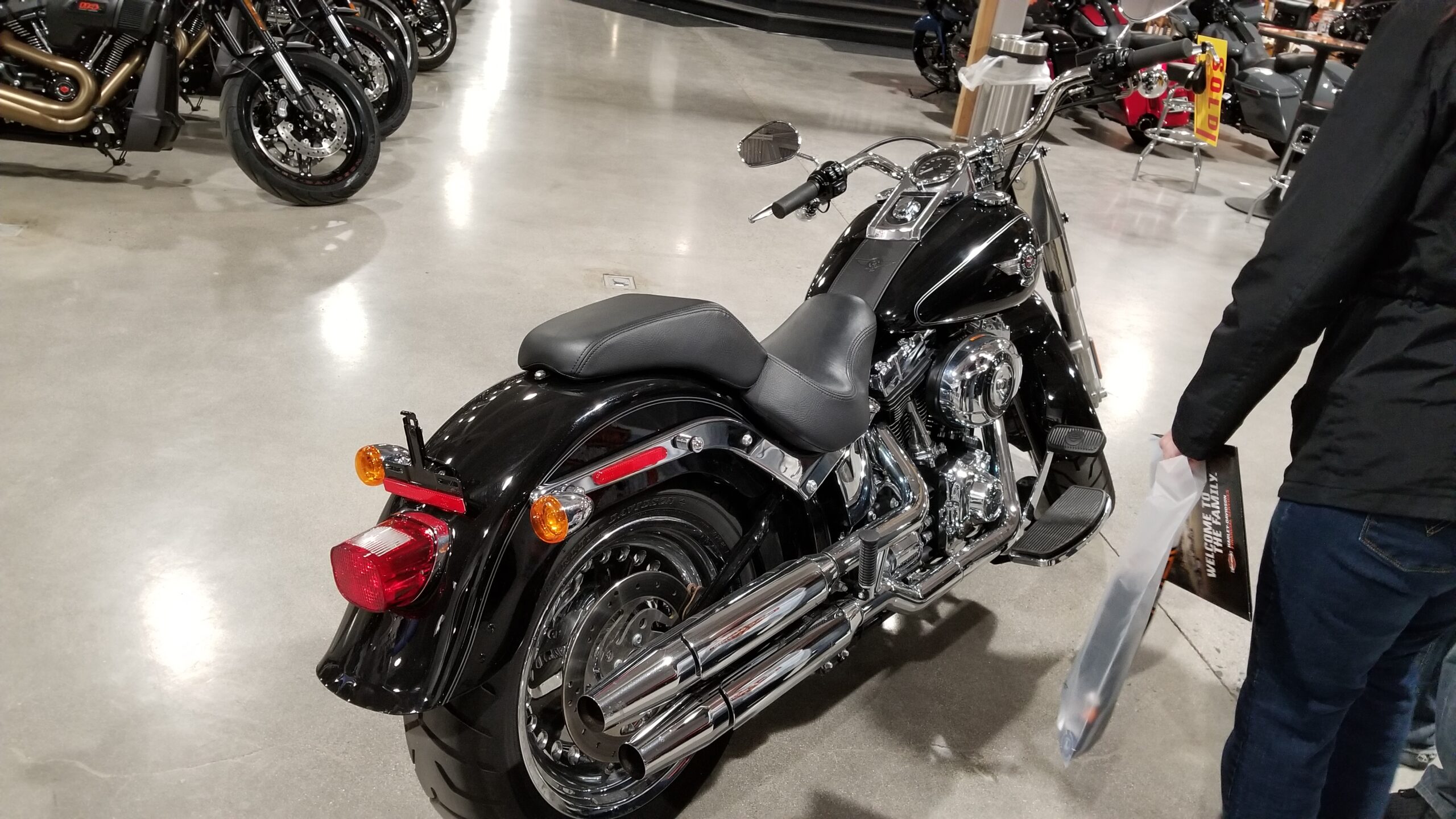
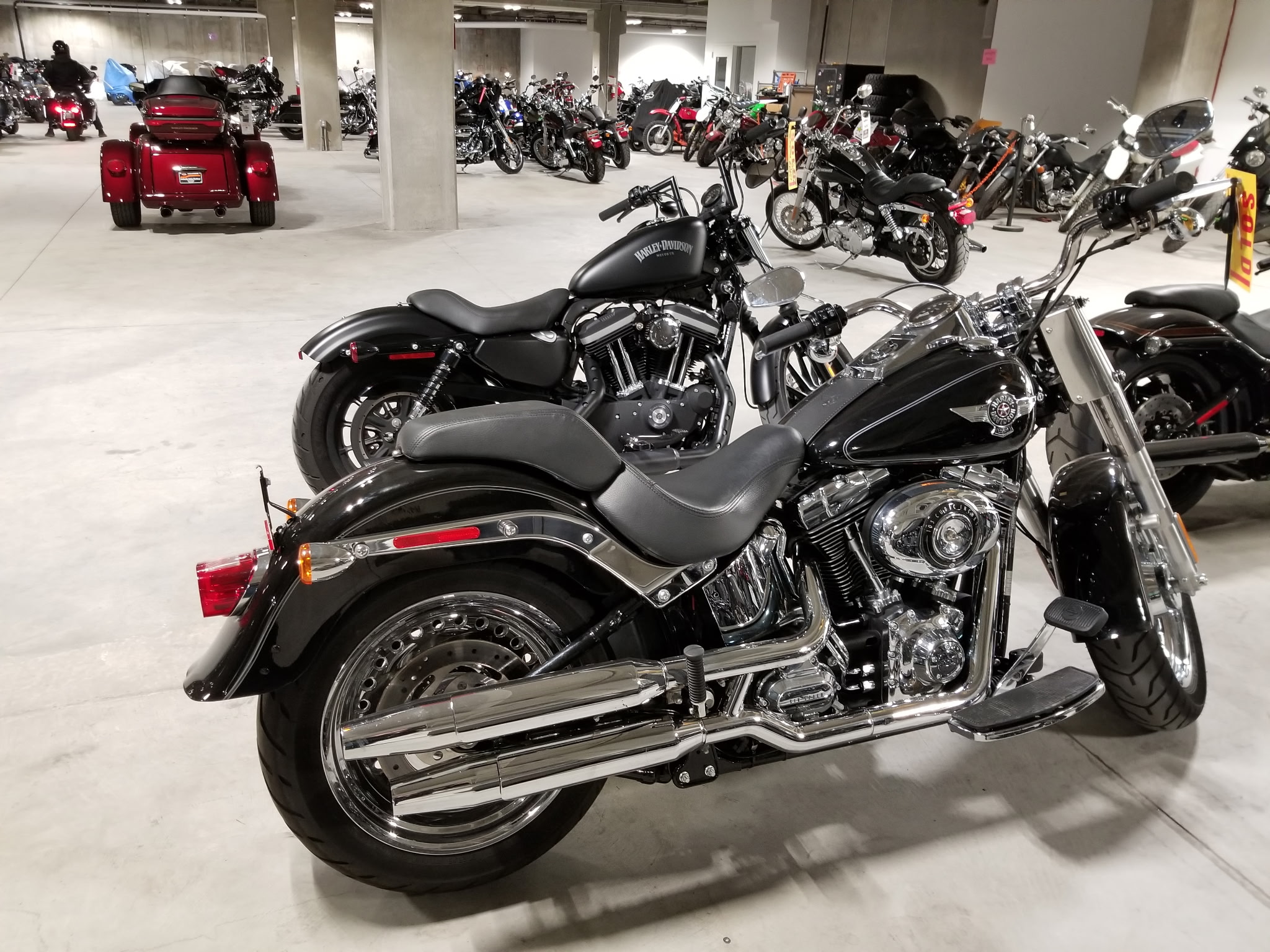
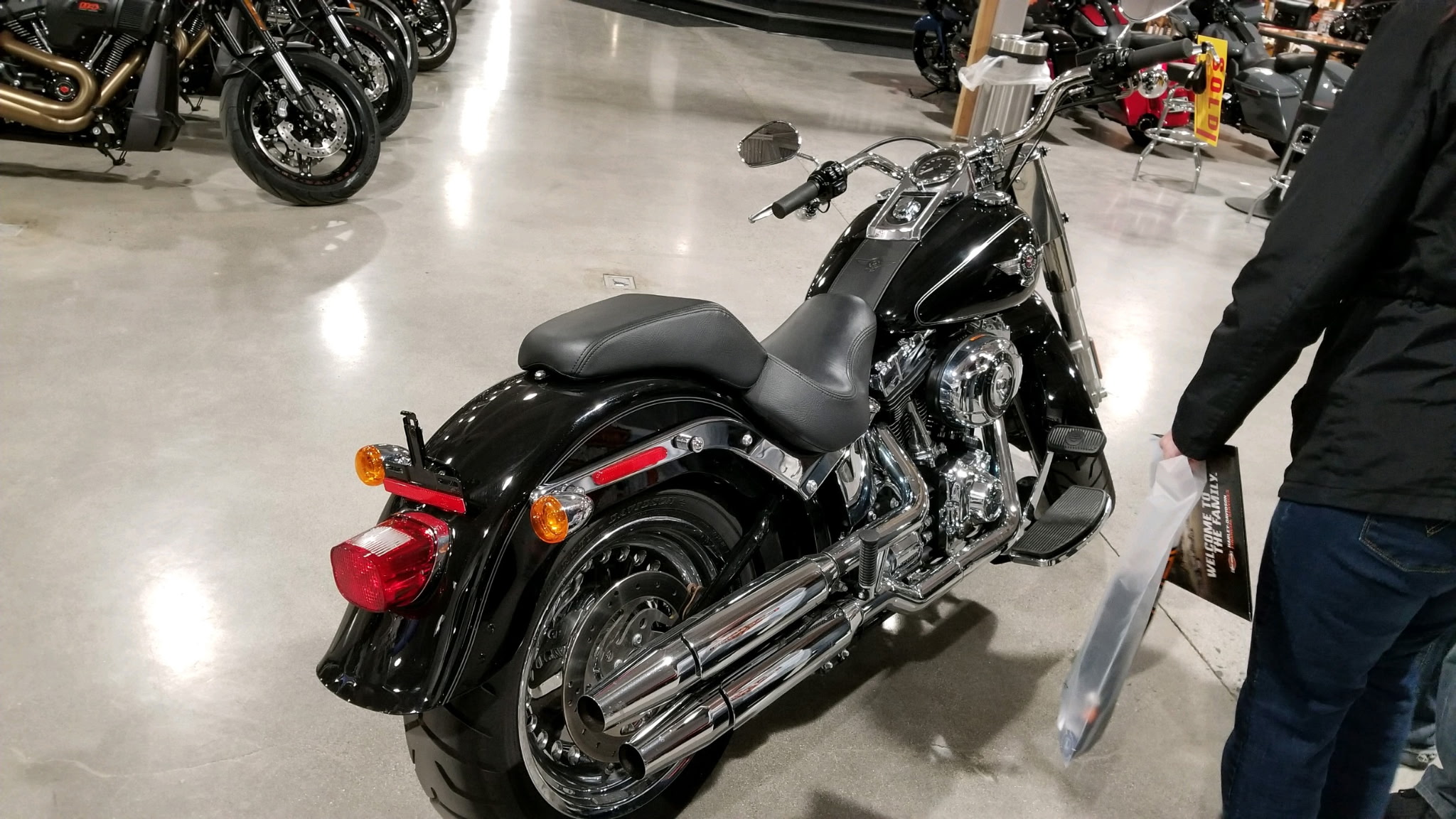
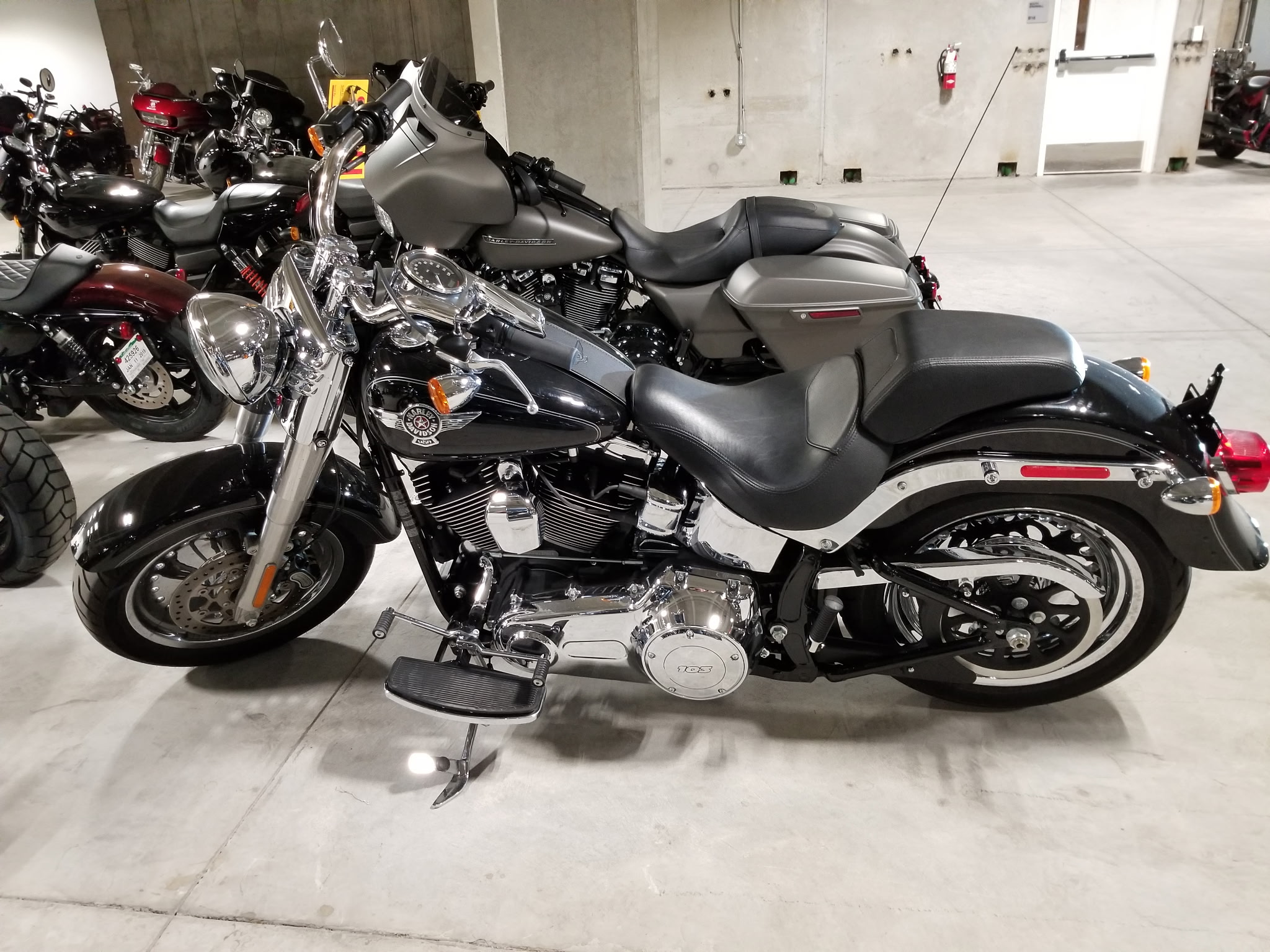
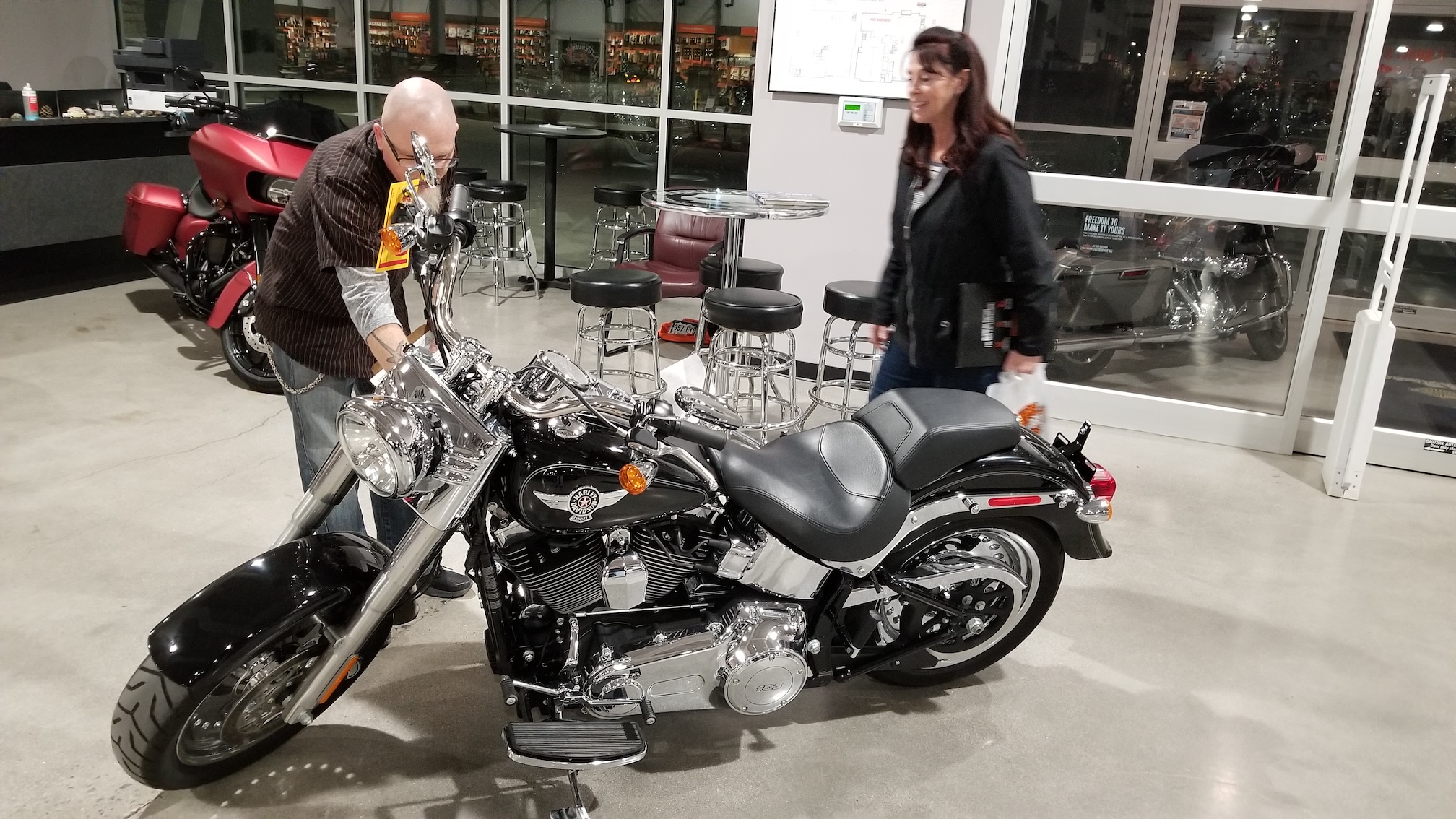
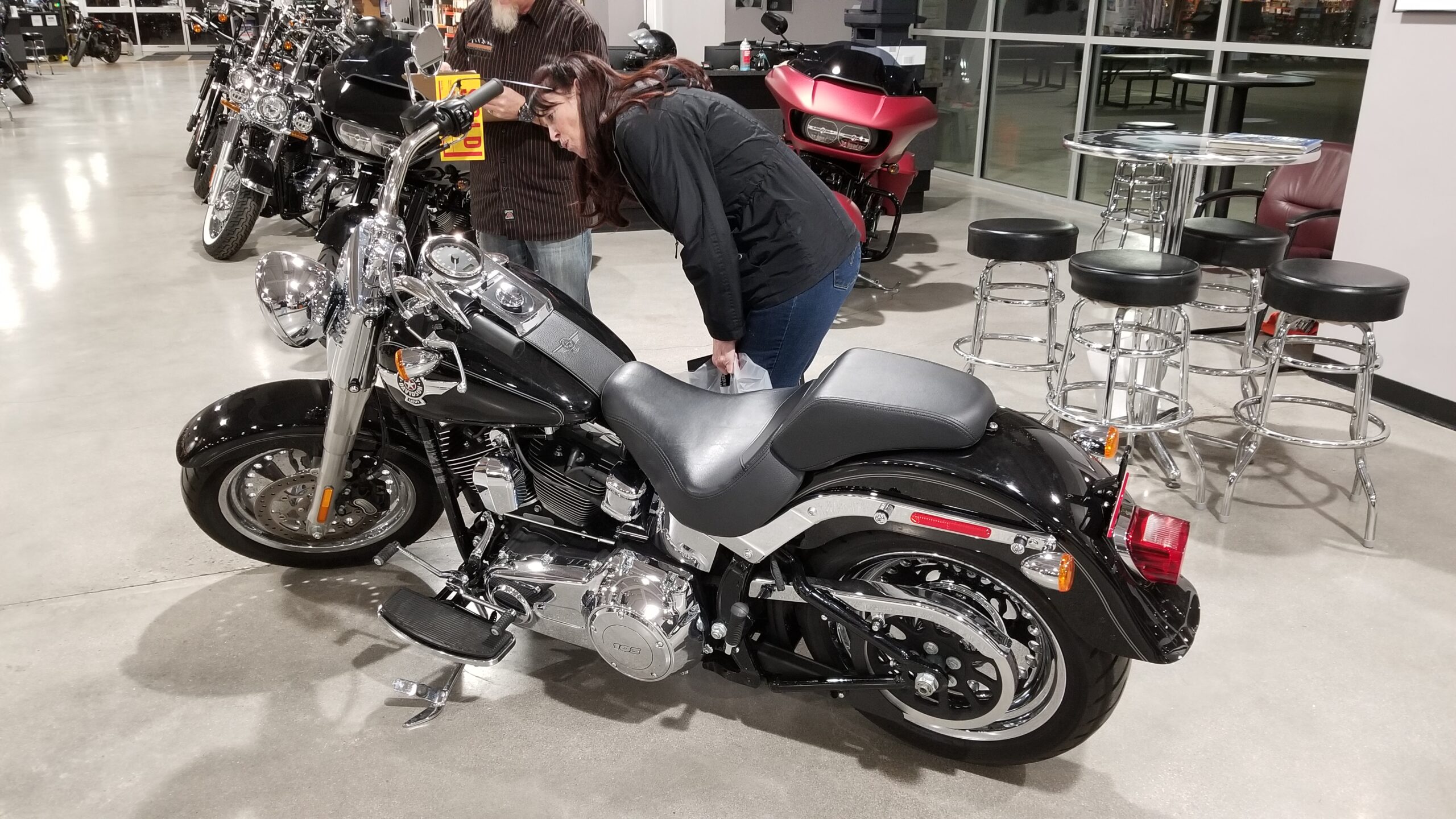
Eventually, I found a 2015 factory black Fat Boy at a dealership in Golden, Colorado. Black paint, low miles, bone stock. A perfect blank canvas. I think it only had around 2,500 miles on it.
We drove to the dealership, and the salesperson took us down to what I call the “holding pens”—those back storage space areas where they store bikes that haven’t made it to the showroom floor yet or possibly never will. This one happens to be in the basement of the dealership. If you’re ever at a larger dealership, always ask to walk through the holding pen. That’s where the hidden gems are. Sometimes the owners find something rare that was traded in and tucks those away for themselves in there. Your visit will usually be well rewarded with eye candy if you have a dealership that has one.
Sure enough, tucked way in the back, was the Fat Boy. We pulled it out, looked it over—it was perfect. So they brought it out and we gave her a new home.
Since we got a decent chunk of money from selling her Road King, I asked her, “What do you want to do with this one?” And without hesitation she said, “Black it out. I don’t want any chrome.”
I said, “Okay, maybe some chrome?”
She said, “Use your best judgement, but I want the blacked out look.”
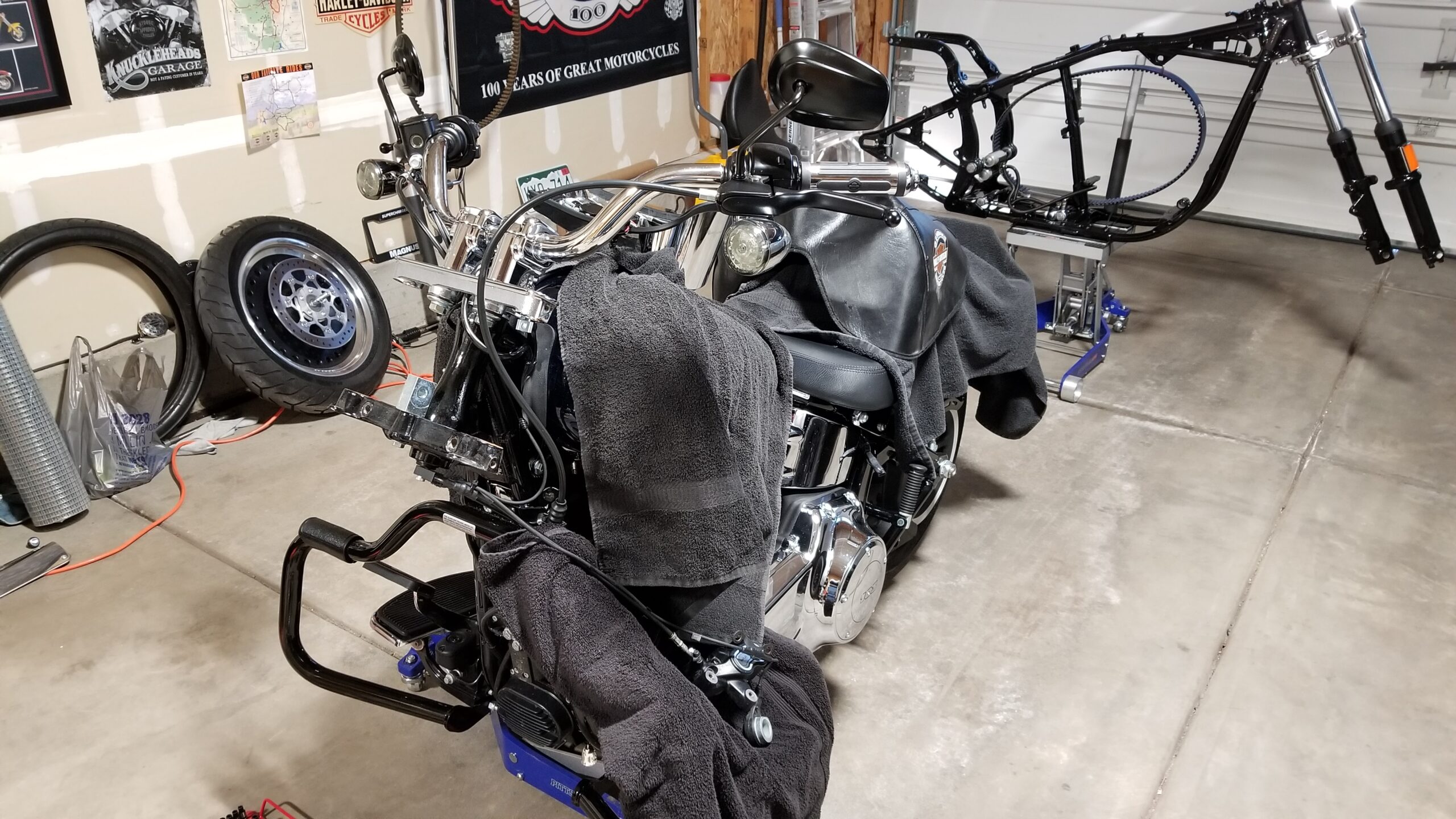
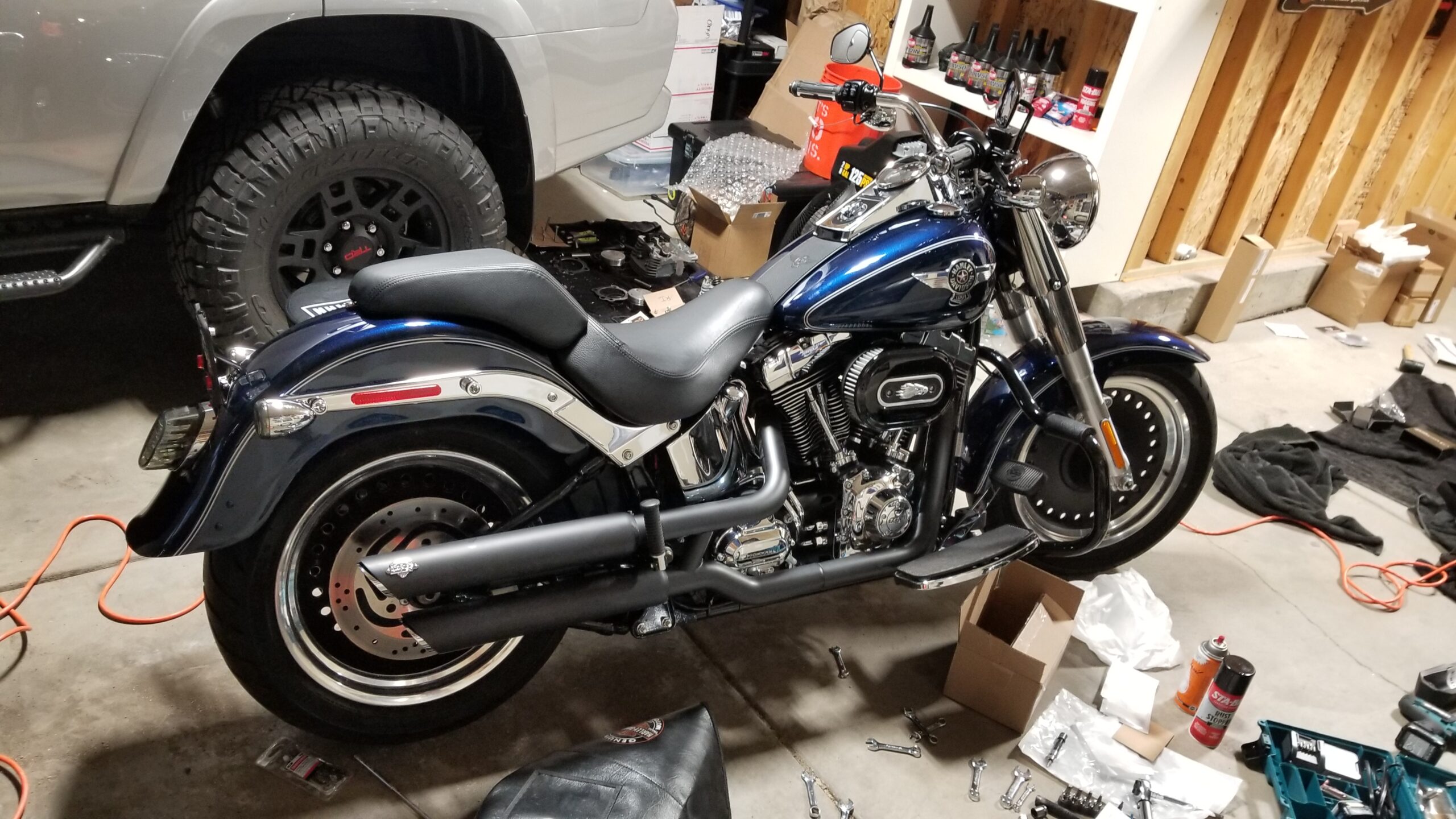
So I got to work. First thing she wanted to ditch were the chrome mag wheels. She wanted the black wheels that came on the Fat Boy Lo—just like the ones on her old 2012. I sold her stock rims for $500 and bought the black ones on eBay for $400. Off to a good start.
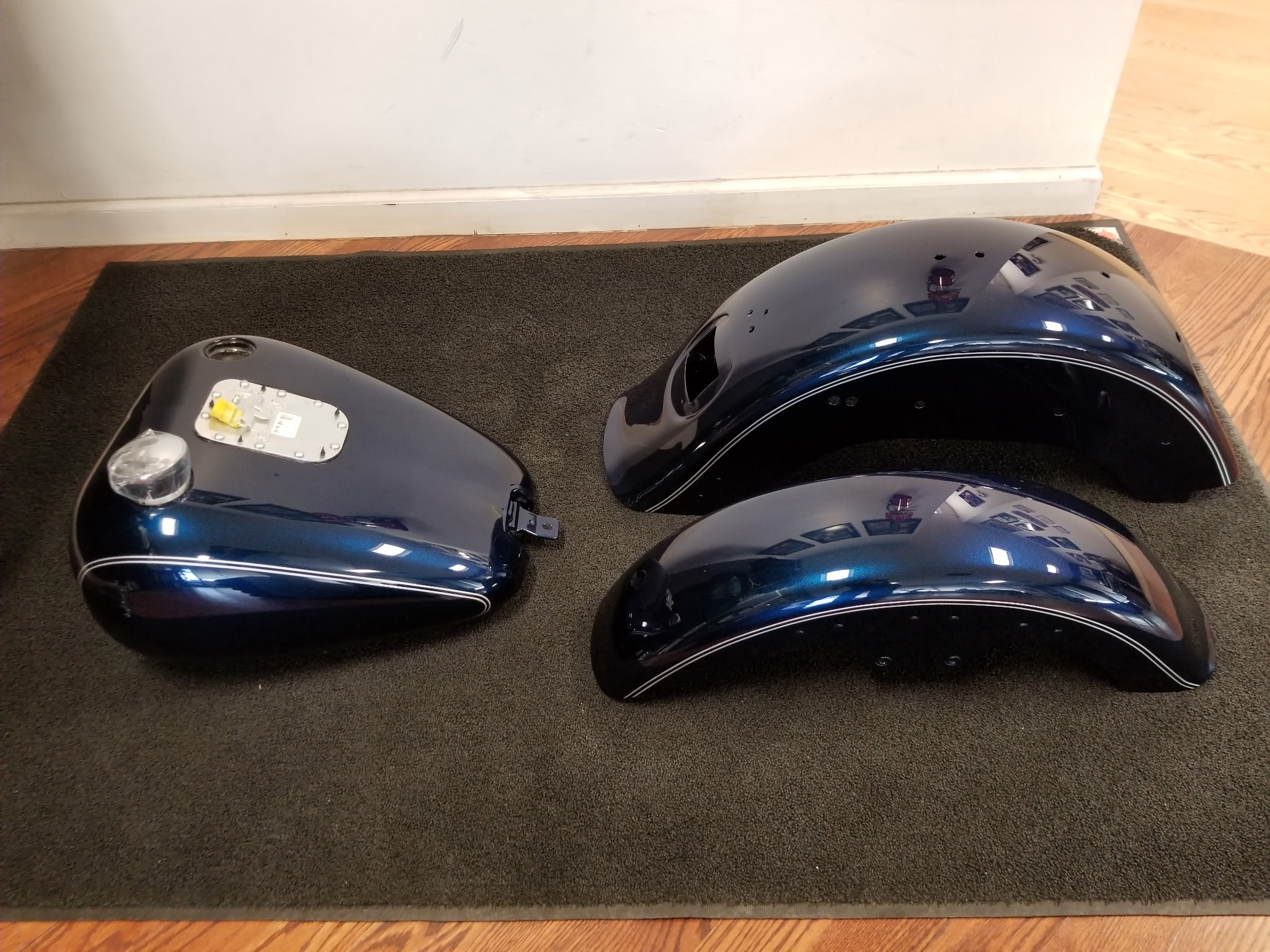
Next up: paint. We found this gorgeous older Harley color code—Metallic Pearl Blue. Bonus points for those that can find the paint code. AI isn’t going to cut it lol. It’s old and was used in very limited runs. Luckily I had a painter in Colorado that knew the paint code. It had a flake to it that looked a lot like the Dyna I have a write up for on this site. Deep, dark, classy—but still popped in the sun.
I did a few other mods as you will see in the video, customized it just the way she wanted, and she rode that bike for several more years, exactly how she liked it. It really did turn out outstanding. That bike received a lot of compliments from other riders when filling up at gas stations.
We ended up selling the Fat Boy because I had found a Slim, and my wife was ready to move on to a bike that ran a bit cooler. The Milwaukee-Eight engines have features like EITMS (Engine Idle Temperature Management System) that help with heat management, which was a big plus.
The ironic part? Even though I had listed the Fat Boy for a while on various free platforms with a few hits from tire kickers, the buyer that finally stepped up was a Harley dealer. I posted it on the H-D1 Marketplace, and almost immediately a dealership called, saying they wanted the bike. That almost never happens—usually, they want you to trade it in toward another bike. But in this case, they just outright bought it and even gave me my full asking price and I by no means had it listed low. No haggling, no nonsense. That never happens!
My guess? They were brokering it for a wealthy client who didn’t want to mess with the general public. They want a custom look, but they feel better if a dealership takes it in – goes through it thoroughly prior to delivery. That kind of thing happens now and then.
Before and After Gallery
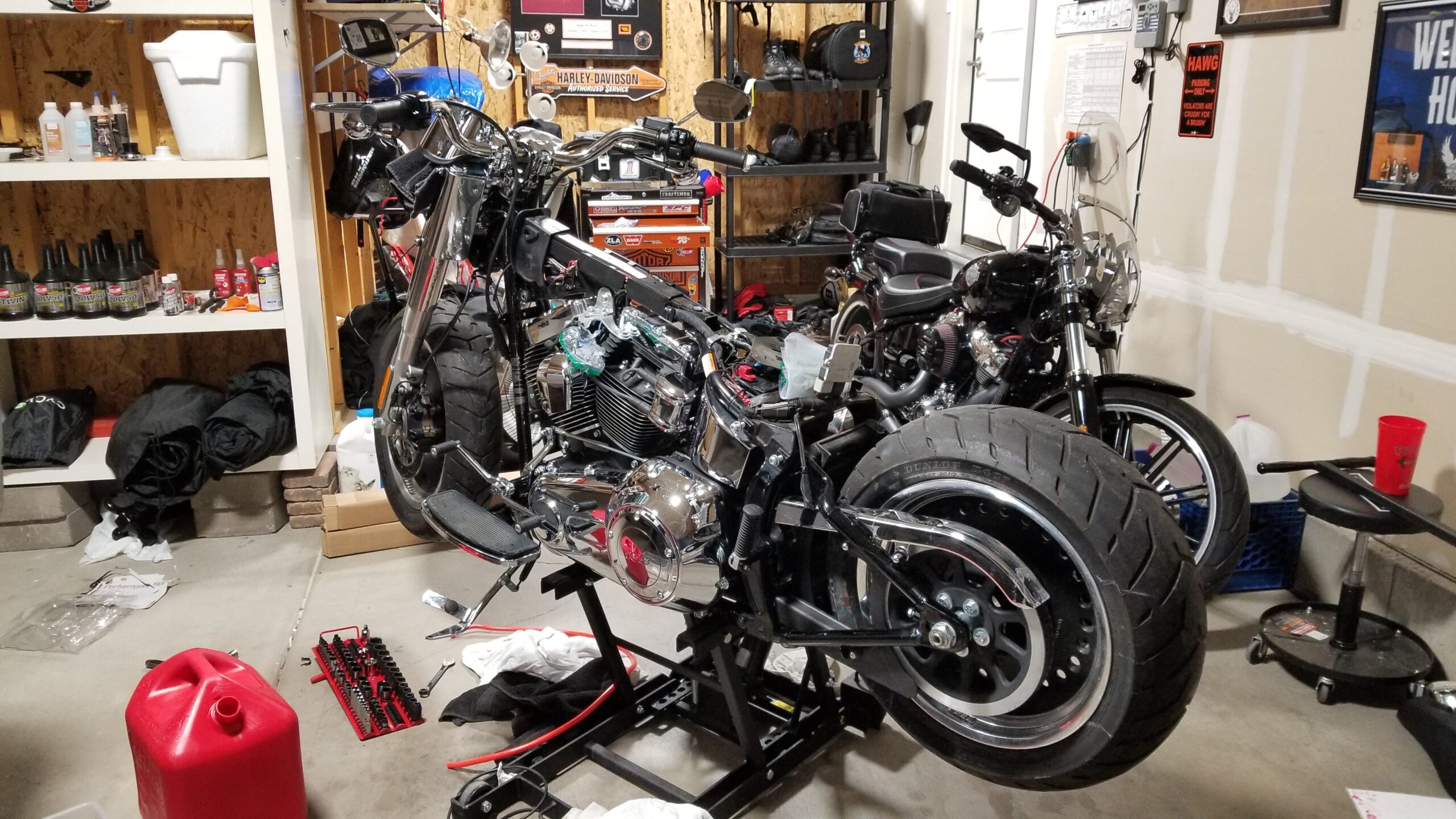
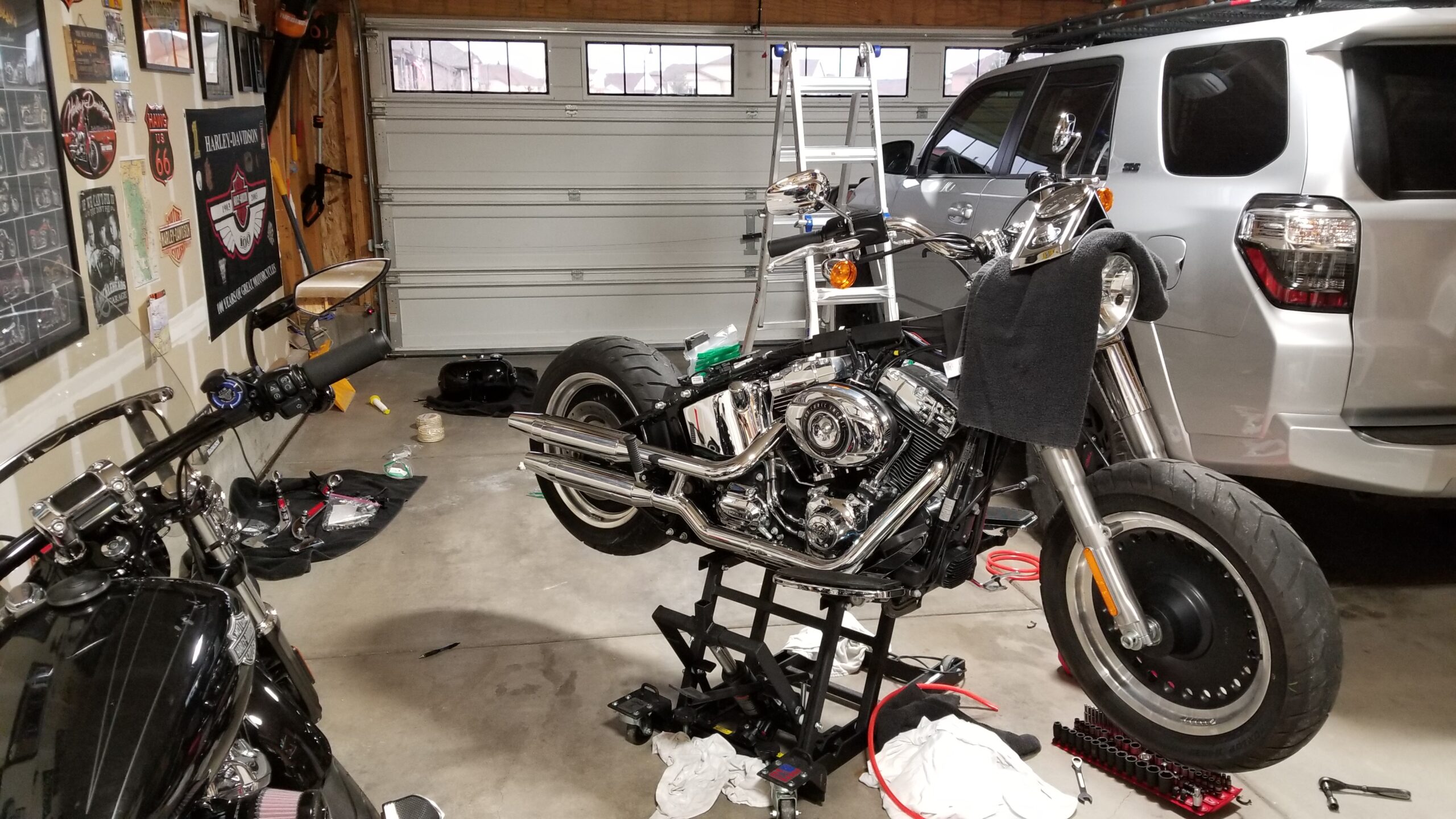
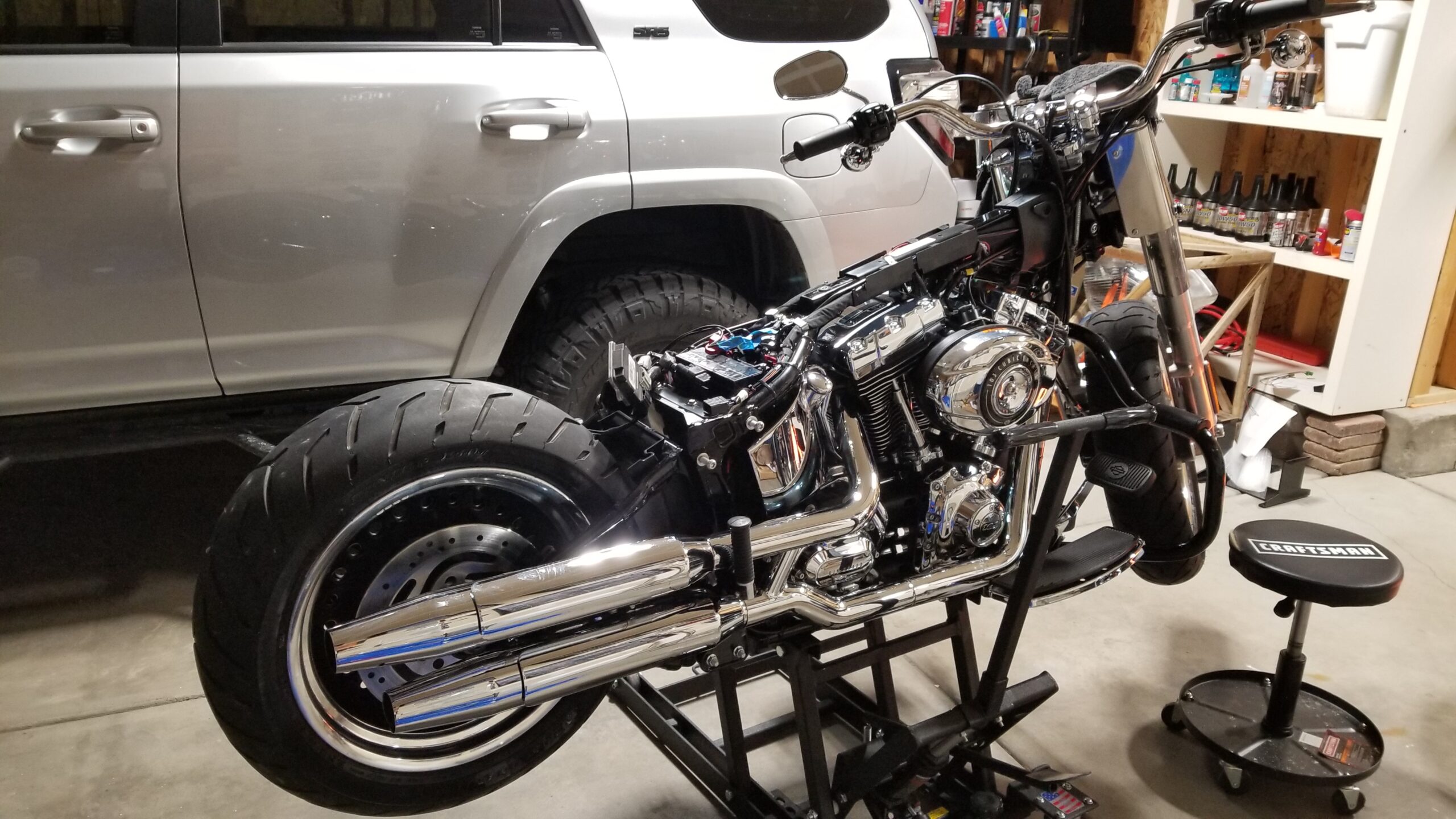
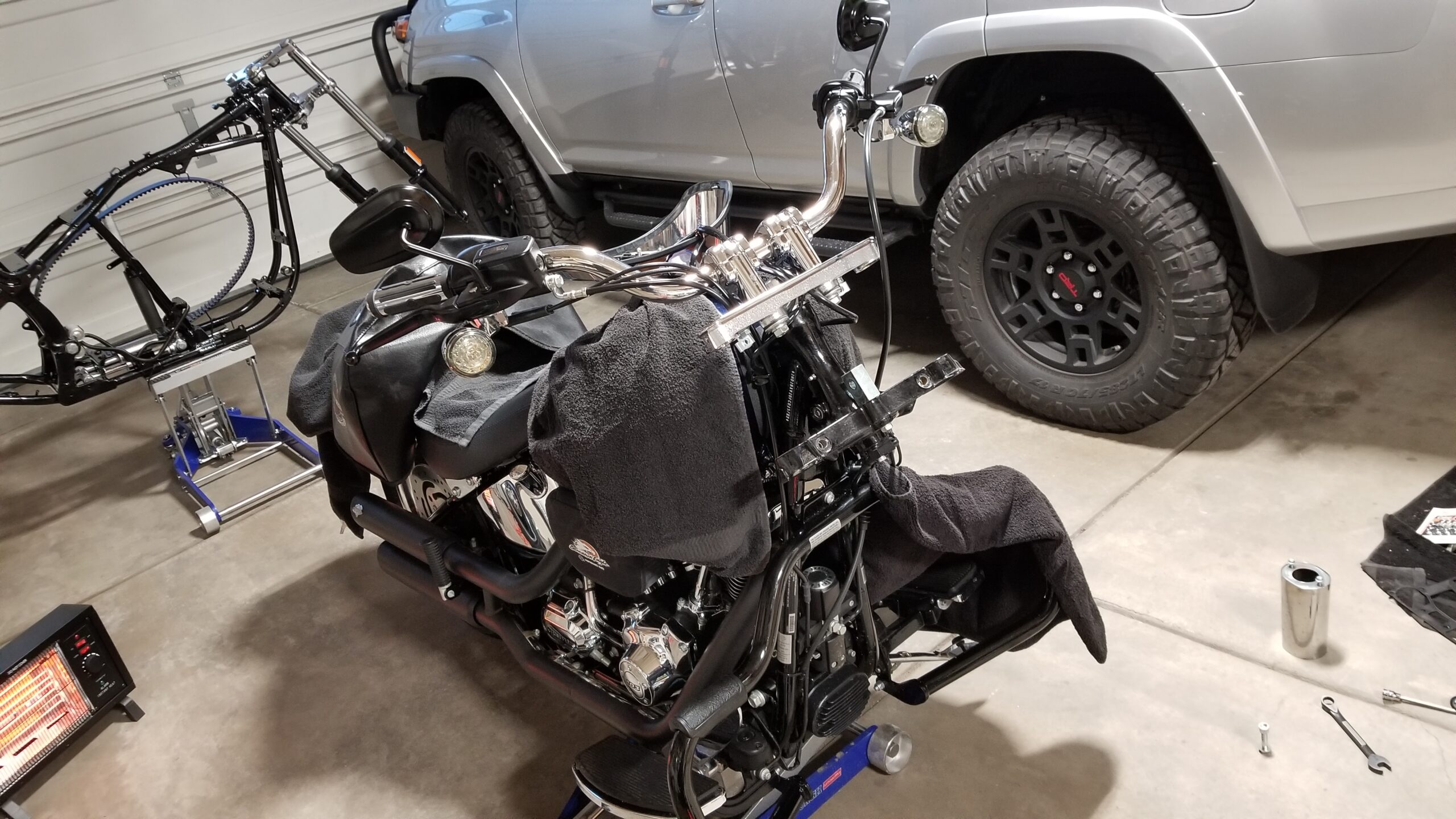
Specifications – Click to collapse
🦅🇺🇸 Model Overview
The 2015 Harley-Davidson Fat Boy continues its legacy as a bold, muscular cruiser with unmistakable presence. Known for its solid-disc wheels, wide stance, and low-slung profile, the Fat Boy blends classic Harley styling with modern power and comfort. It’s a factory custom that makes a strong statement—on the boulevard or the highway.
🔧 Engine & Transmission
- Engine: Twin Cam 103™ V-Twin, air-cooled
- Displacement: 1,690cc (103 cu in)
- Bore x Stroke: 98.4 mm x 111.1 mm
- Compression Ratio: 9.6:1
- Fuel System: Electronic Sequential Port Fuel Injection (ESPFI)
- Transmission: 6-speed Cruise Drive®
- Final Drive: Belt
- Torque: 97.4 ft-lbs @ 3,000 RPM (claimed)
🛠️ Chassis, Suspension & Brakes
- Frame: Softail frame (hidden horizontal rear shocks for hardtail look)
- Front Suspension: 41.3 mm telescopic fork
- Rear Suspension: Twin, coil-over monoshocks (hidden)
- Front Brake: 4-piston fixed caliper, single disc
- Rear Brake: 2-piston torque-free floating caliper, single disc
- ABS: Optional or standard depending on region/package
🛞 Wheels & Tires
- Front Wheel: 17″ solid cast aluminum “Lakester” disc
- Front Tire: 140/75R17
- Rear Wheel: 17″ solid disc
- Rear Tire: 200/55R17
📏 Dimensions & Weight
- Overall Length: 94.3 in
- Seat Height: 26.6 in (laden)
- Ground Clearance: 5.1 in
- Wheelbase: 64.5 in
- Rake/Trail: 31° / 5.8 in
- Dry Weight: 701 lbs
- Running Order Weight: 730 lbs
- Fuel Capacity: 5.0 gallons
- Oil Capacity (w/filter): 3.5 quarts
🎛️ Features & Highlights
- Iconic solid-disc wheels and wide front forks
- Classic bullet-style chrome headlamp
- Fat tires for a strong, planted feel
- Chrome shotgun-style dual exhaust
- Tank-mounted console with large speedometer
- Wide, comfortable two-piece seat
- H-D® Smart Security System and ABS available
- Custom paint and color options for 2015, including hard candy and two-tone finishes
🎯 Special Notes
Known for its timeless style and exceptional road presencegulations and declining sales, especially in the U.S. The GT6 remains a favorite among enthusiasts for its classic styling and smooth six-cylinder performance in a compact chassis—earning it the nickname “The Poor Man’s E-Type.”
The 2015 model was part of the final years of the Twin Cam 103 era before the introduction of the Milwaukee-Eight engine in 2017
Combines Softail styling with solid cruiser performance—ideal for both solo riders and light touring