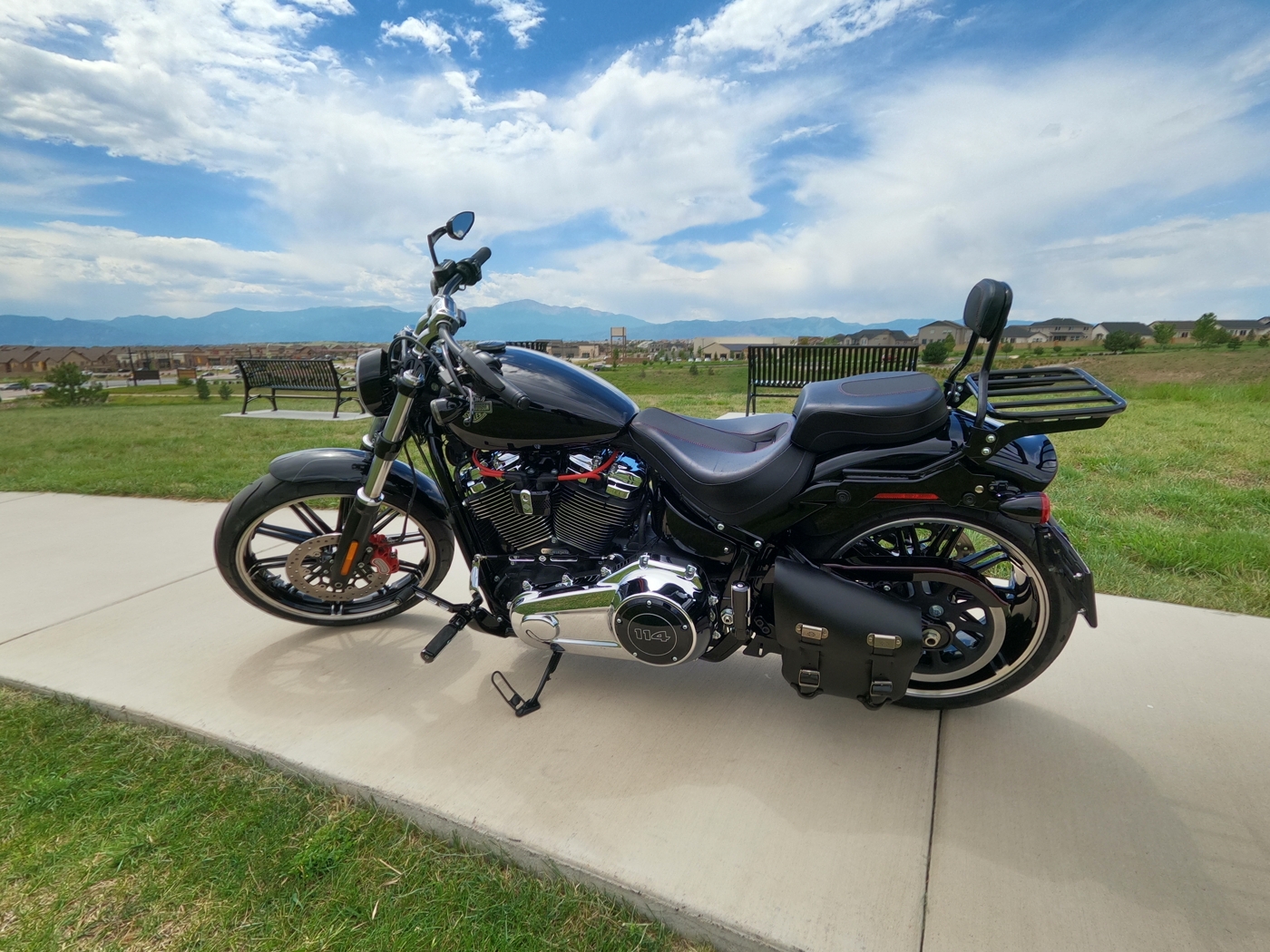
2018 Harley Davidson Breakout
Project: Samara
The Story Behind the Build
We’ve all been there—whether you buy a motorcycle new or used, you almost always end up spending extra cash to make it your own. That usually means customizations. Before I go any further, let me throw out a quick disclaimer: I’m about to make some comments that might sound a bit negative toward the Motor Company. This isn’t aimed at the company as a whole—it’s about the leadership decisions that were made starting in 2018. Don’t believe me take a 2017 Heritage and park it beside a 2018 Heritage. One has leather accents the other is like an engineer from a metric bike manufacturer dreamed up the design.
As I mentioned in another write-up, 2018 marked Harley-Davidson’s 115th Anniversary. It was also the year they introduced the Milwaukee-Eight engine into the Softail lineup. That’s about the time I feel like things started going off the rails. Now, I’m not pointing fingers at the CEO—he didn’t take the top job until 2020—but he was on the board of directors since 2007, so I’d bet money he had a hand in where things headed.
At some point, the leadership must’ve decided Harley needed to make bikes more “inexpensive.” But think about that word for a second—inexpensive isn’t what happened. What they gave us instead was cheap. And I don’t mean in terms of price—I mean in terms of build quality.
Let me explain.
Next time you’re at a dealership, take a walk through the current Softail lineup. Look closely at how much plastic is on these bikes—it starts to feel more like you’re looking at a metric import than an American legend. They put the oil cooler in the front wedged between the down tubes and then they slapped a plastic cover over it. And right under the tank, dead center of the engine, is a plastic ignition coil that’s just plain ugly. Do you remember what used to go there? A horn. Covering that horn was a chrome cover! Food for thought.
So before you even start customizing, you’re already $125 deep just to buy a proper metal oil cooler cover and another $80 to hide that coil. They charge $205 to the public—probably for something that costs them around $20. What’s $20 in the grand scheme of a bike’s selling price? If Harley really wants to sell more bikes, they should stop nickel-and-diming their customers, especially when people are already paying top dollar for a premium brand. It’s like Porsche slapping hubcaps on a 911. And sadly, that’s just the beginning.
One more little nugget to drop in here—think back to that earlier era. Remember those annual mailers Harley would send out, or the ones you’d find at the dealerships? You’d flip to the back and unfold this massive three-panel spread listing every model and trim line. It was impressive. Nowadays? You get a two-page foldout with just a handful of bikes. Sigh…A sign of the times. Maybe Trump’s tariff relief will allow them to hire some better engineering in the design department and beef up the model line up. Get back to their roots! I so miss Willie G. That cat had wickedly good skills and common sense.
As mentioned previously let’s talk about the Heritage. Check out the saddlebags. They look like dollar-store knockoffs—fake, plastic looking things that have no business being on a Harley-Davidson. It’s a Heritage for crying out loud. Don’t skimp on the leather!
Back in 2018, I was genuinely excited about the new Milwaukee-Eight engine—kind of like I am now about their variable valve engine found on the CVOs. I got caught up in the hype and ended up doing something extremely stupid: I traded up to a 2018 Breakout.
Now, for context, I had a 2014 Twin-cam Breakout before that, and I loved that bike. There’ll be a write-up about it here somewhere. It was hands-down one of my all-time favorites. So it felt natural at the time—new engine, same style, what could go wrong?
Plenty, it turns out.
To this day, I’ve lost count of how many things I can’t stand about the 2018 Breakout. Let’s start with the gas tank—just 3.5 gallons. If all your buddies are riding bikes with 5-gallon tanks, guess who’s the guy pulling over for gas every 140–150 miles? Fuel pump convos with stuff like this being called out “How’s that Sportster tank working out for ya?” Yeah, that gets old real quick.
Then there’s the headlight. It looks like a goofy diamond—totally out of place. Who in Milwaukee’s design department thought that was a good idea? It completely ruins the bike’s front-end look. When I bought it, I was focused on the engine and how it rode, not the styling. I figured I’d clean up the aesthetics later, like I always do. What I didn’t realize was that some of these design choices aren’t easily fixed—not without serious fabrication.
I even tried retrofitting a Fat Bob headlight. Now that bike has a solid look—aggressive, a little Bronx street fighter vibe, but cool. The problem? The Fat Bob is an FL, the Breakout is an FX. Totally different fork setups. I even ordered the Fat Bob nacelle just to see if I could make it work, but no matter what I did, there was no clean solution without swapping out the entire front end.
That Fat Bob nacelle? It’s a love-it-or-hate-it thing. About 75% of the guys I talked to loved it. The other 25%? Said it made the bike look like Bender from Futurama. Eventually, I just threw in the towel.
And here’s the thing—if you ever find yourself saying, “I’ll just have to live with it” regarding anything about your Harley, you’re not living your best life. Period.
I dumped a bunch of time and money into that bike trying to make it visually appealing. But when I finally sold it? No love lost. They did eventually discontinue the Breakout, but in the last year or two they brought it back. This time with a 5 gallon gas tank and a 117 engine. Guess what? They still have the stupid headlight through the 2024 model. It looks like the 2025 model switched to a more traditional chrome bucket headlight—definitely an improvement. But honestly, the whole front end still feels like it needs to go back to the design studio. Throw some real gauges on there while you’re at it.
And last but not least—the wheels. Just… blah. The stock mags I had on my Twin Cam were miles better. If I bought that bike, the very first thing I’d do is swap out those wheels. After my experience, the ONLY newer Softail you’d catch me riding as a primary bike is the Fat Boy. They actually managed to get most things right with that platform. Now that bike has the look—I absolutely love the front end!
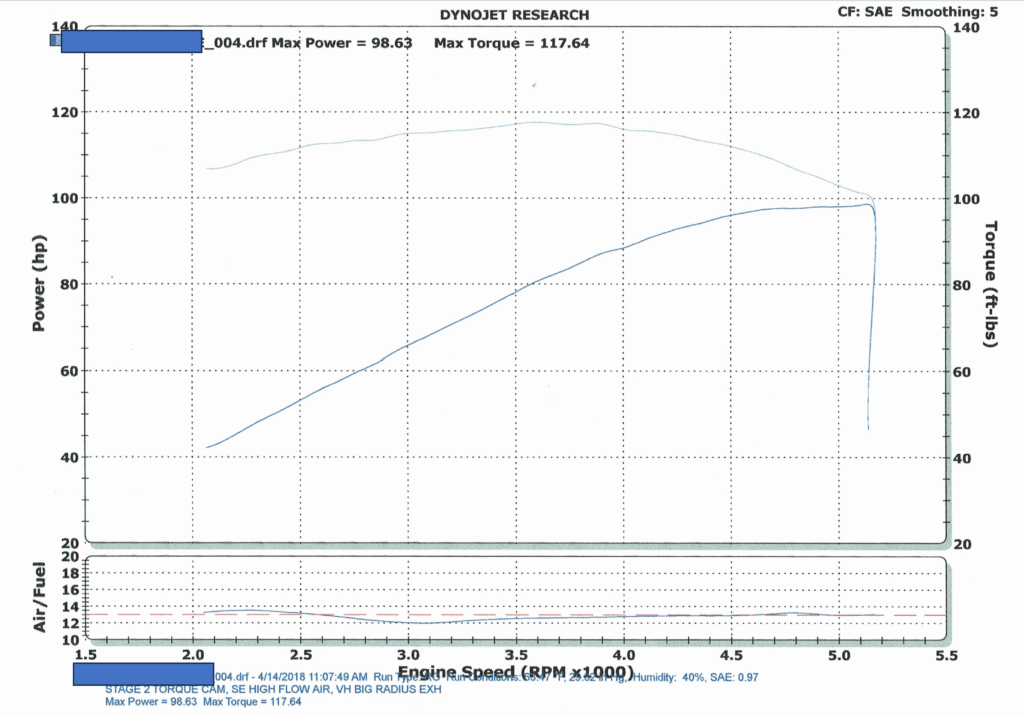
Something interesting from this dyno sheet—now, keep in mind I used a Harley torque cam for this build. On a Stage 2 114 engine, I was pulling 98 horsepower. But with my 107, I’m getting 108 horsepower! Just goes to show, don’t underestimate what a 107 can do with the right cam and a proper tune!
I don’t think I mentioned all modifications in this video. It’s what I shot when I listed the bike for sale. Got top dollar for it, but I’m sure I still took a bath on all the upgrades invested. Lesson learned.
Specifications – Click to collapse
🦅🇺🇸 Model Overview
The 2018 Harley-Davidson Breakout 114 is a long, low, and muscular cruiser built for aggressive styling and straight-line performance. With a fat 240mm rear tire, drag-style bars, raked-out front end, and a torque-rich Milwaukee-Eight® 114 engine, the Breakout delivers that stretched chopper vibe with modern refinement. It’s part of Harley’s all-new Softail lineup for 2018, blending classic hardtail looks with contemporary handling and technology.
🔧 Engine & Transmission
- Engine: Milwaukee-Eight® 114 V-Twin, air/oil-cooled
- Displacement: 1,868 cc (114 cu in)
- Bore x Stroke: 102 mm x 114 mm
- Compression Ratio: 10.5:1
- Fuel System: Electronic Sequential Port Fuel Injection (ESPFI)
- Exhaust: 2-into-2 staggered shorty duals
- Transmission: 6-speed Cruise Drive®
- Final Drive: Belt
- Peak Torque: 119 ft-lbs @ 3,000 RPM
🛠️ Chassis, Suspension & Brakes
- Frame: High-stiffness Softail frame with hidden rear monoshock
- Front Suspension: 43 mm inverted forks with dual bending valve technology
- Rear Suspension: Coil-over monoshock with external preload adjustment
- Front Brake: 4-piston fixed caliper, single 300 mm disc
- Rear Brake: 2-piston floating caliper, 292 mm disc
- ABS: Standard
🛞 Wheels & Tires
- Front Wheel: 21″ Gasser II cast aluminum
- Front Tire: 130/60B21
- Rear Wheel: 18″ Gasser II cast aluminum
- Rear Tire: 240/40R18
- Tire Brand: Michelin Scorcher 11 radial tires
📏 Dimensions & Weight
- Overall Length: 93.3 in
- Wheelbase: 66.7 in
- Seat Height: 25.6 in (laden)
- Rake / Trail: 34° / 5.7 in
- Ground Clearance: 4.5 in
- Dry Weight: 648 lbs
- Running Order Weight: 673 lbs
- Fuel Capacity: 3.5 gallons
- Oil Capacity (w/filter): 5.0 quarts
🎛️ Features & Highlights
- Drag-style handlebars with digital riser-mounted gauge
- Slim LED headlamp and minimalist lighting
- Keyless ignition with security system
- Side-mounted license plate and low-profile mirrors
- Classic Softail hardtail-inspired rear with improved ride comfort
- Signature fat rear tire and aggressive rake for a custom stance
- Modern chassis tuning for confident cornering despite the long, low design
🎯 Special Notes
Ideal for riders who love straight-line muscle and want a factory custom look right off the showroom floor
The 2018 Breakout 114 was part of the all-new Softail redesign, offering a major leap in handling and performance compared to the previous Dyna-based version
Its 114 engine delivered impressive torque and smoother power delivery, making it a top pick for performance-oriented cruiser fans