1980 Harley Model D Golf Cart
Project: “Mulligan” The caddies worst nightmare!
History
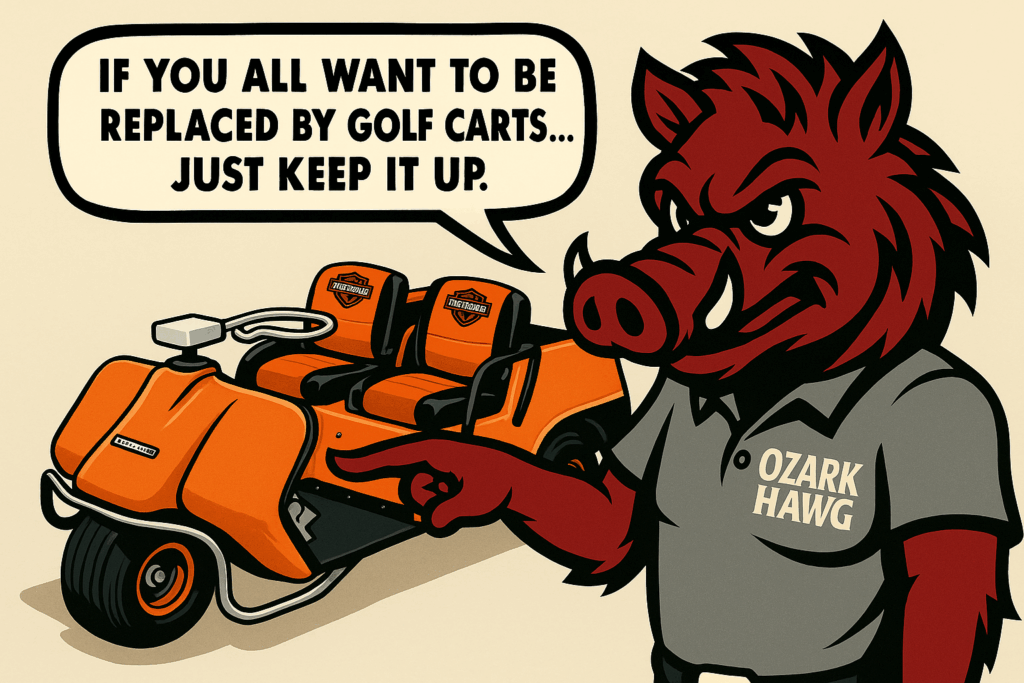
If you haven’t seen the 1980 classic Caddyshack, then the quote in the graphic above—and the joke behind it—might go right over your head. Do yourself a favor and stream it on Prime. It’s Rodney Dangerfield in peak form. While you’re at it, plan a full Dangerfield binge night—Back to School and Easy Money are two more all-time greats and remain to this day my go to for classic comedy.
“I didn’t know Harley-Davidson made golf carts?”
I hear that a lot—whether someone sees one in person or I bring it up in conversation. The truth is, Harley-Davidson has done much more than just motorcycles over the years. They’ve produced golf carts, bicycles, scooters, ATVs, snowmobiles, and even something called a Servi-Car, which was commonly used by police departments, ice cream vendors, and small businesses.
Harley-Davidson began producing golf carts in 1963, and they continued until 1982, when the division was sold to Columbia ParCar. Columbia kept building variants of the original design well into the 1990s.
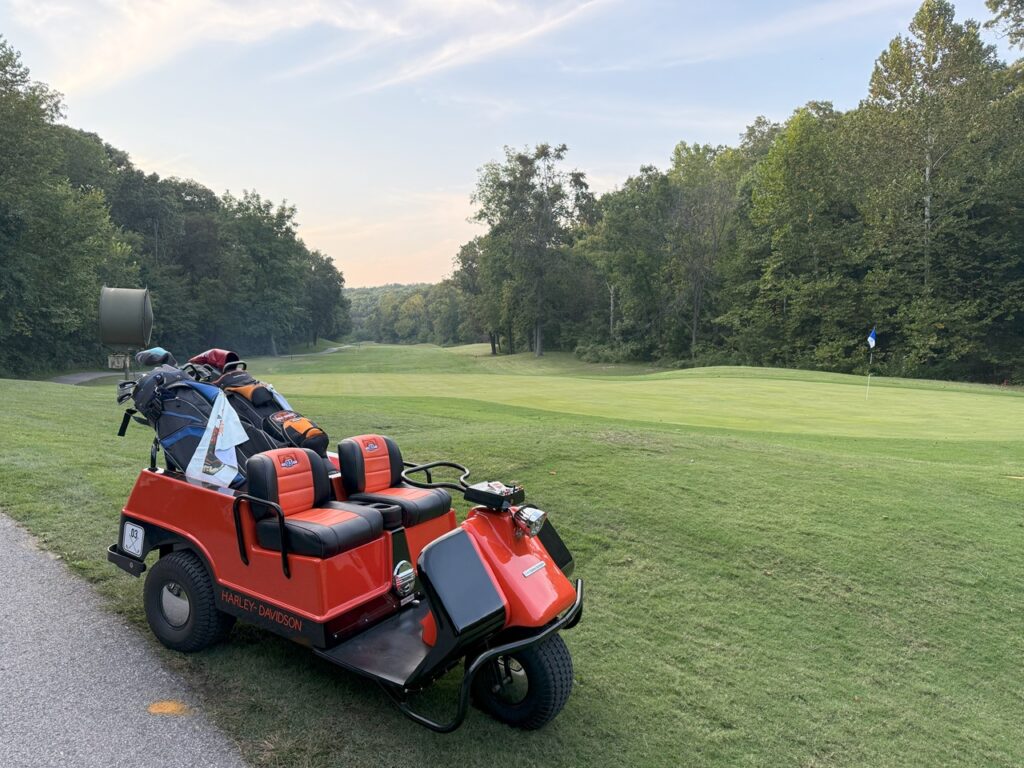
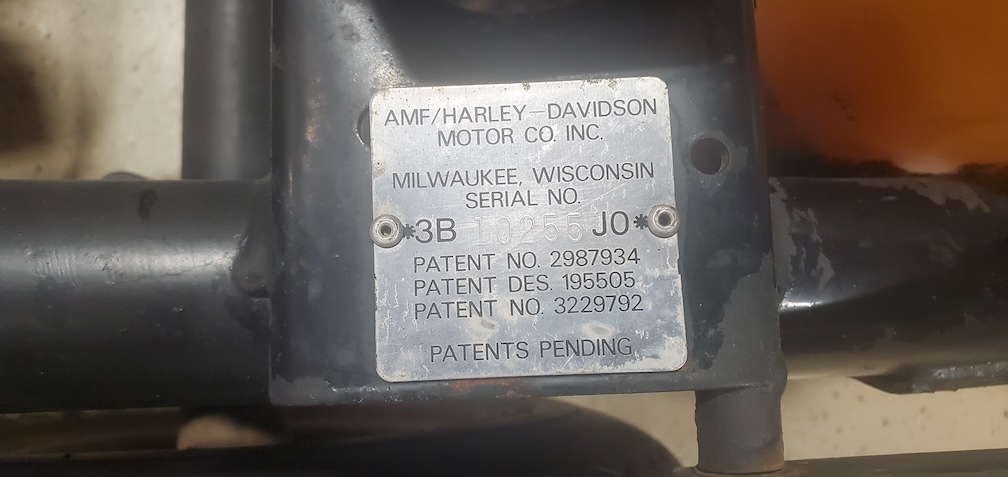
These golf carts were built from the ground up by Harley and came in various models. Edward Saffert of Milwaukee has the design patent for the body, was registered June 13th 1962 and then HD production started in 1963. One of the most popular—and the one we’re showcasing here today—is the Model D. It was a three-wheeled, gas-powered cart with a two-stroke engine and a unique tiller-style steering handle, which gives it that vintage charm.
There were also other models:
- Model DE – an electric version of the Model D
- Model D4 – a gas-powered four-wheeler
- Model DE4 – an electric four-wheeler
- The 4-wheel models had conventional steering wheels rather than tillers.
Harley also produced a much rarer utility and maintenance cart known as the Model G, which was the gas-powered version. These were typically used by maintenance crews and groundskeepers—think of golf course support vehicles. They’re seldom seen today and are considered collector’s items.
The “G” designation is a nod to the model used during the Servi-Car era.
Another rare variant was the MGIV, or Master Glide IV. These were quirky little machines—four-wheeled, electric-powered, with storage bays in the rear for carrying tools or supplies. Production numbers for both the Model G and MGIV were very low, with manufacturing only spanning from the late 1960s to the early 1970s.
If you ever come across one, grab it—they’re that rare.
For reference, even the Model D carts, of which about 4,000 to 6,000 were produced in 1980, are considered relatively rare.
That said, I’m always open to correction. If you know any part of this history is inaccurate, please let me know—sorting out the history of these carts can be quite tricky.
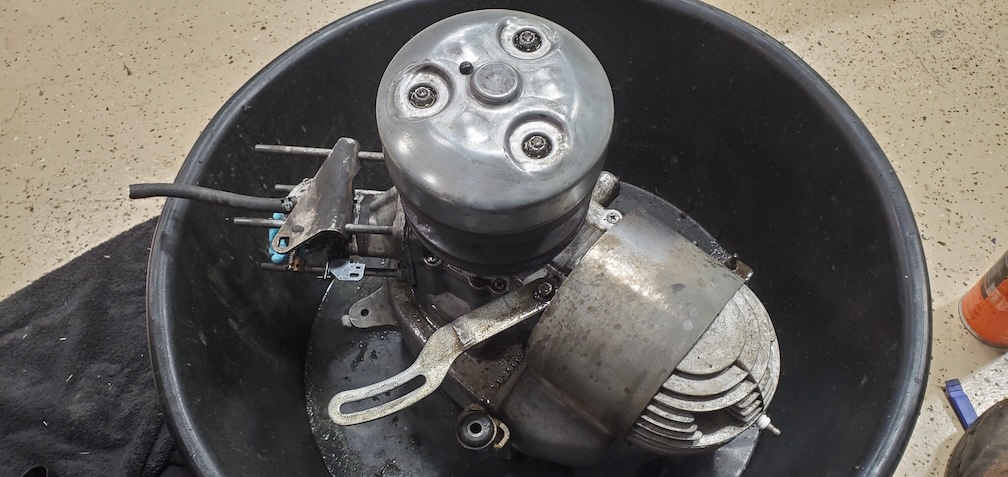
The engines used in the gas carts were 245cc (about 15 cubic inches for the SAE crowd), two-stroke that produced roughly 8 horsepower—enough to get the cart moving at 12 to 15 mph.
In 1969, Harley-Davidson was struggling financially. That year, they were purchased by AMF (American Machine and Foundry)—a company known for manufacturing everything from bowling equipment to bicycles. Many Harley fans consider the “AMF years” to be a low point in the company’s history.
There was a lot of internal resistance to the AMF acquisition. Worker morale dropped, and sabotage wasn’t uncommon—stories circulated of employees leaving tools inside primary drives, failing to install parts, or deliberately leaving bolts loose. As a result, many motorcycles sold during that era had to be returned immediately for warranty repairs—sometimes before even leaving the dealership parking lot.
Despite the bad reputation, it’s important to understand that AMF actually saved Harley-Davidson—twice. They invested heavily in the development of the Evolution engine, which ultimately brought Harley back from the brink. By the mid-1980s, the group of 13 had bought Harley-Davidson back from AMF, launched the Evolution (Evo) bikes, and demand had rebounded so strongly that models like the Softail had long waiting lists.
So yes—Harley-Davidson made golf carts, and they’re just one part of a much bigger, more complex legacy.
The Story Behind the Build
I vaguely remember seeing those old Harley-Davidson golf carts as a kid. I recall photos of Elvis Presley cruising around Graceland with Lisa Marie in one of those vintage Model D carts. There’s even that iconic shot of Elvis and Joe Esposito goofing off in a three-wheeler—that image really stuck with me. I also remember seeing a few of them out on actual golf courses. The ones with the tiller-style steering especially caught my eye.
So, how does a guy who usually customizes Harley-Davidson motorcycles end up restoring a golf cart? Honestly, it happened by accident. I was hunting for parts for another bike project when I stumbled across an ad for a Harley-Davidson golf cart. Out of curiosity, I went to check it out. It had been “restored,” but definitely not to any standard I’d accept—so I passed.
Fast forward a few years—my wife and I moved into a golf course community. Since we’re both golfers, I started thinking: Why would I ride around in a Yamaha when I’m a Harley guy? That’s when it hit me—I needed one of those old Harley carts for myself.
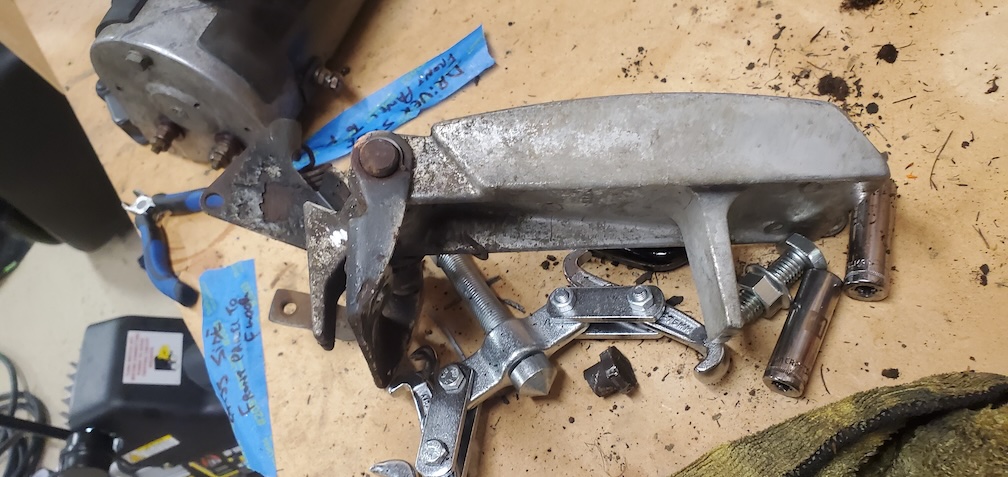
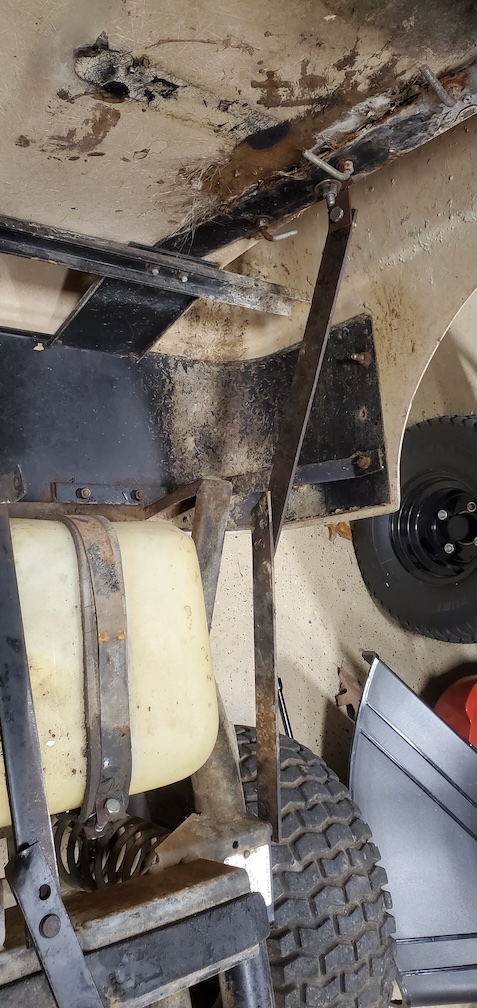
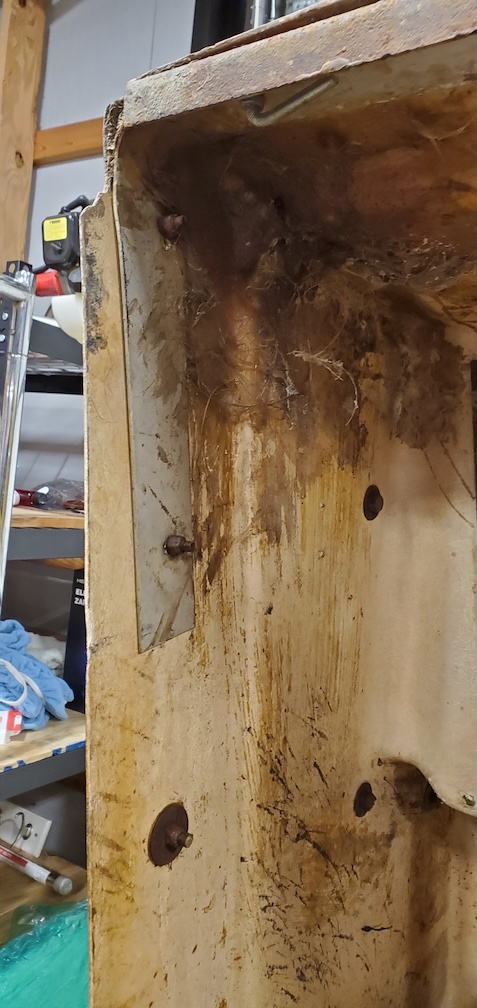
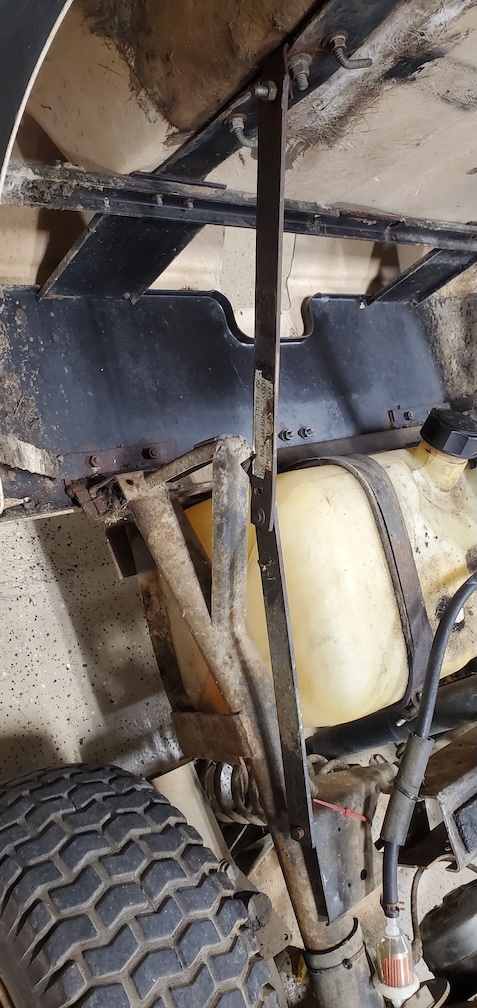
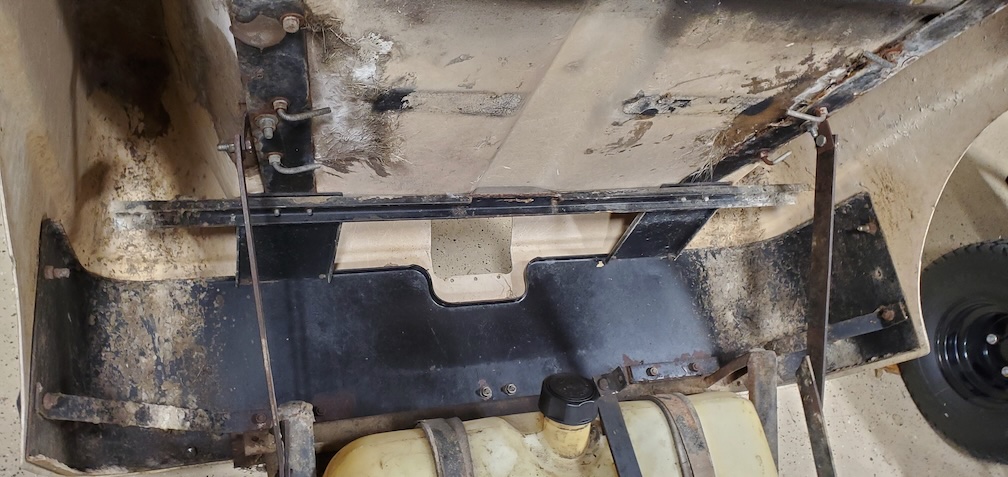
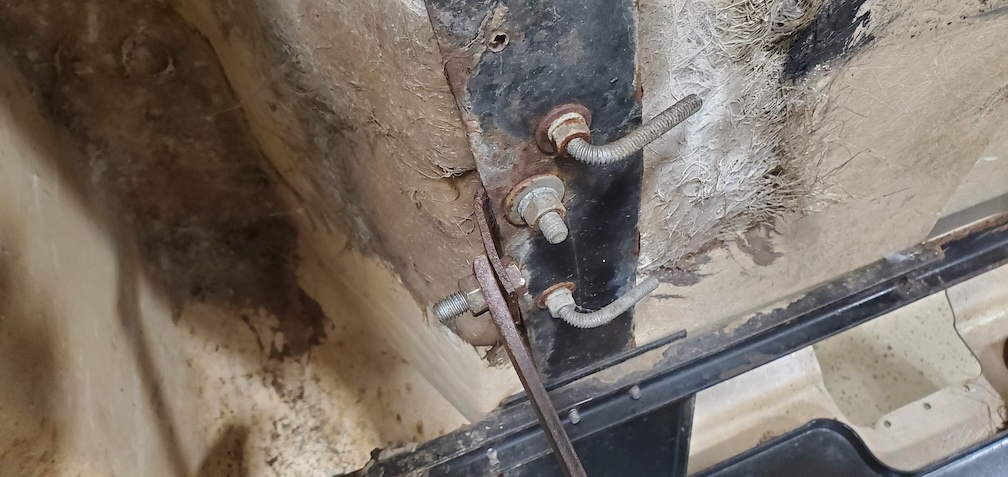
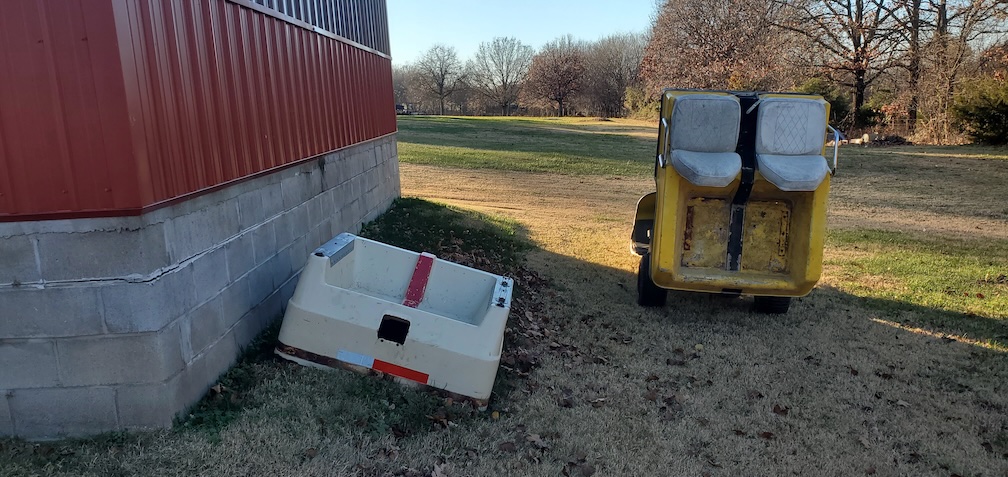
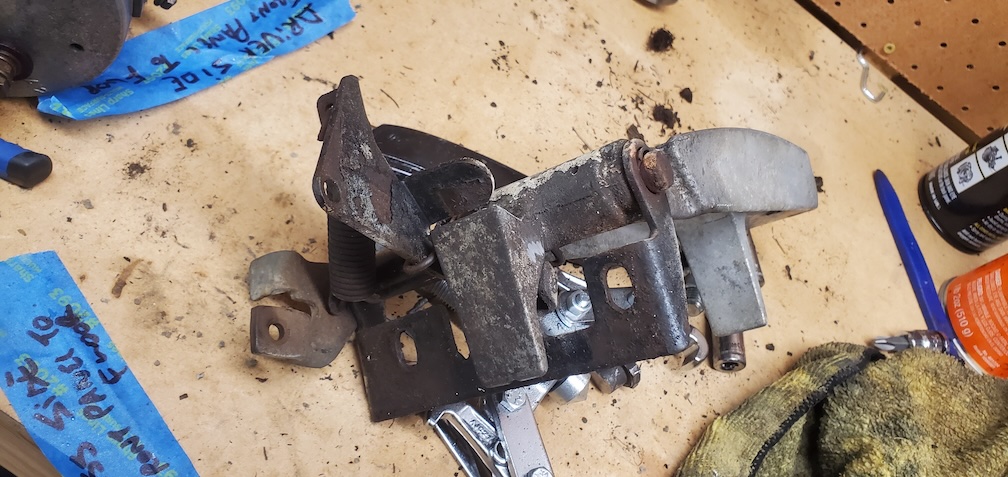
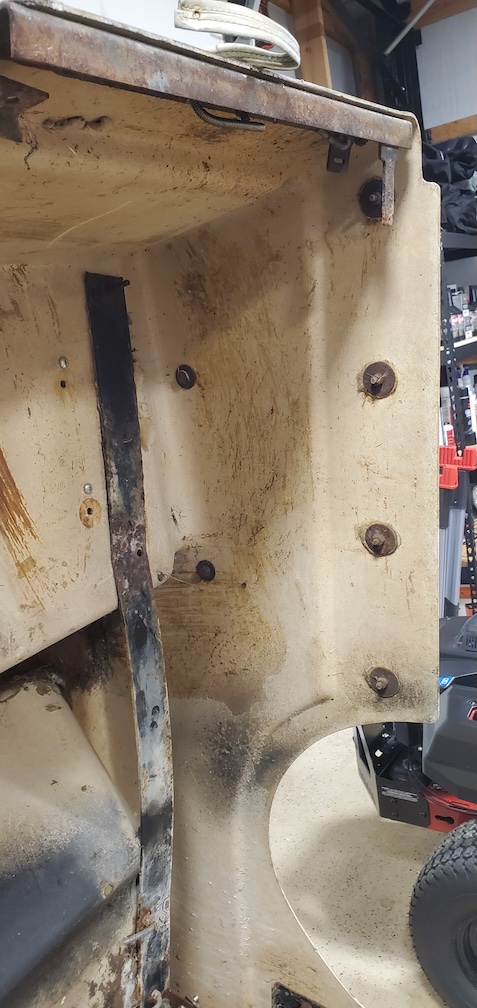
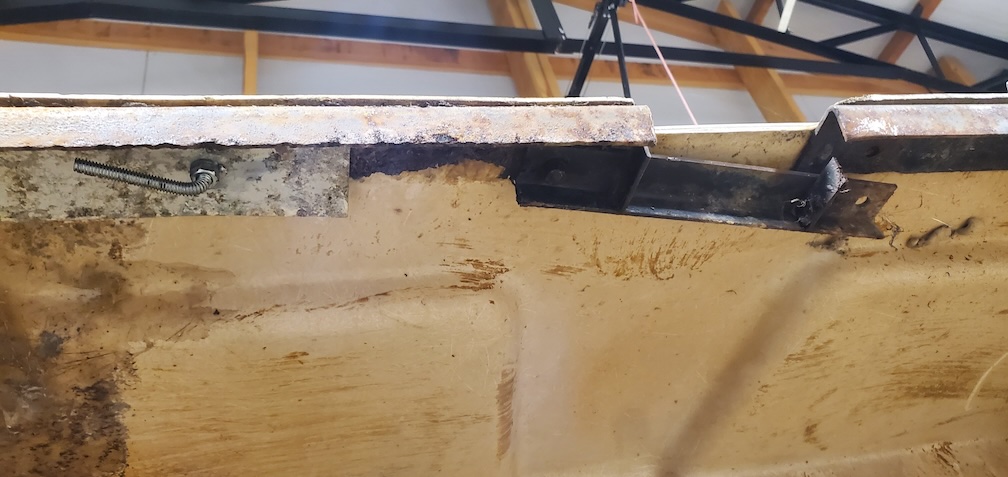
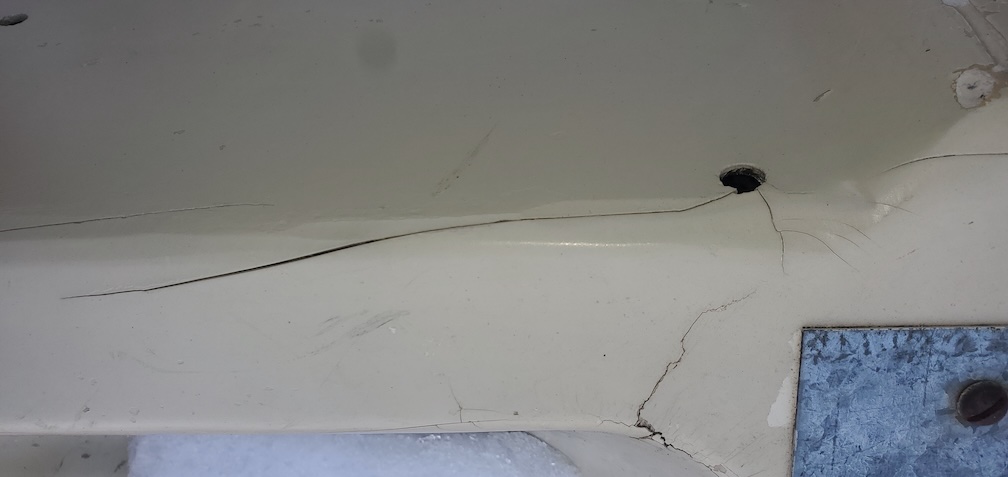
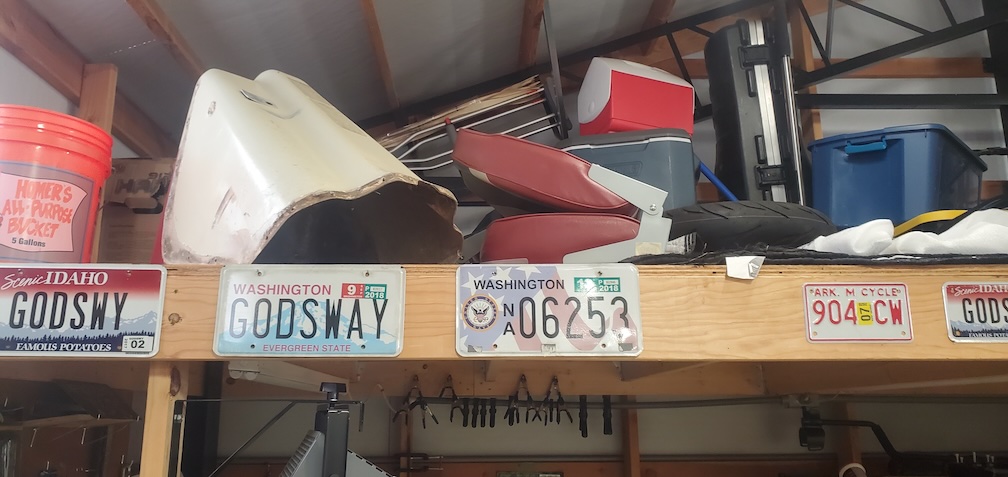
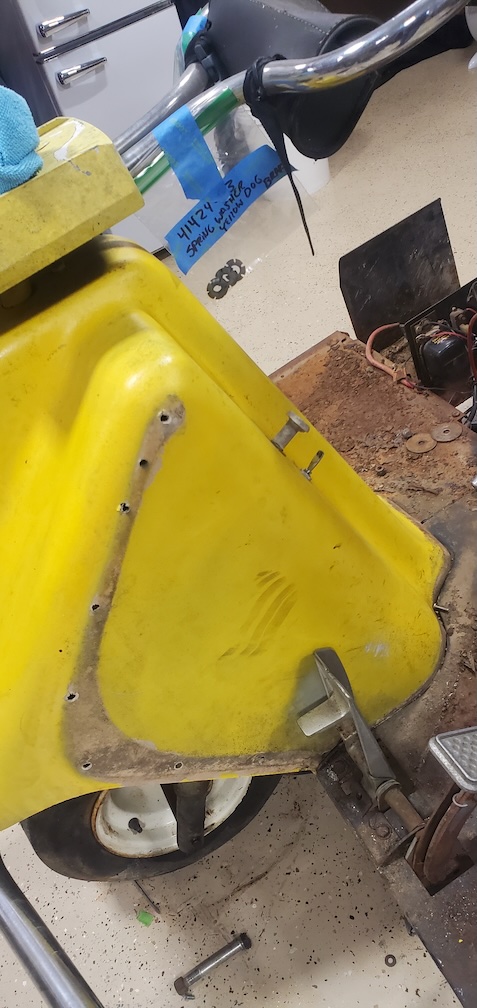
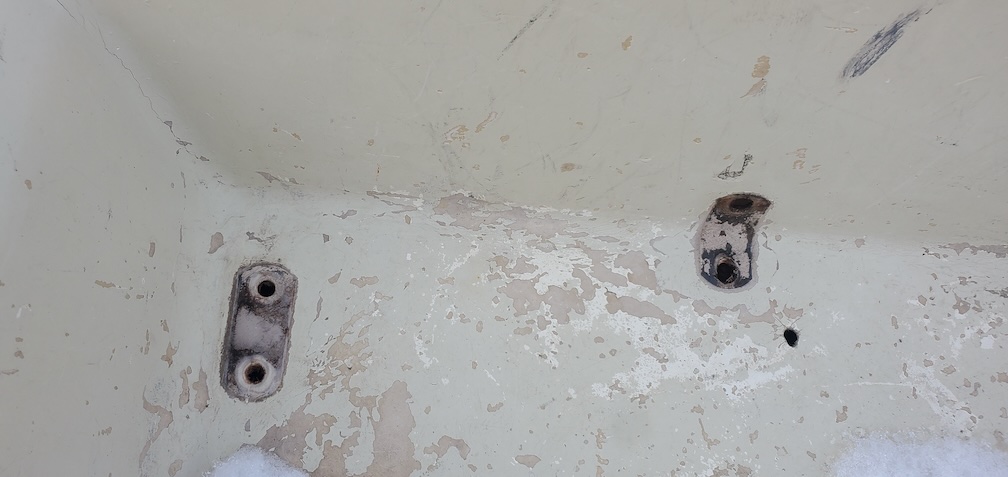
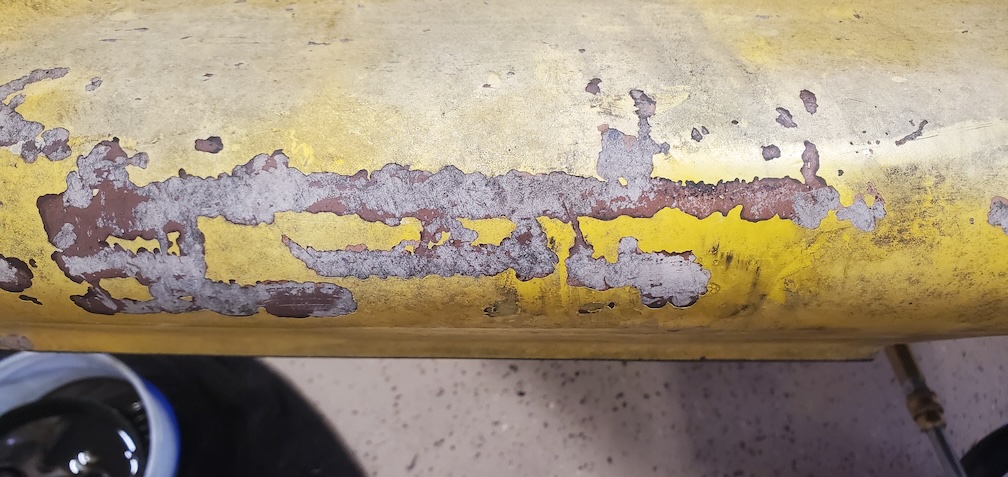
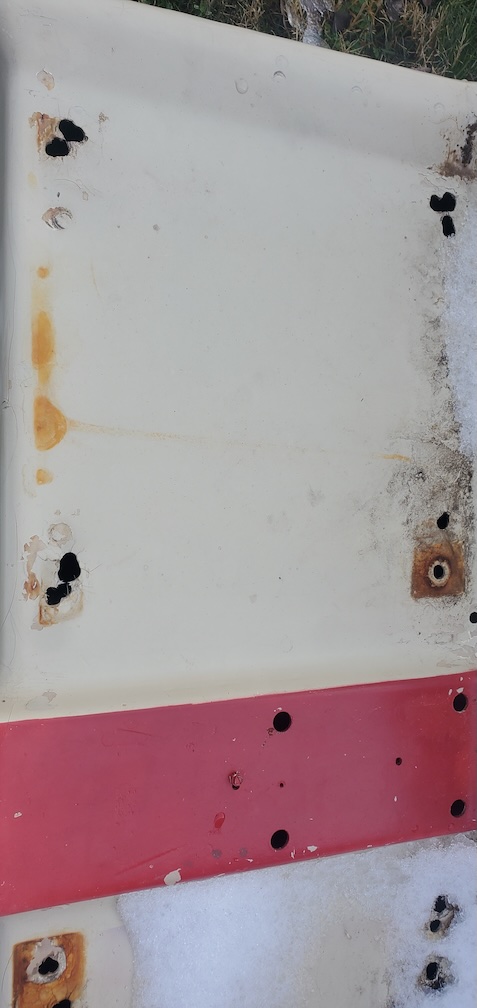
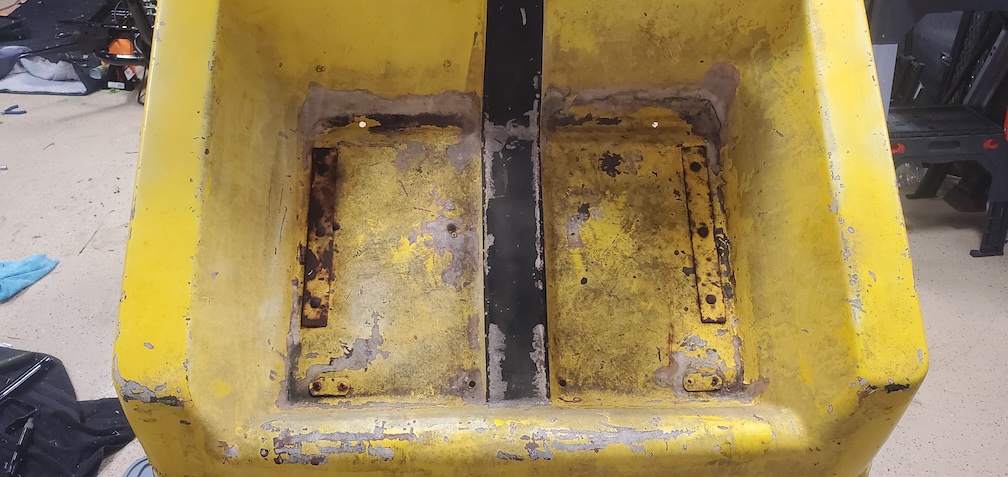
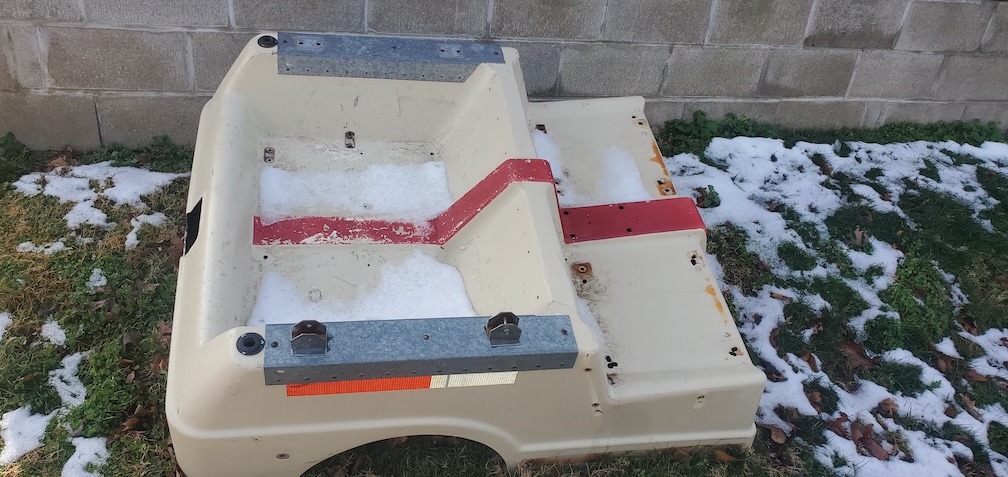
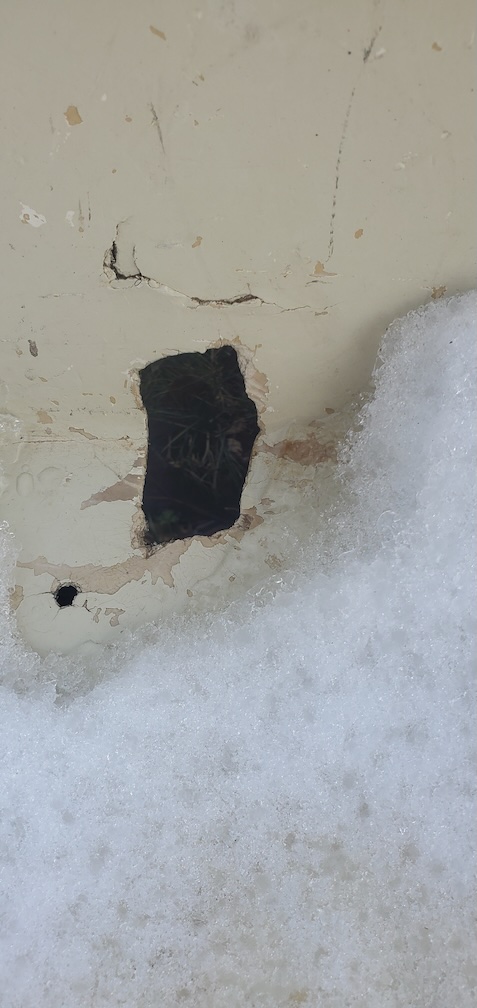
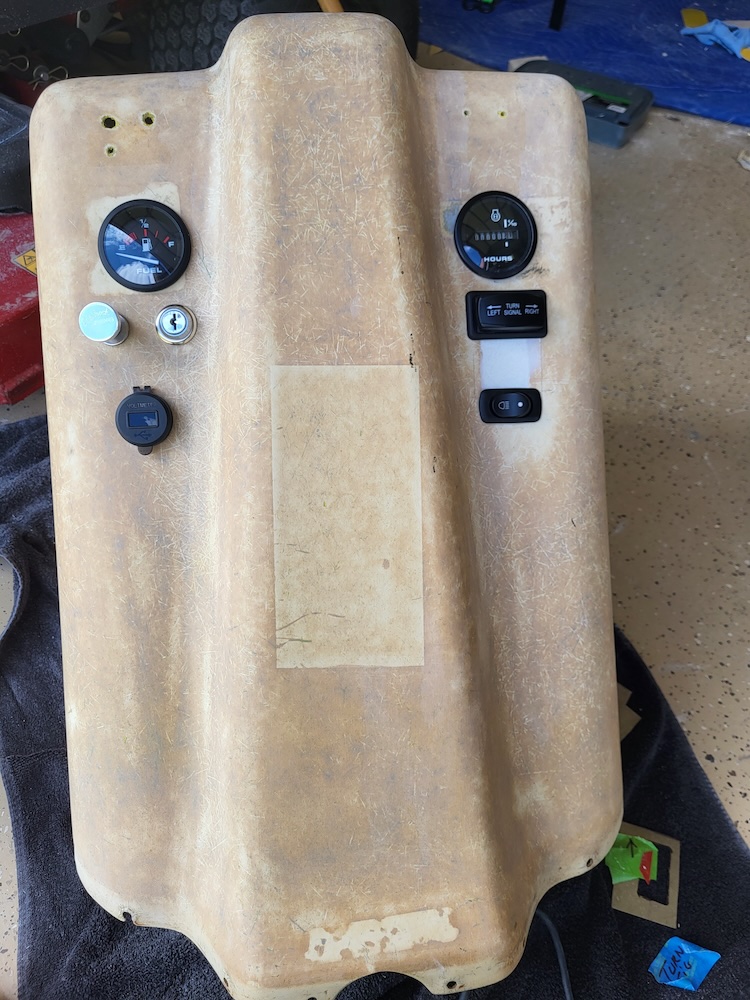
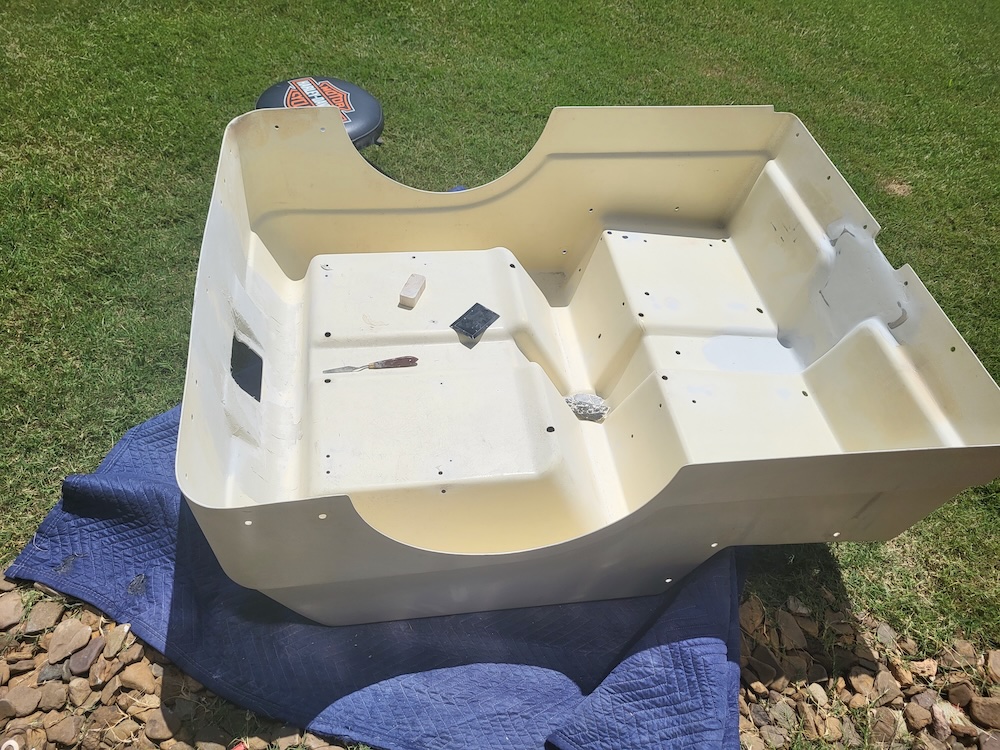
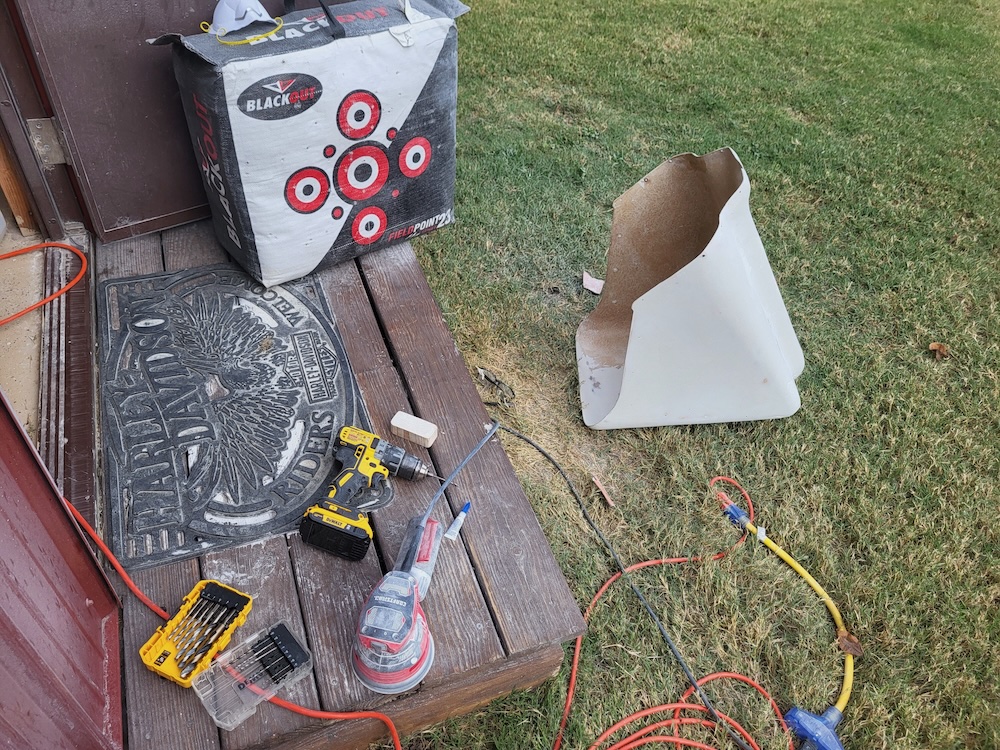
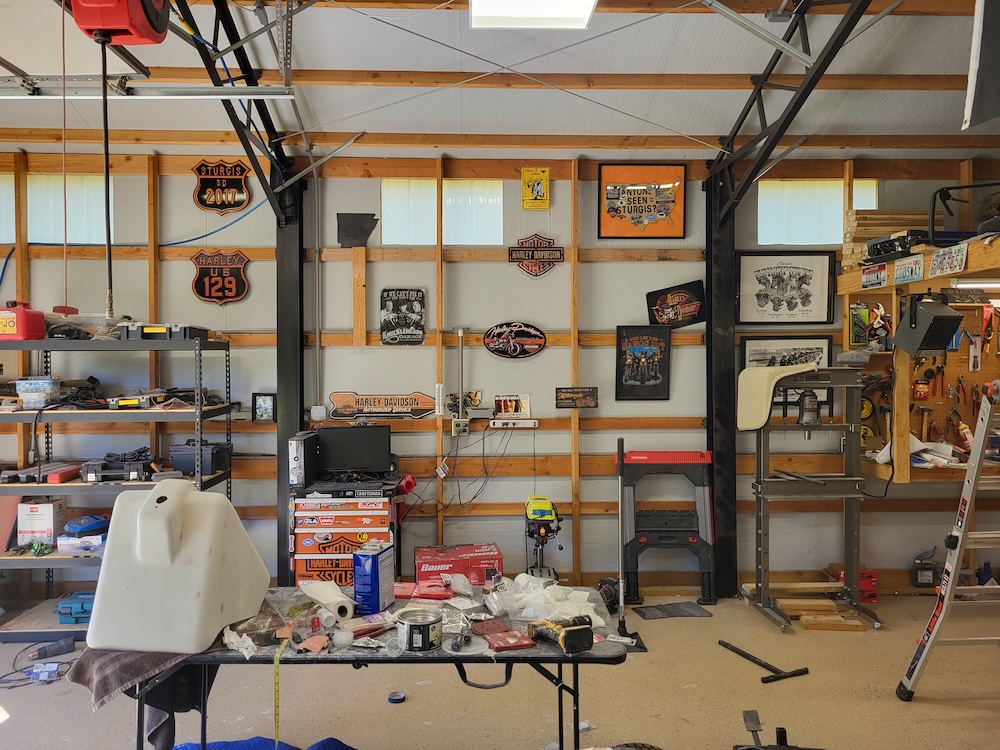
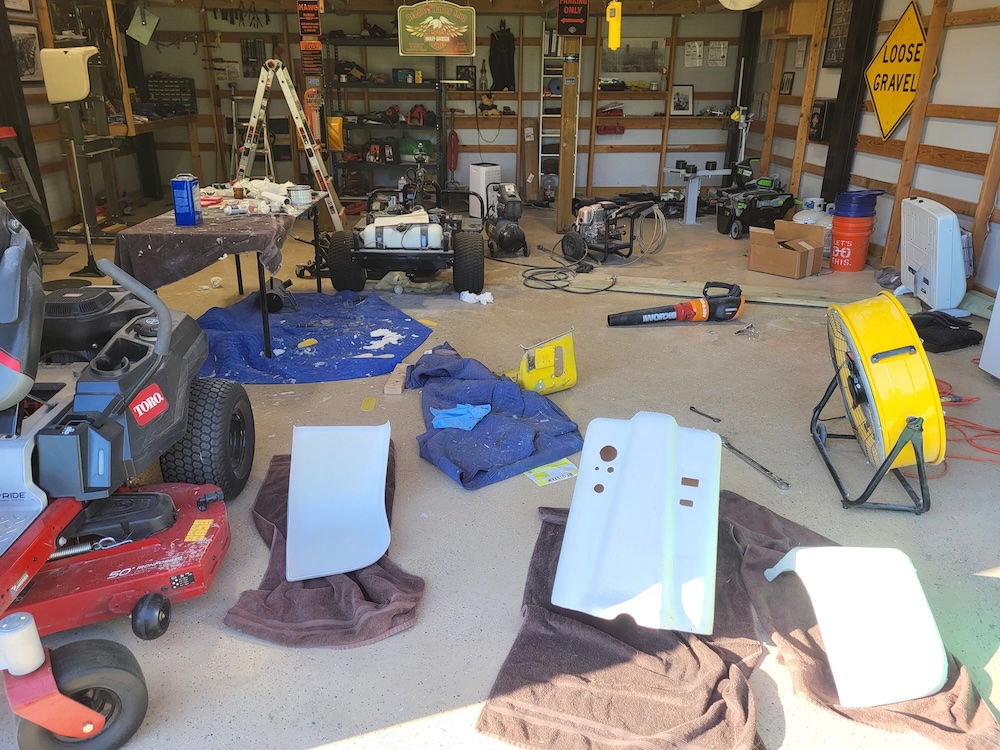
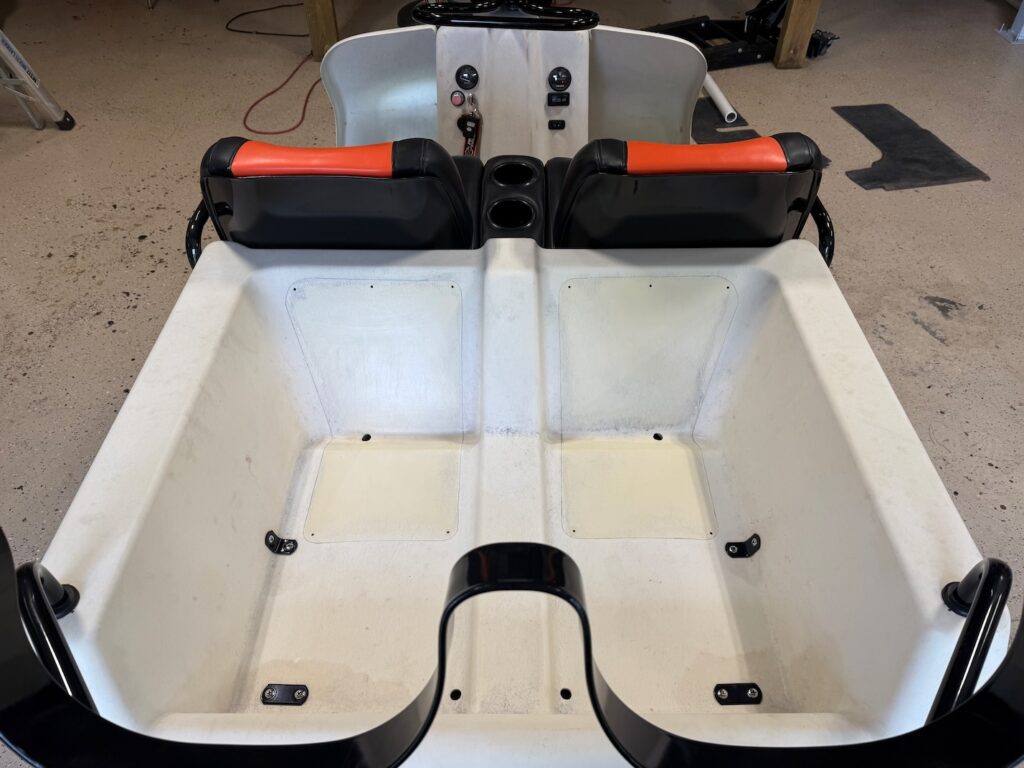
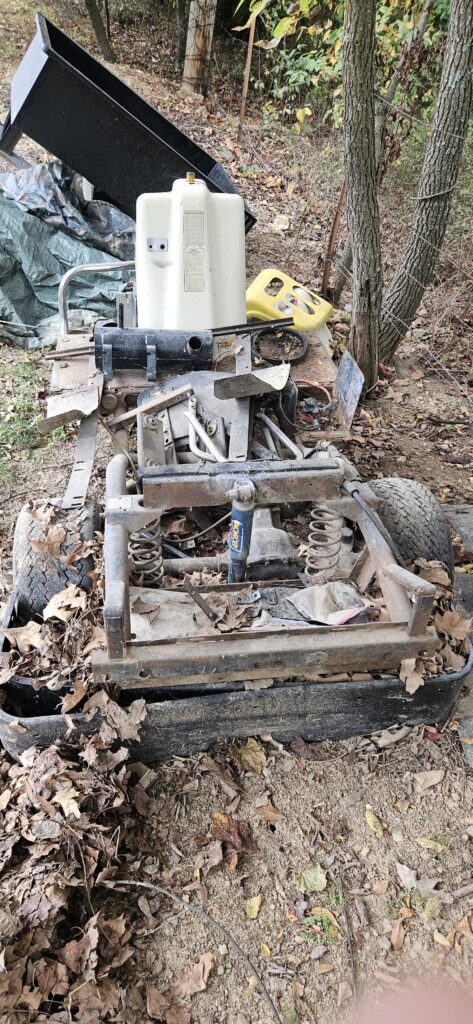
Eventually, I came across a 1980 model. The seller claimed it ran at one point, but the “restoration” was rough—marine boat seats and a lot of questionable design choices. To pull off a full build, I ended up buying two more carts: a 1972 and another 1976. One had been buried in a field, the other was in terrible shape but had a solid top end. Between the three, I was able to piece together everything I needed for a complete restoration. The fiberglass on the 1980 body was in terrible shape, riddled with cracks. This was probably a farmer’s cart at some point—someone had bolted aluminum railing onto the rear cargo area. The previous owner had drilled new holes all over it to secure the body supports. I spent over 400 hours repairing the fiberglass—using pieces from a ’72, ’76, and the ’80 model. Not many of the carts I’ve seen held up well, especially the “flippers”—the ones that had been rolled in accidents. Still, it was worth picking up. The ’80 wasn’t running, the tires were flat, and we had to push it onto the trailer. The ’72 had to be pulled out of the ground, and while the ’76 actually ran when I bought it, it was a real mess cosmetically.
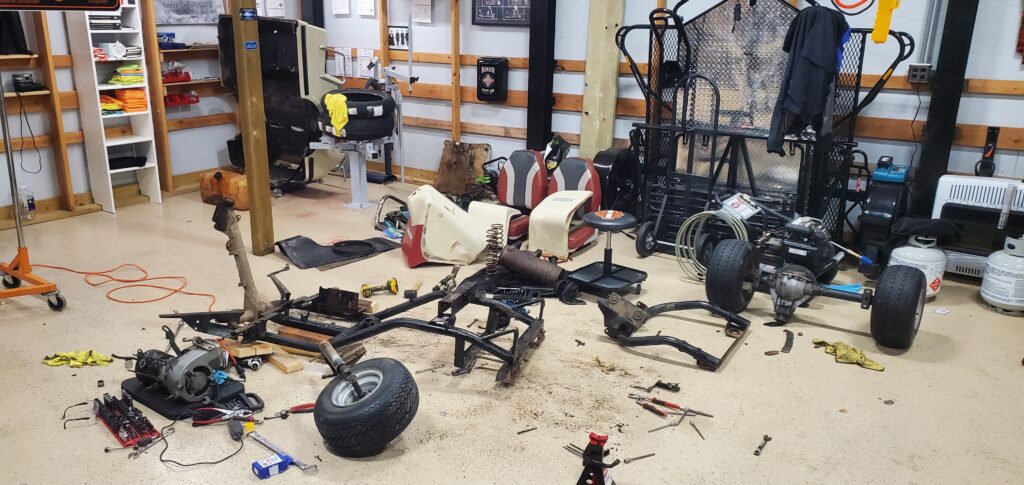
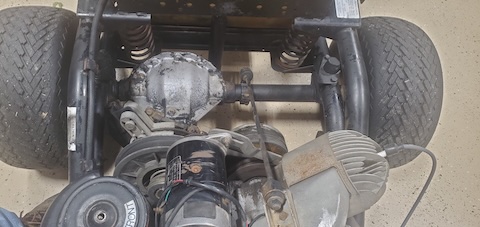
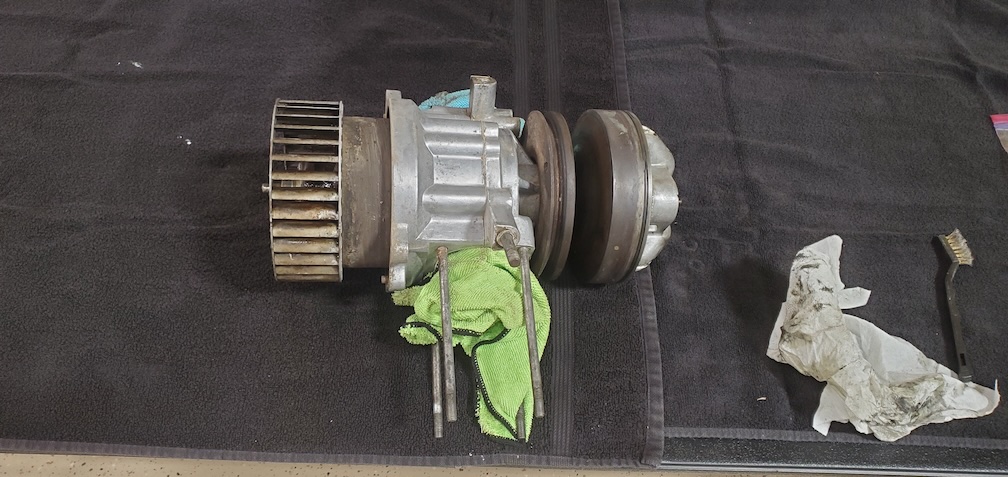
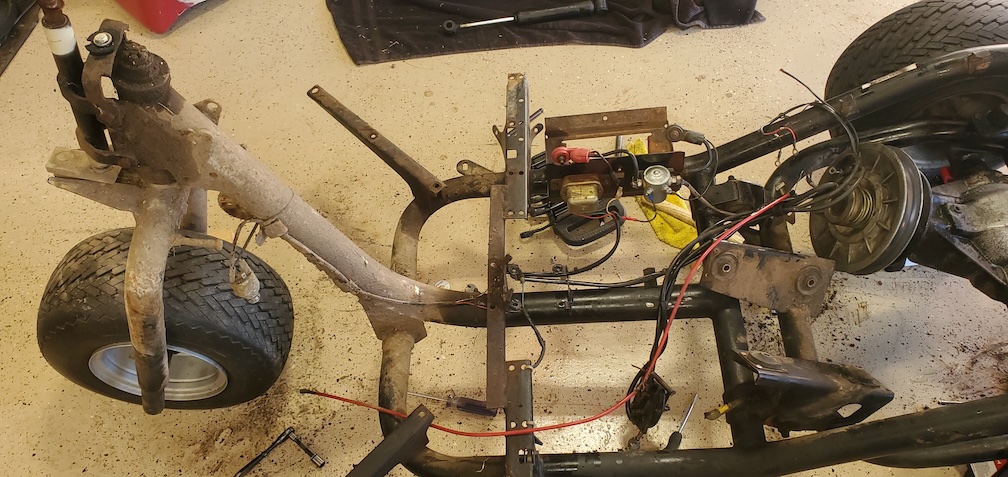
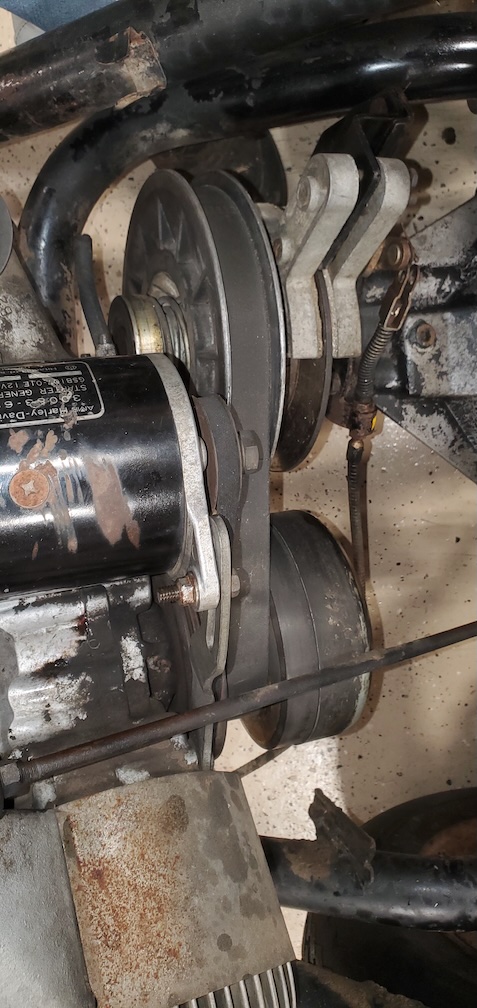
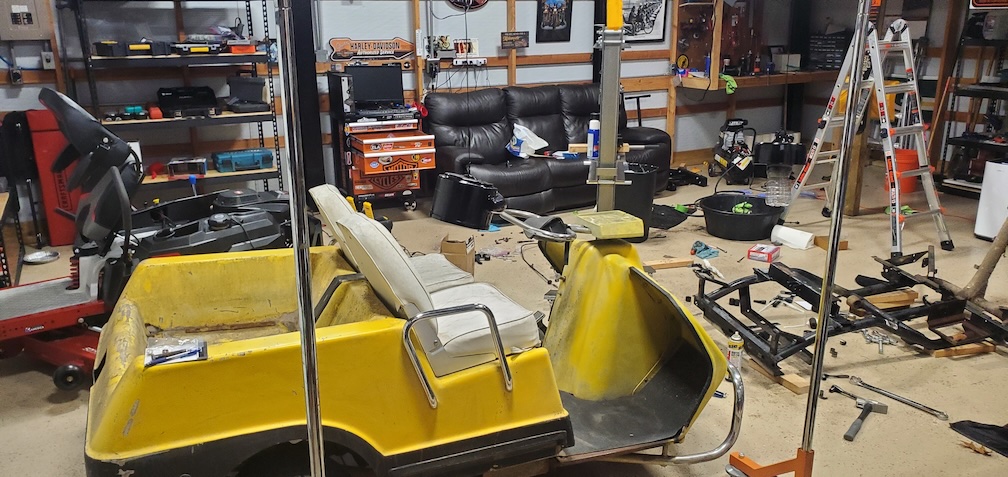
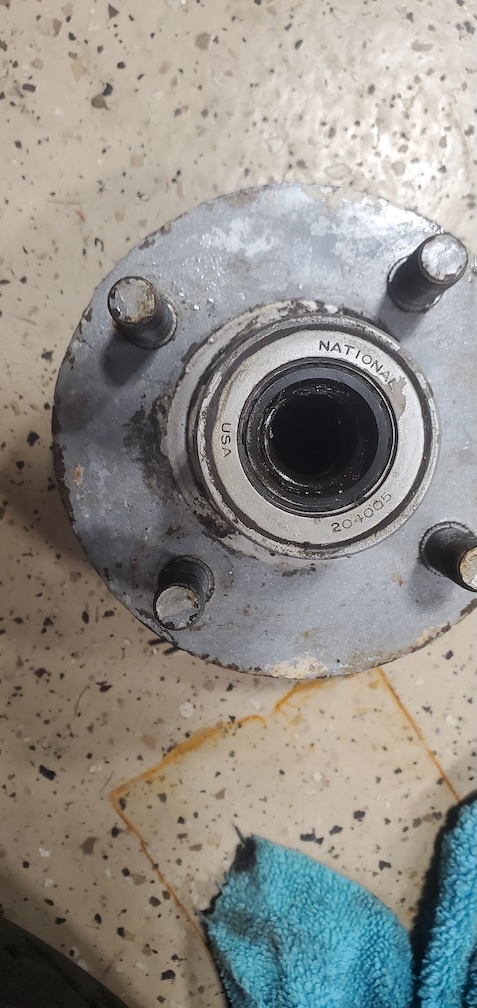
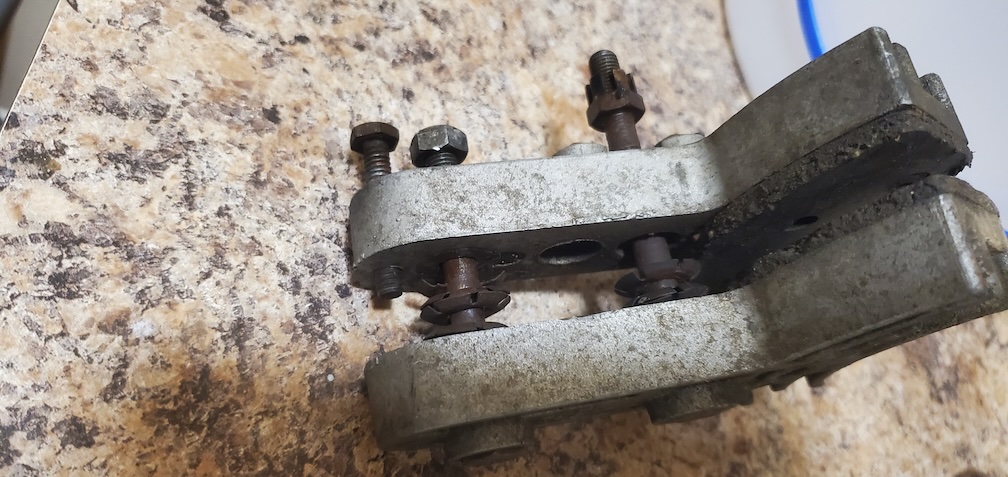
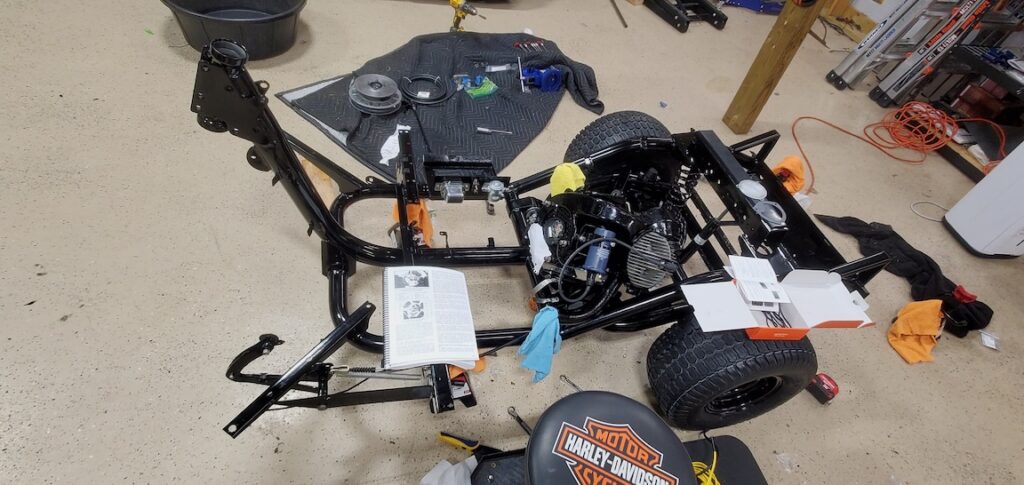
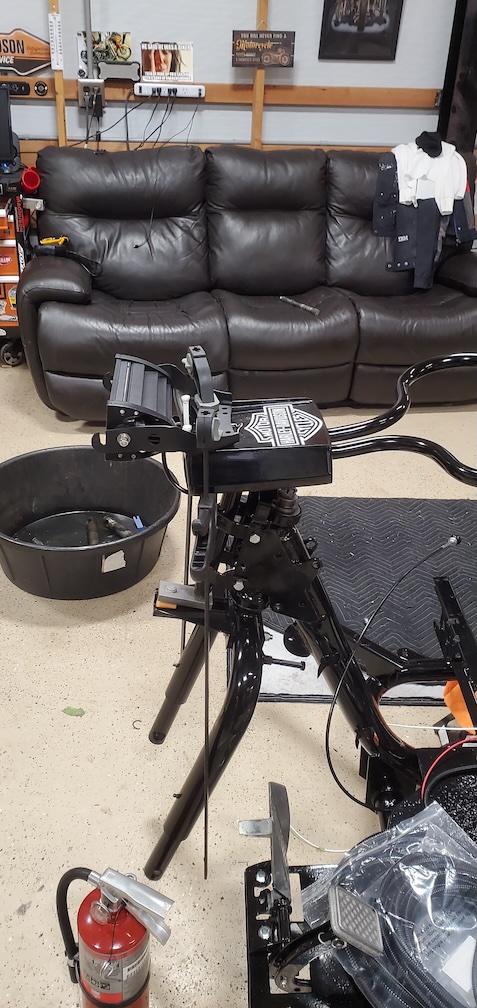
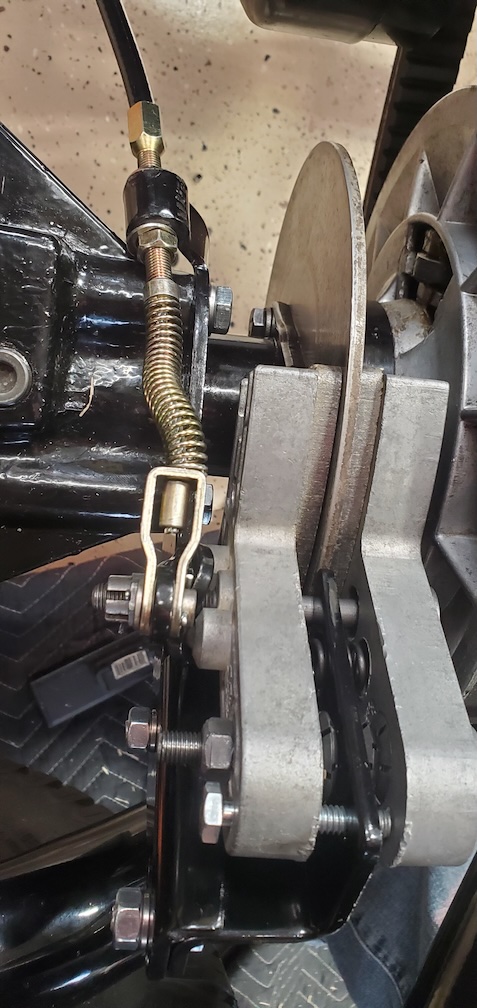
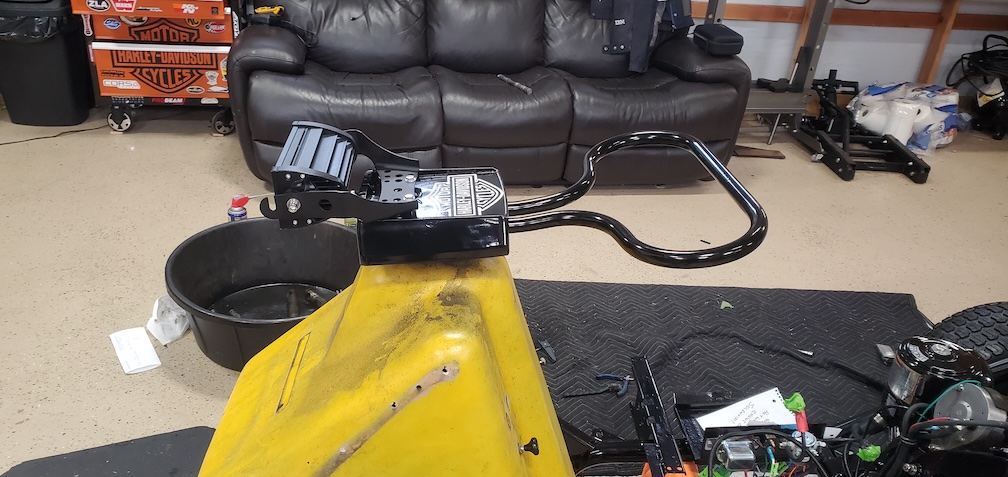
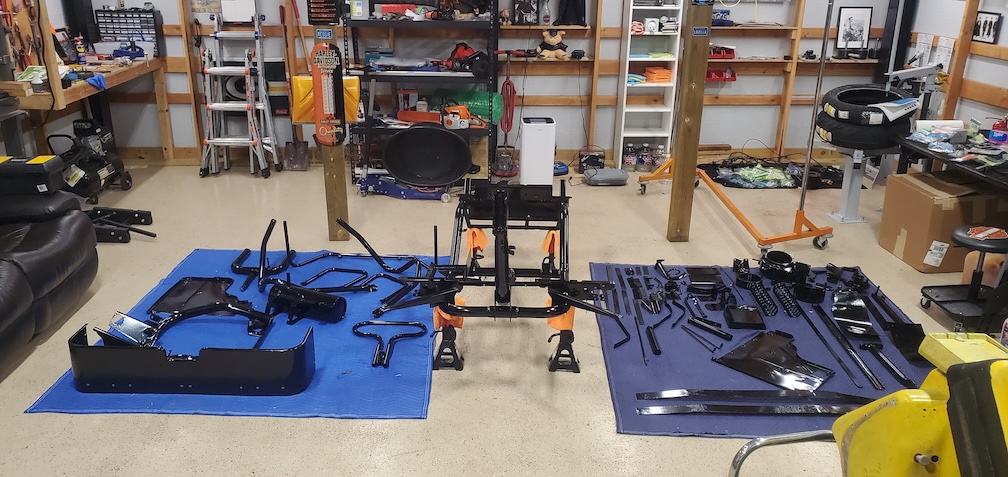
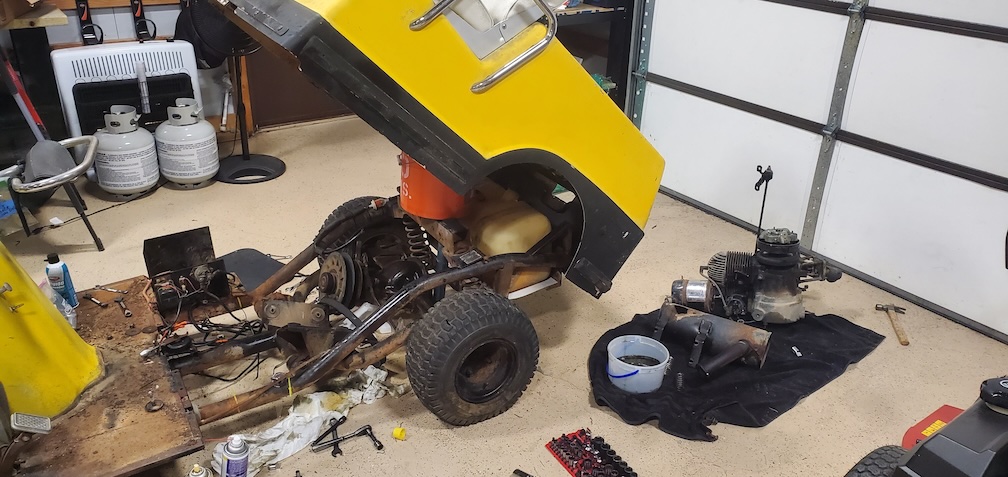
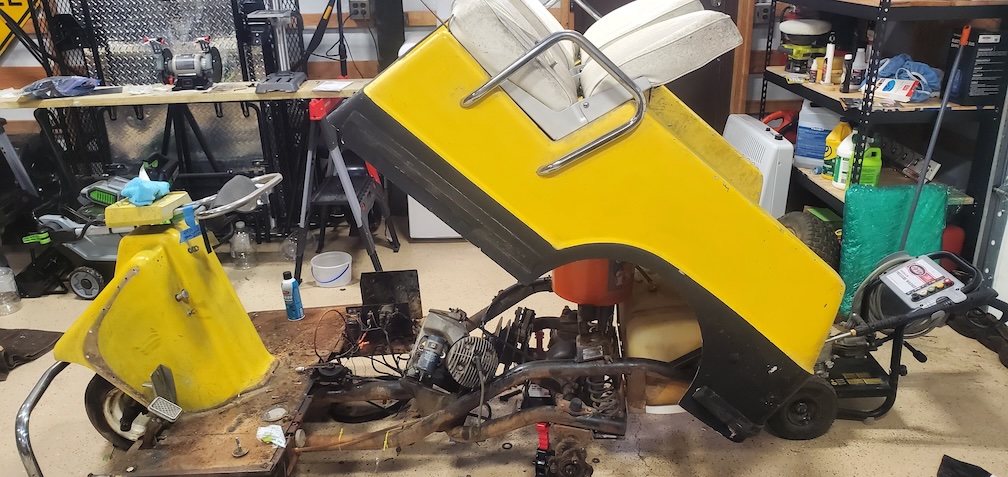
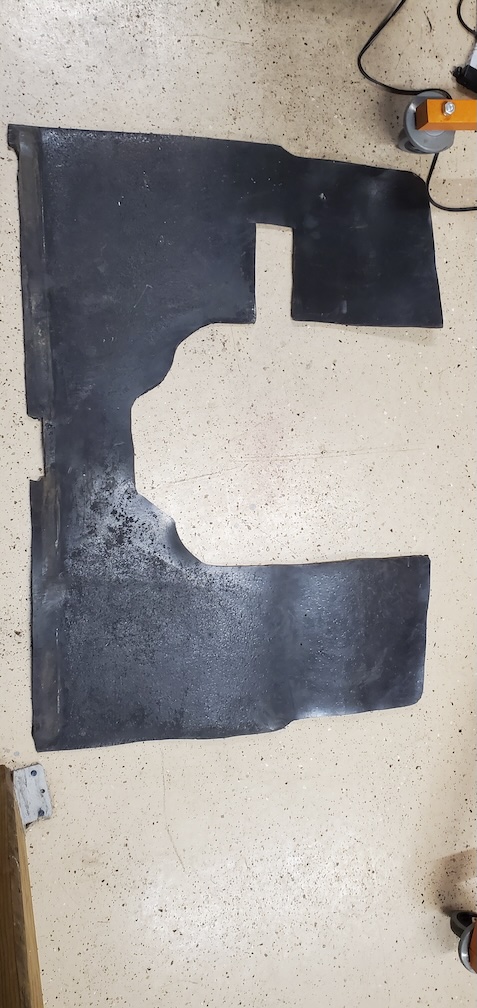
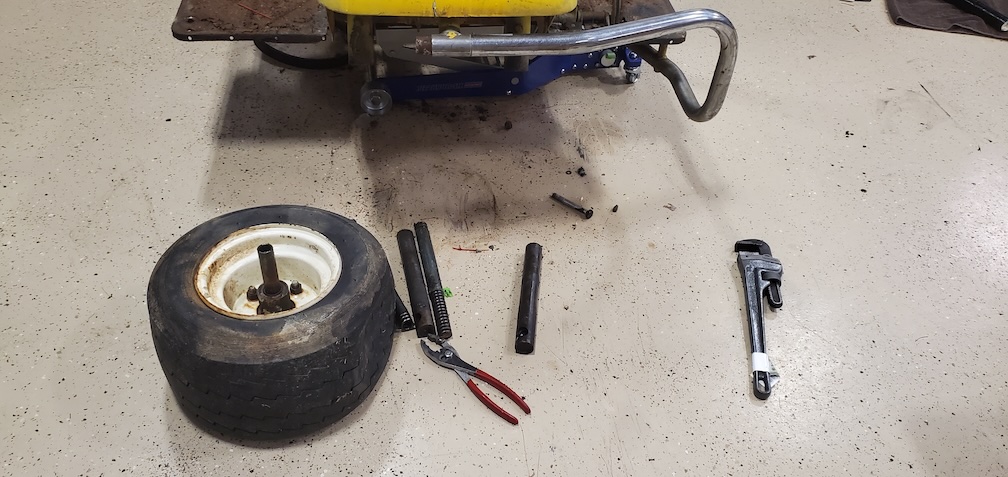
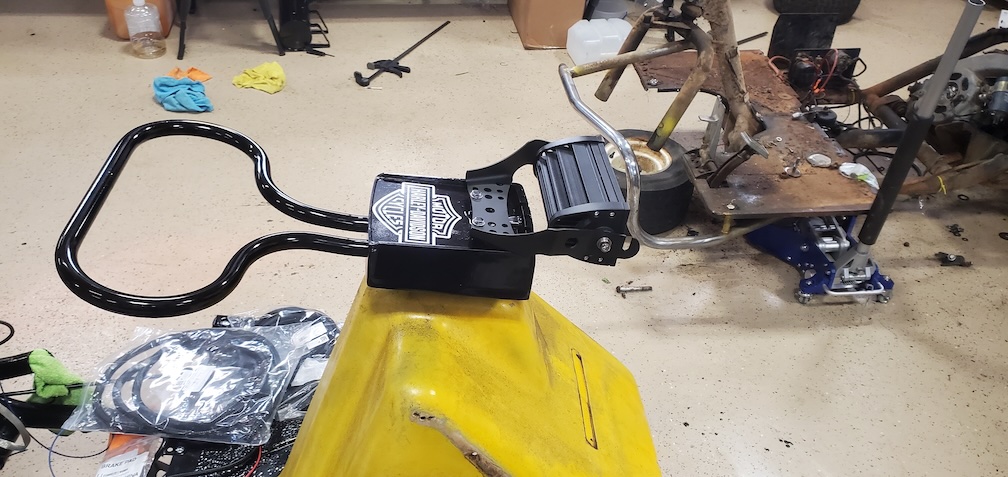
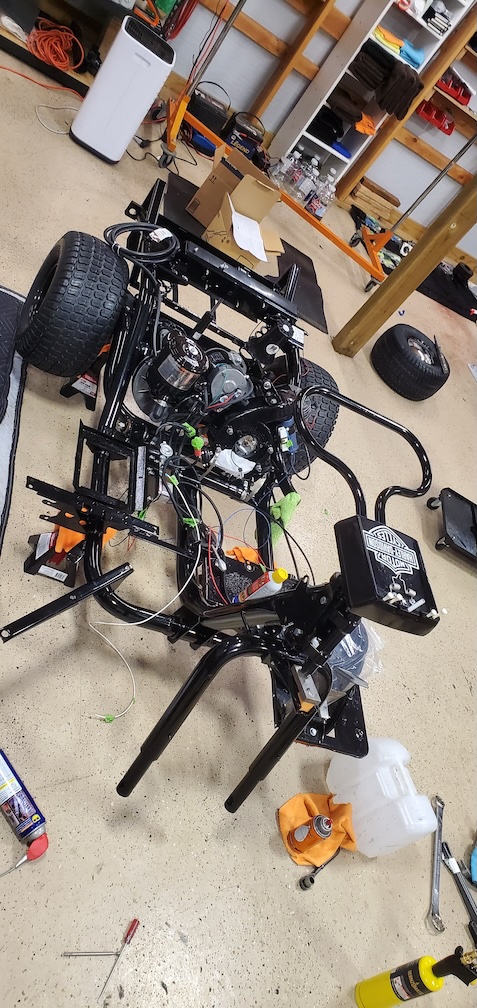
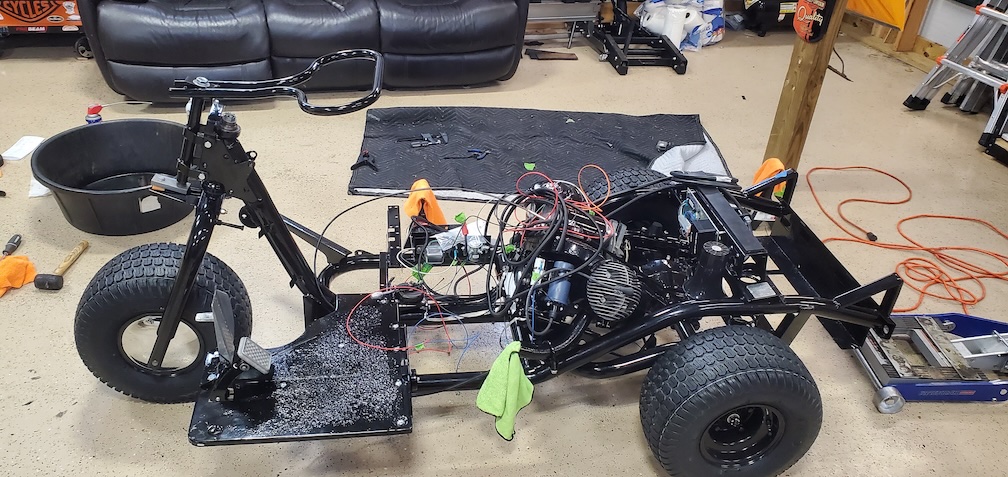
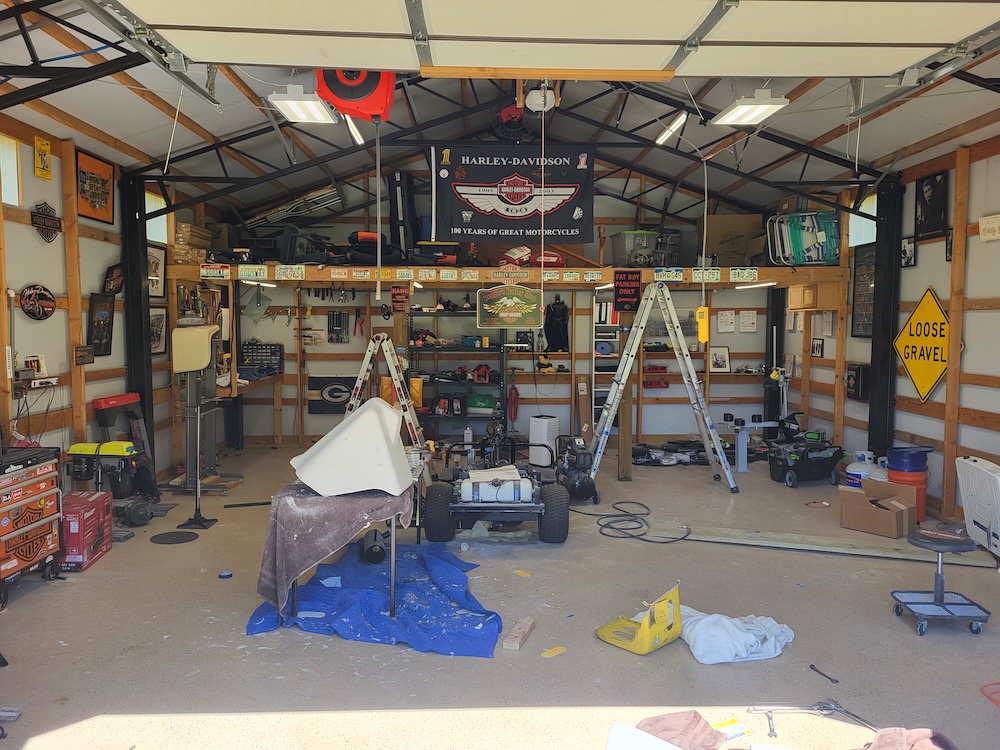
Once I got the ’80 home, I tore it down (you can see that in the main photo at the top of this post) and quickly realized that while some parts were still available from vendors, others—like the centrifugal clutch—were nearly impossible to find. That’s why I ended up buying the other two carts. From my experience of motorcycle restoration, I’ve learned that picking up a donor victim—or even two—is often more cost-effective than trying to hunt down individual parts on eBay.
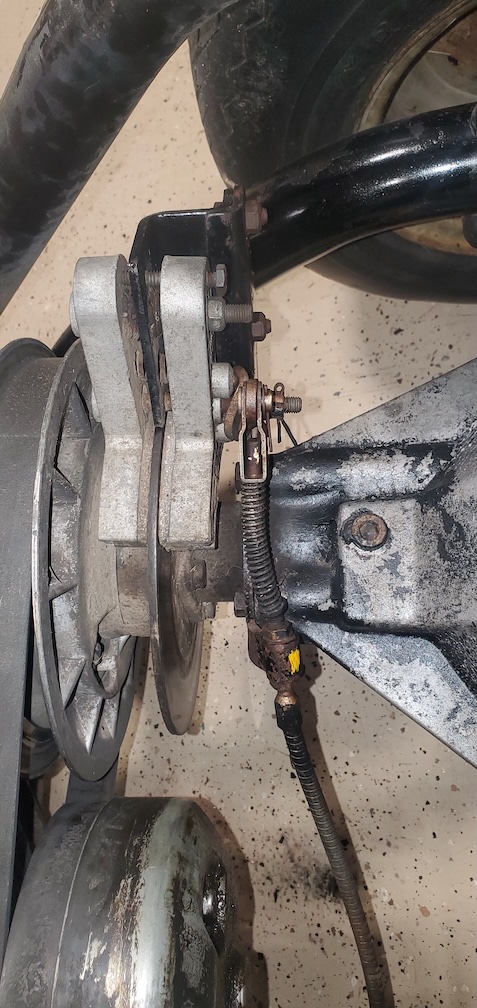
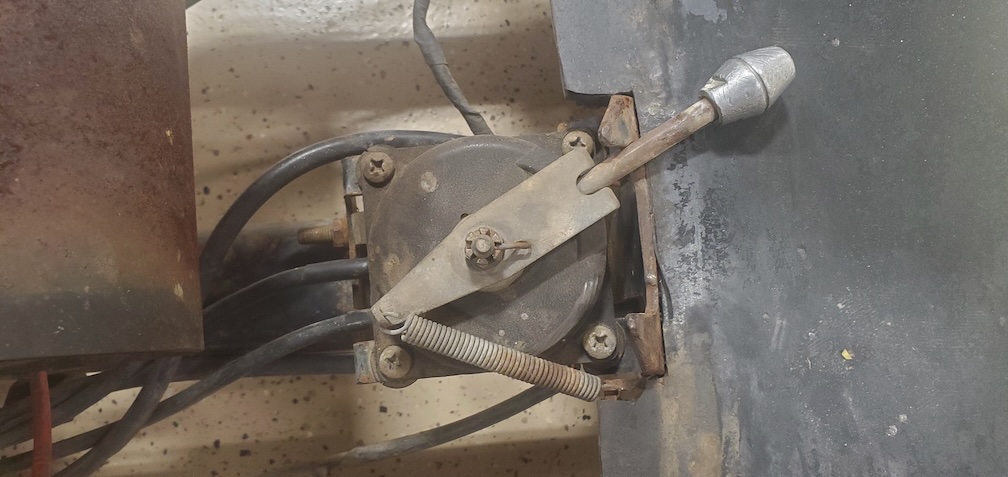
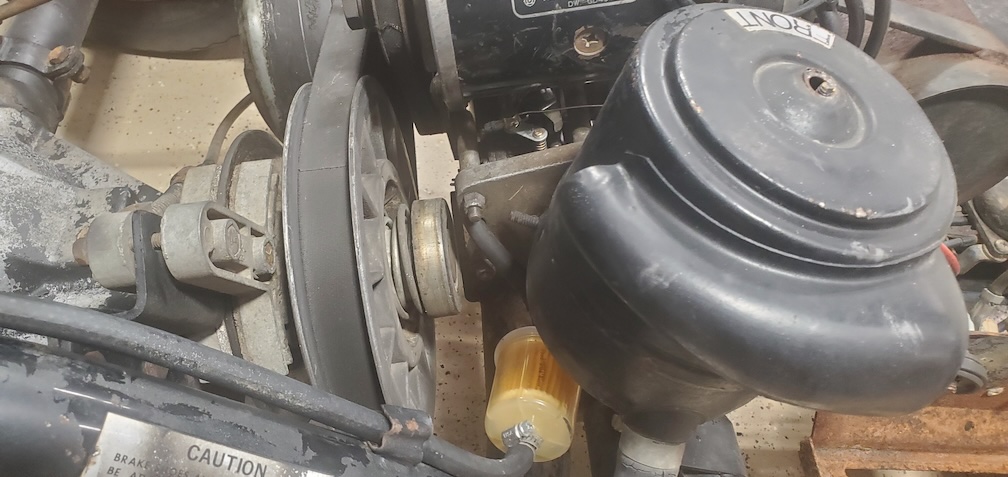
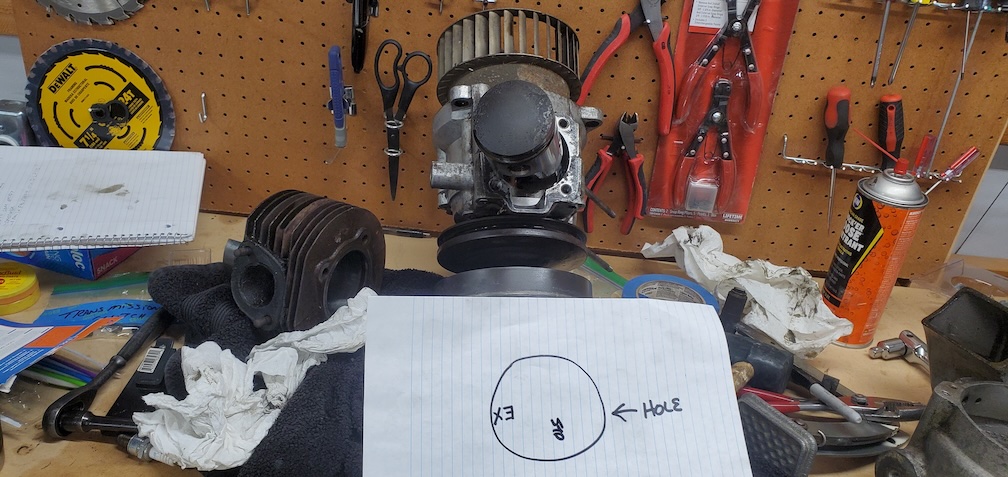
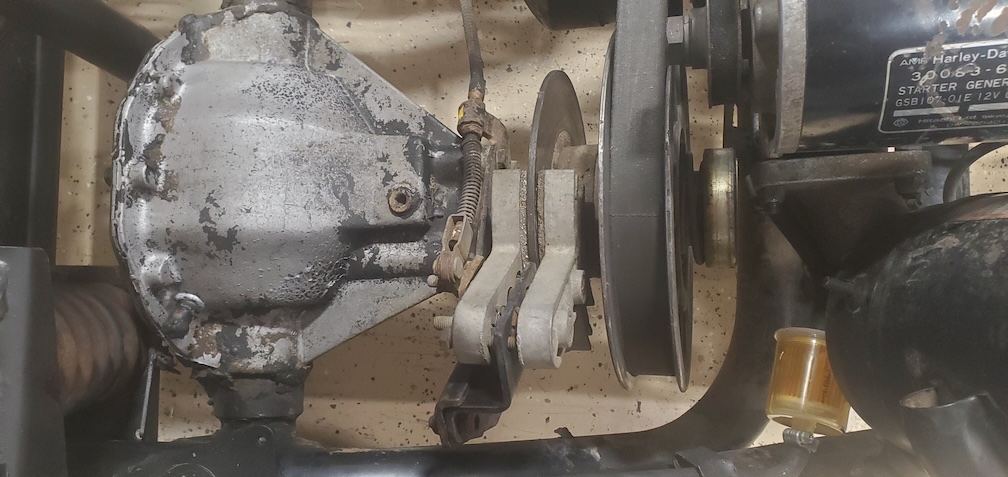
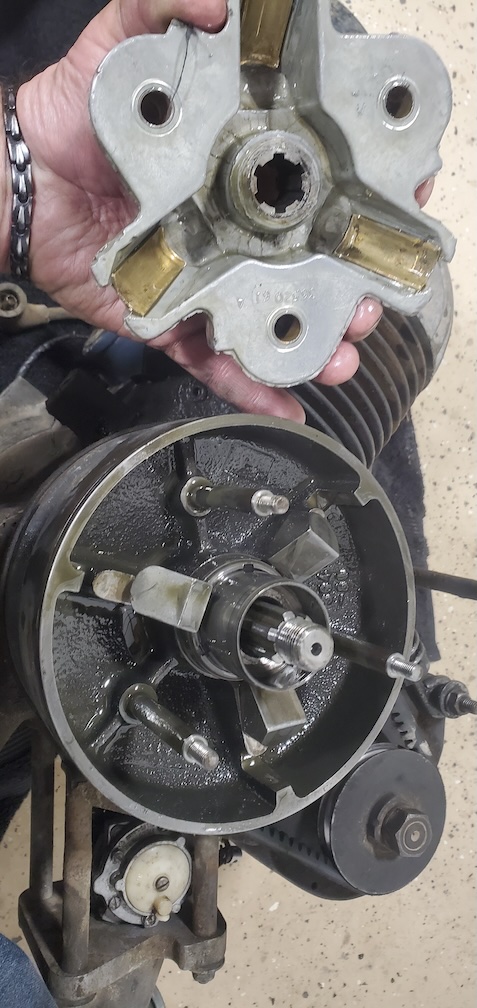
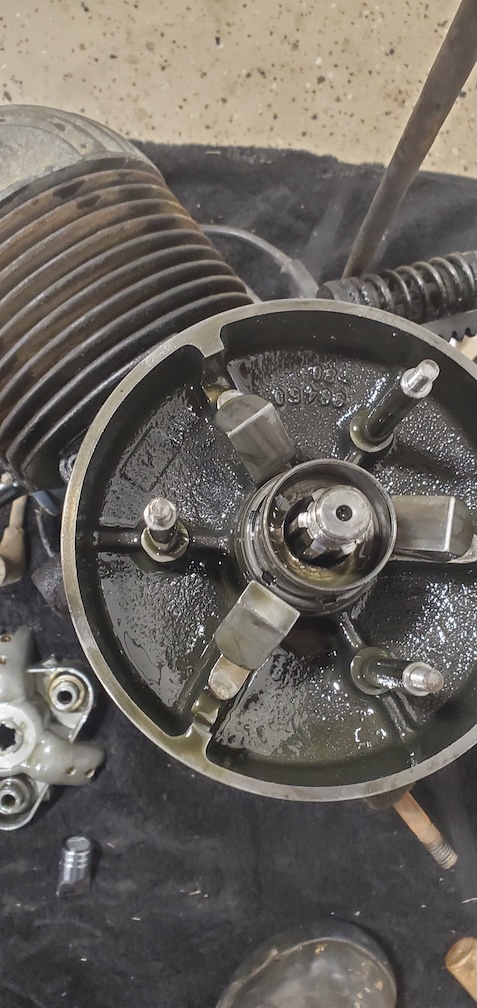
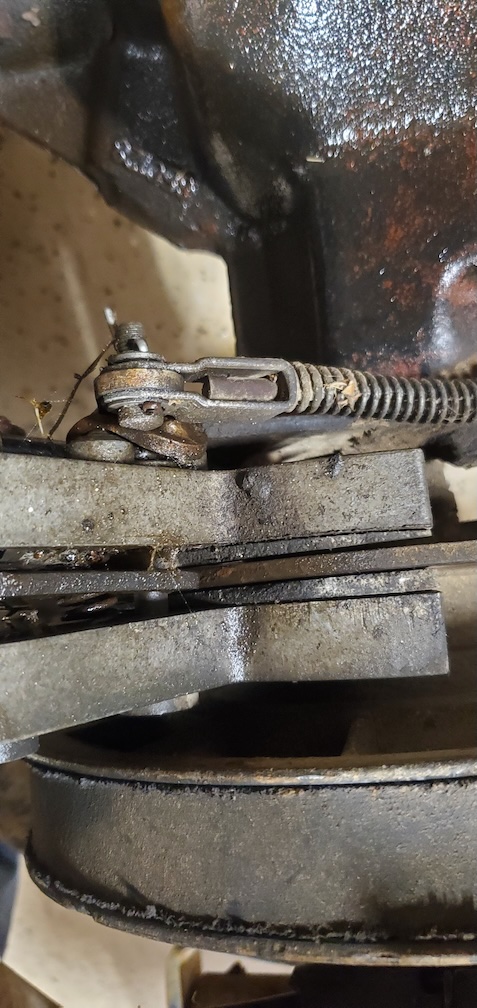
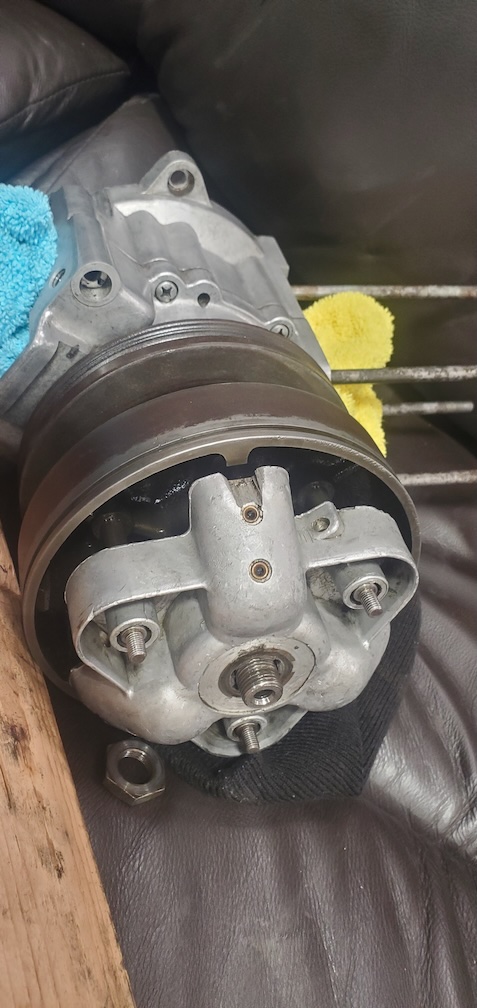
These carts don’t use a traditional transmission. Instead, the engine runs clockwise for forward and counterclockwise for reverse, which makes ignition timing a bit of an art. You have to time it to 25 degrees before top dead center for forward, and 25 degrees after for reverse—then find a compromise somewhere in between. As the engine speeds up, the centrifugal clutch kicks in. Older versions use steel balls, while newer ones use odd shaped weights. These internal weights spin outward as RPMs increase, pushing against the clutch housing and generating centrifugal force. That force engages the belt connected to the clutch, which then drives a manual transmission and sends power to the differential. It’s a pretty fascinating piece of old-school engineering.
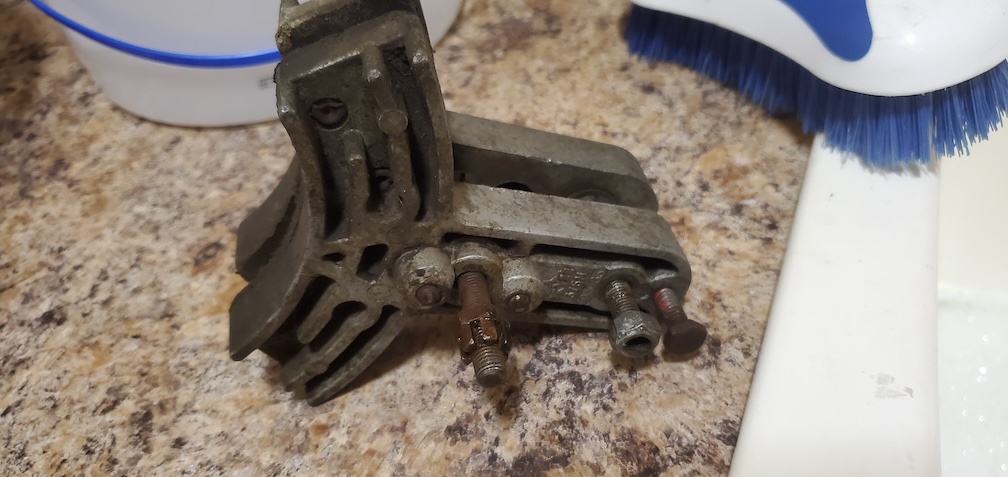
A lack of preventative maintenance led to many of their abandonment. The clutches require 12 ounces of 90-weight gear oil, but many owners didn’t keep up with it. Without oil, the internal weights wear right through the clutch housing, burning holes into the cast iron. Those holes leak oil—bad news. My 1980 clutch had those holes. Thankfully, the one from the 1976 cart didn’t—and it even had the updated clutch version. I got lucky there.
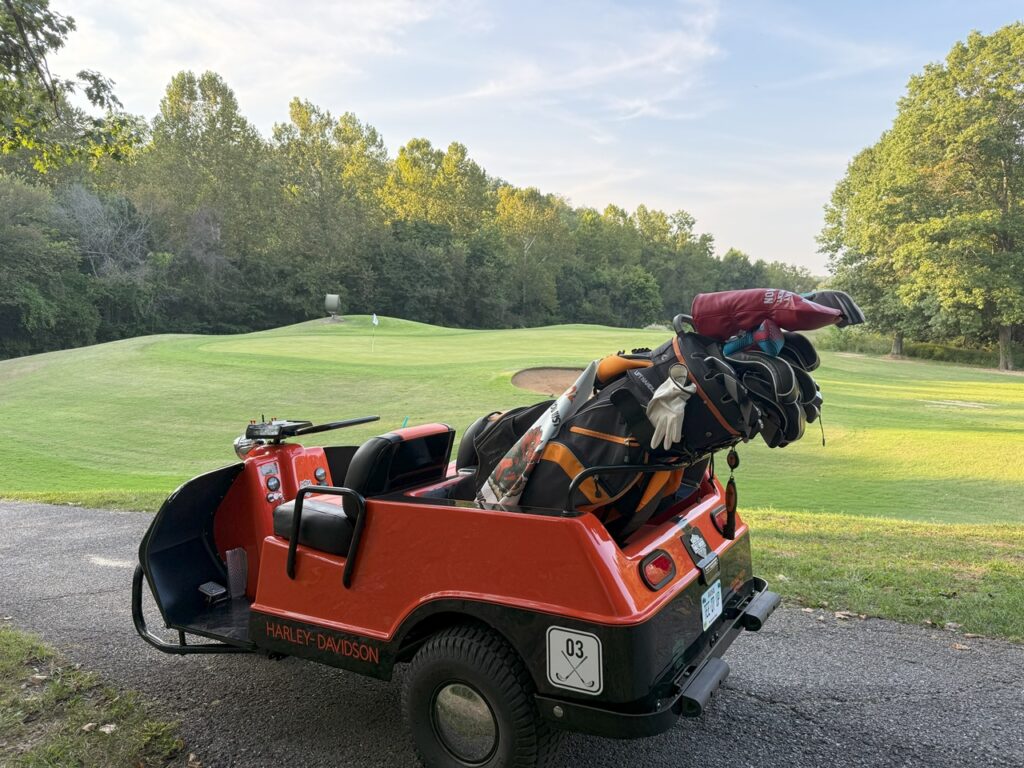
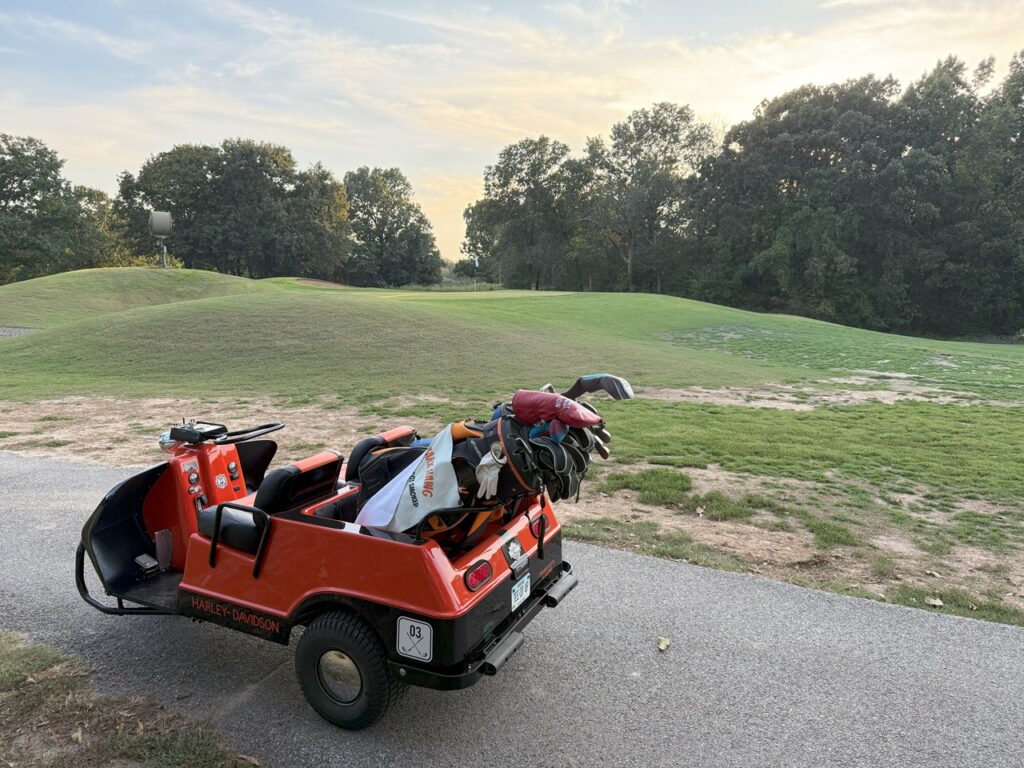
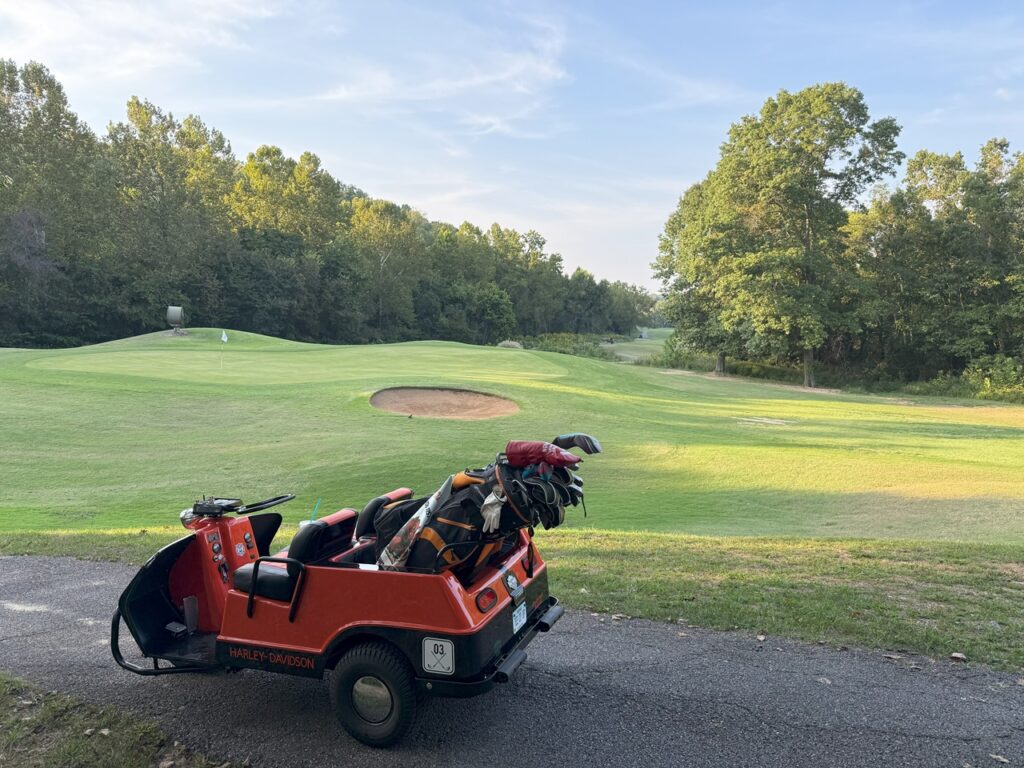
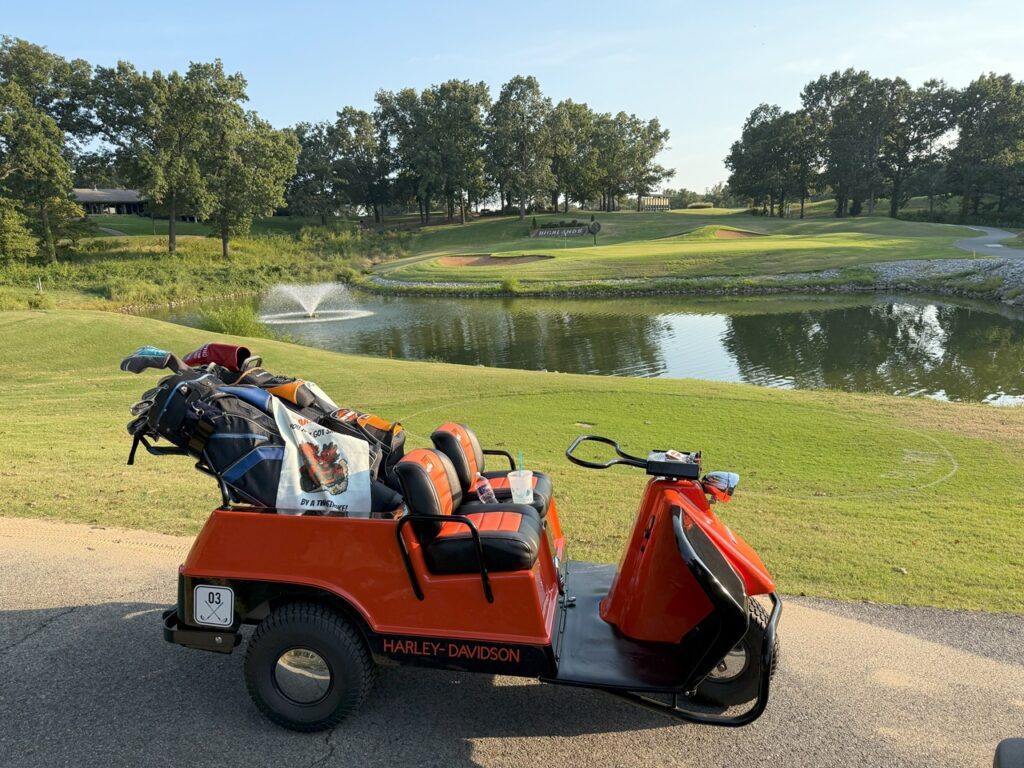
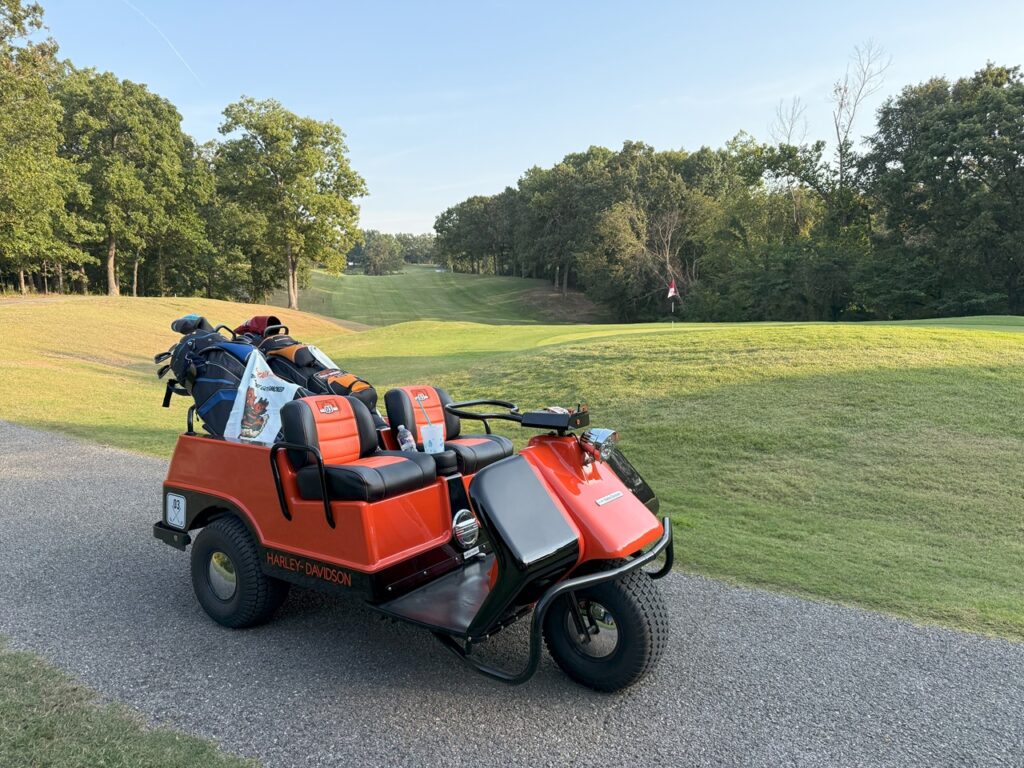
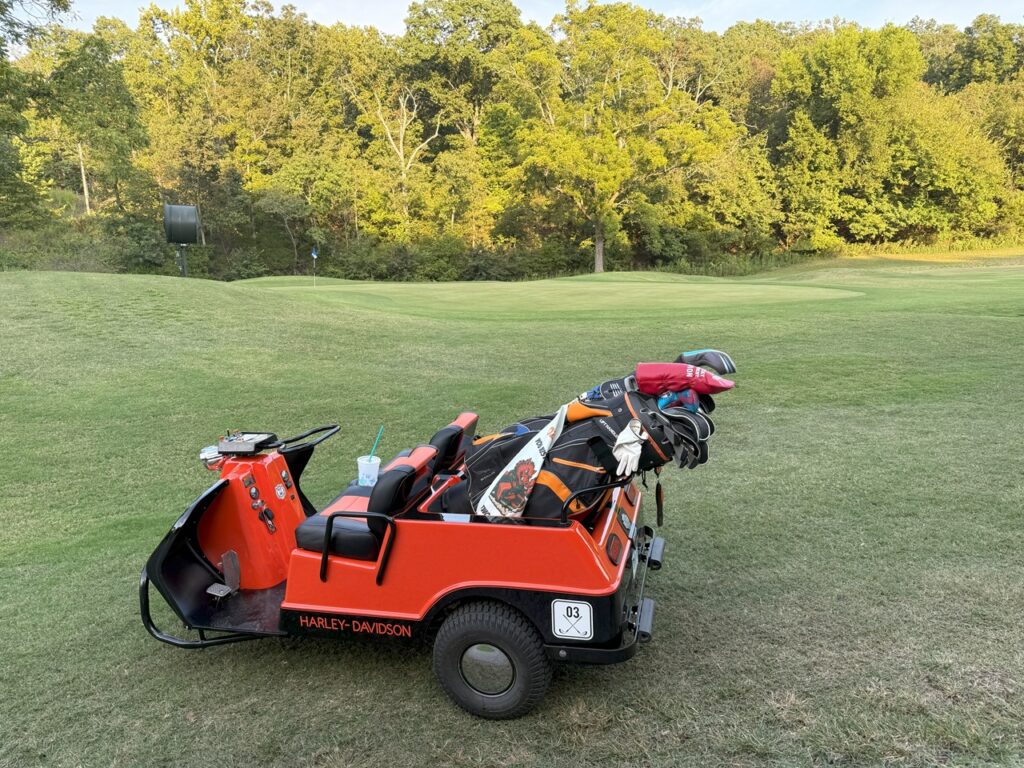
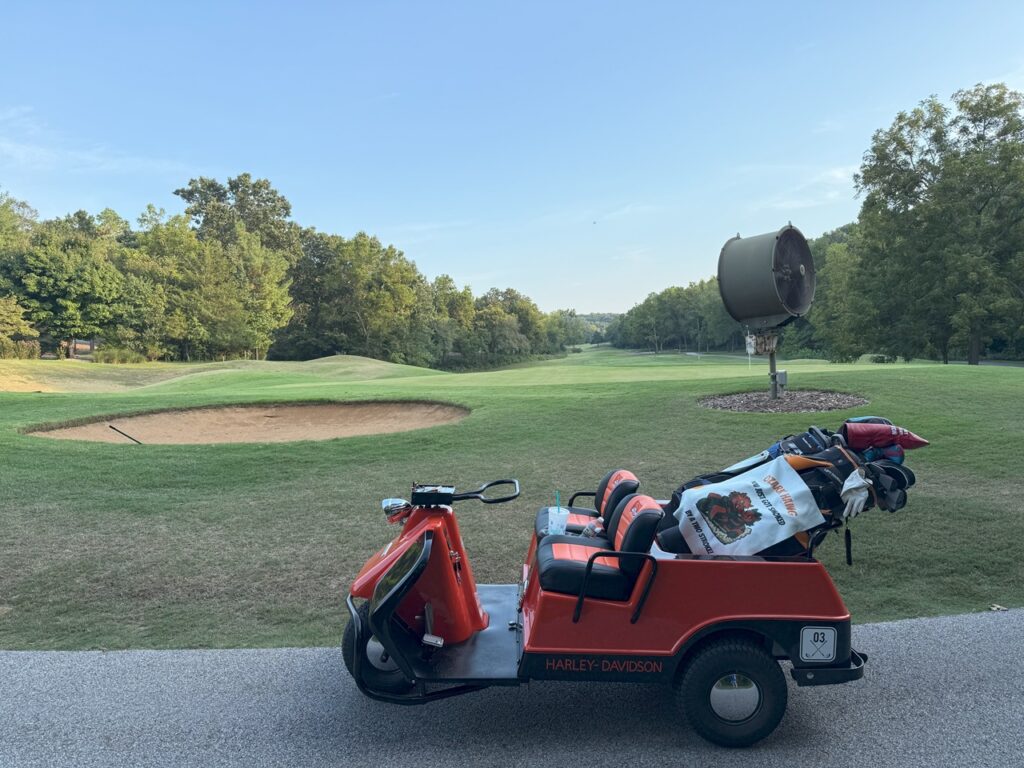
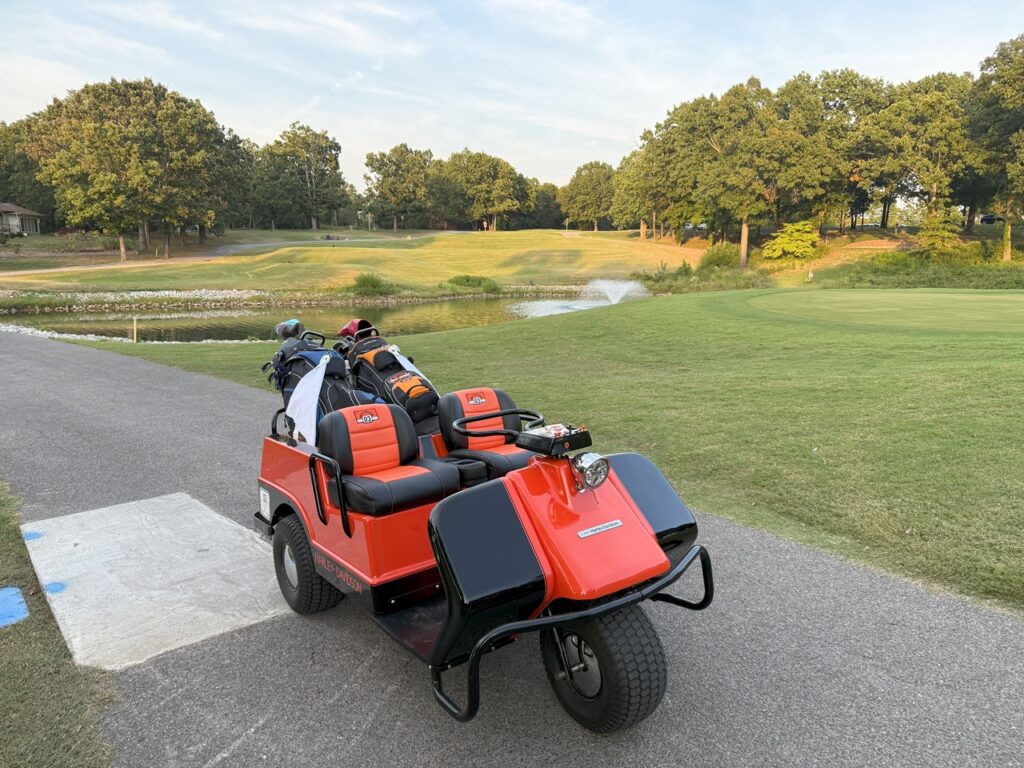
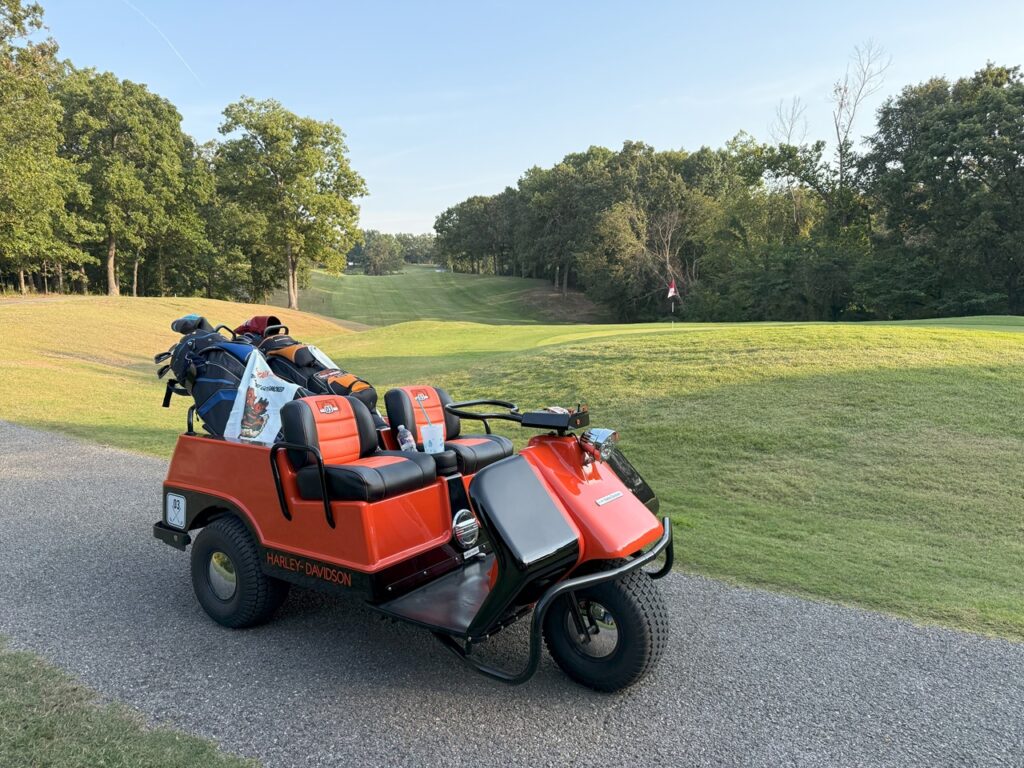
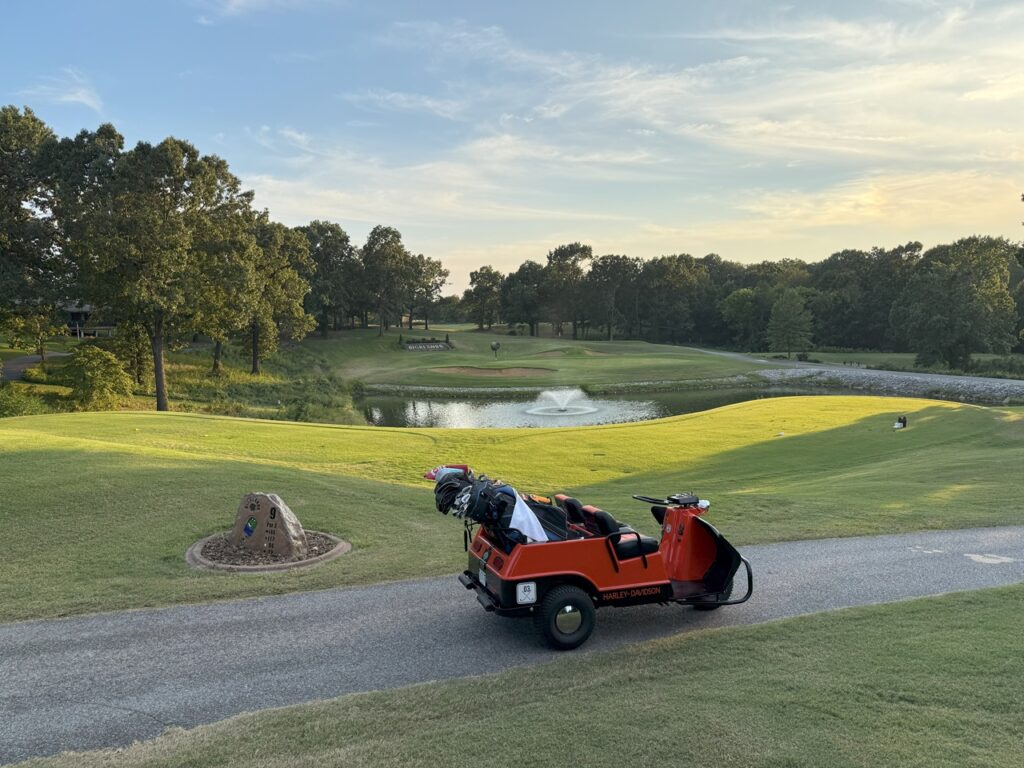
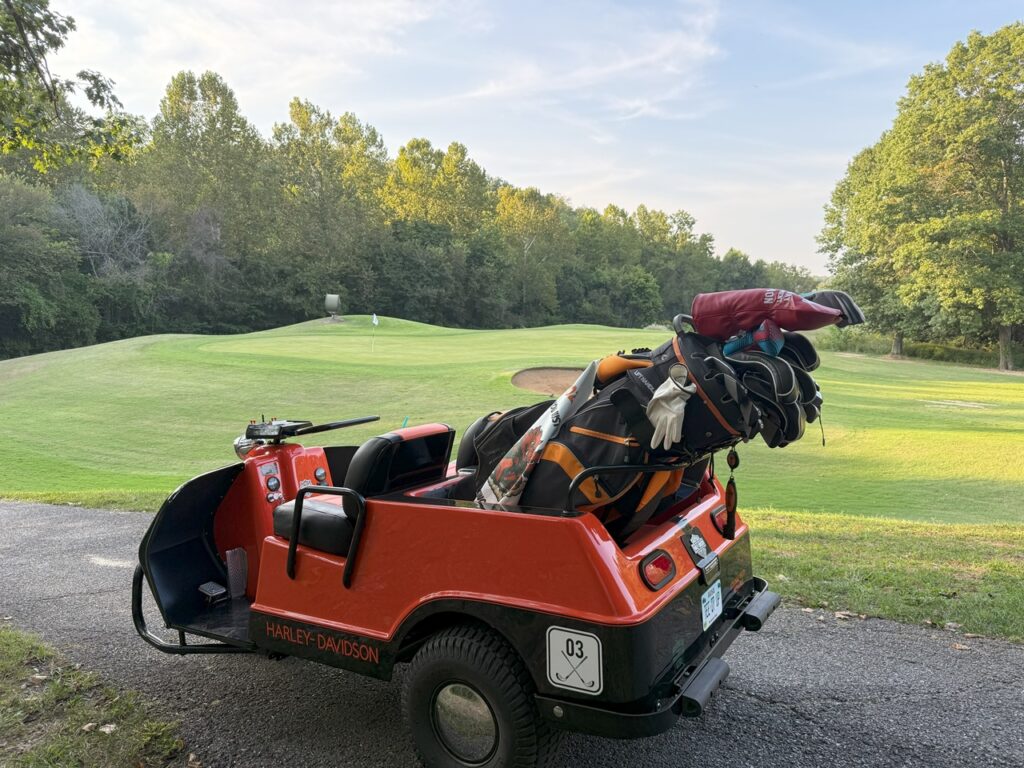
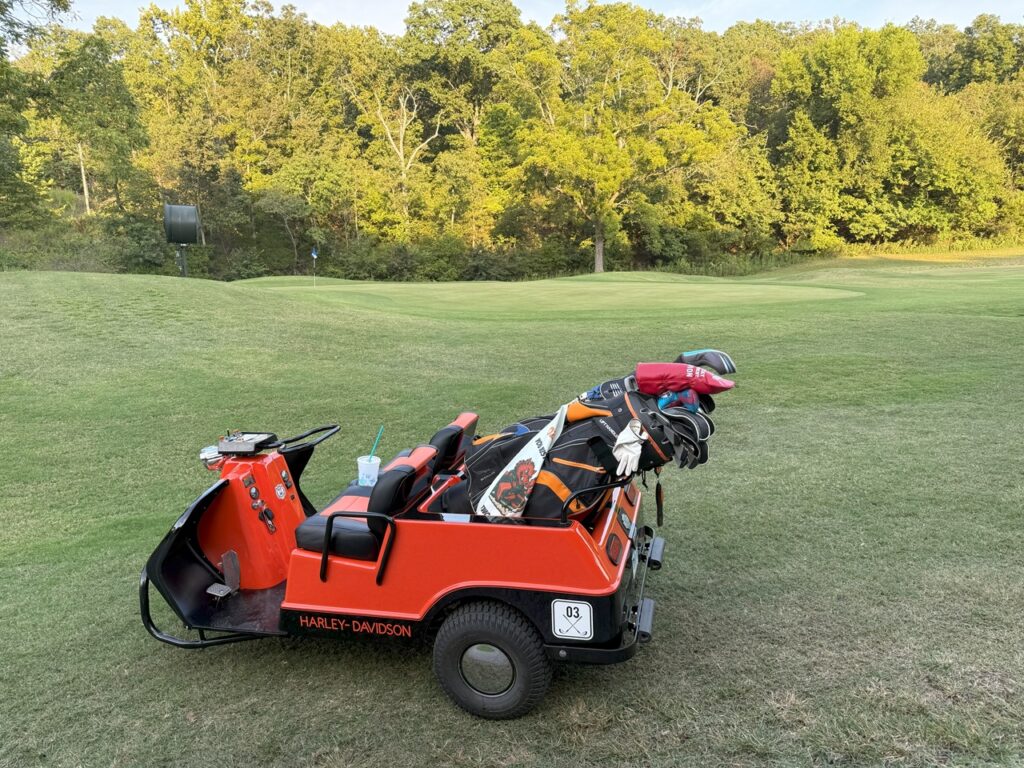
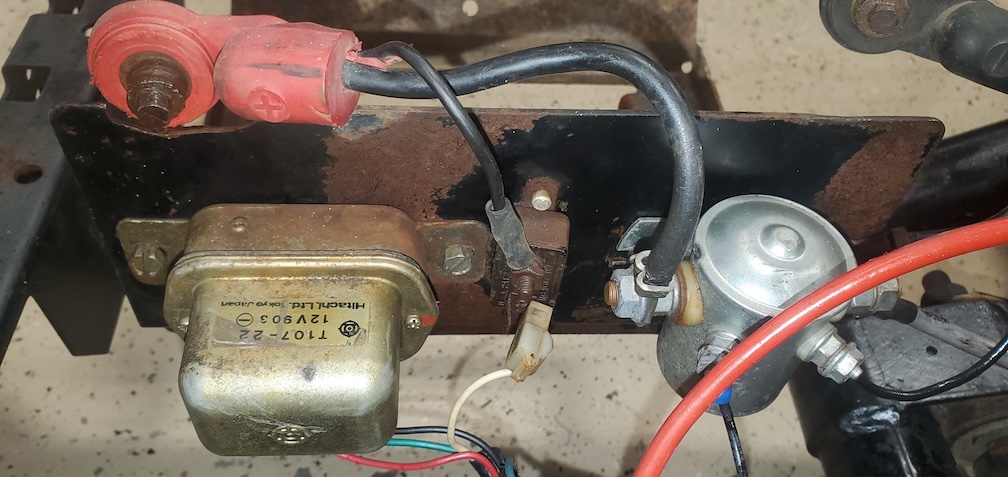
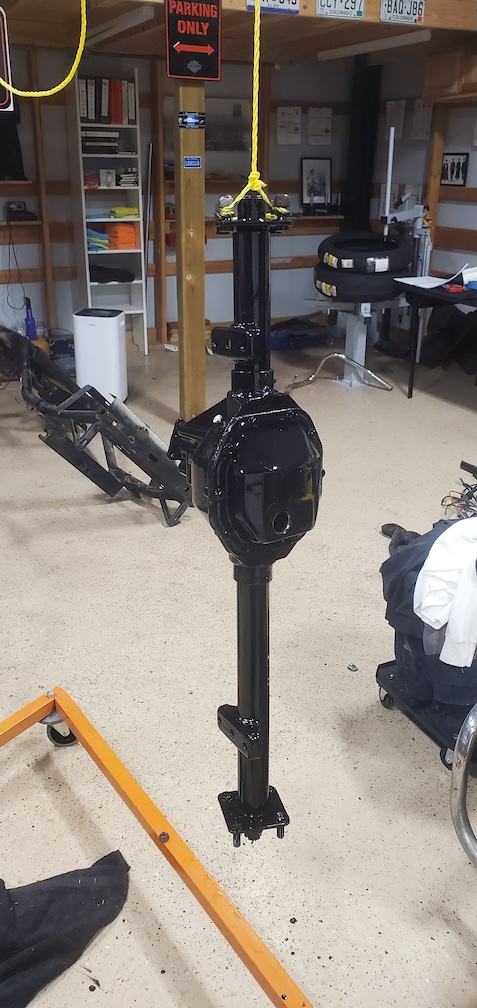
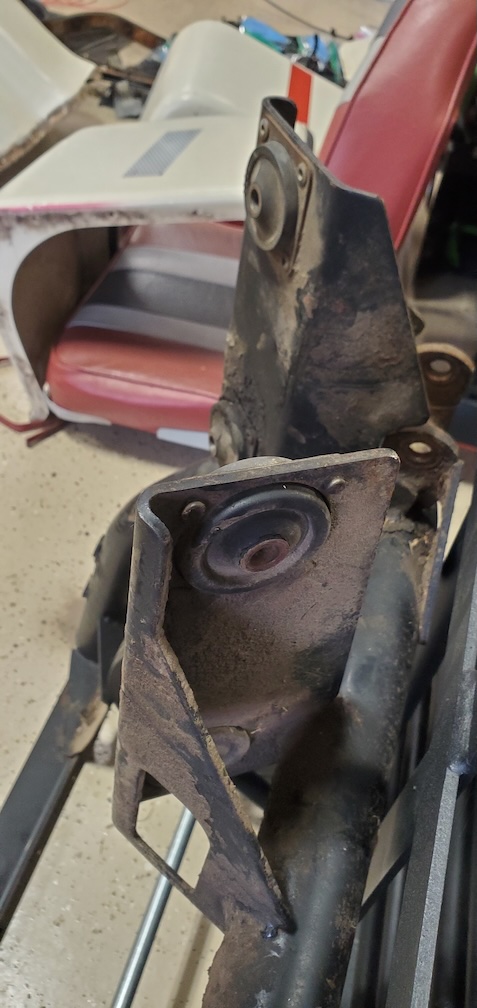
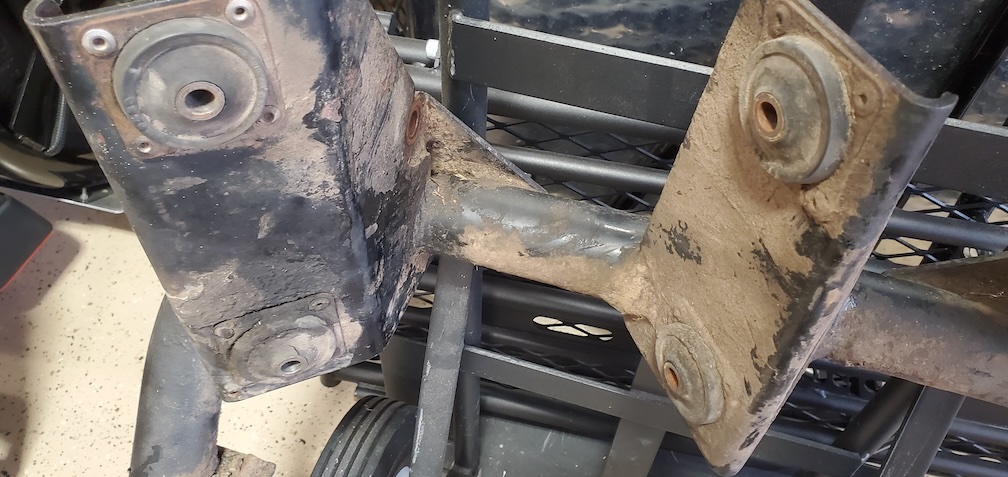
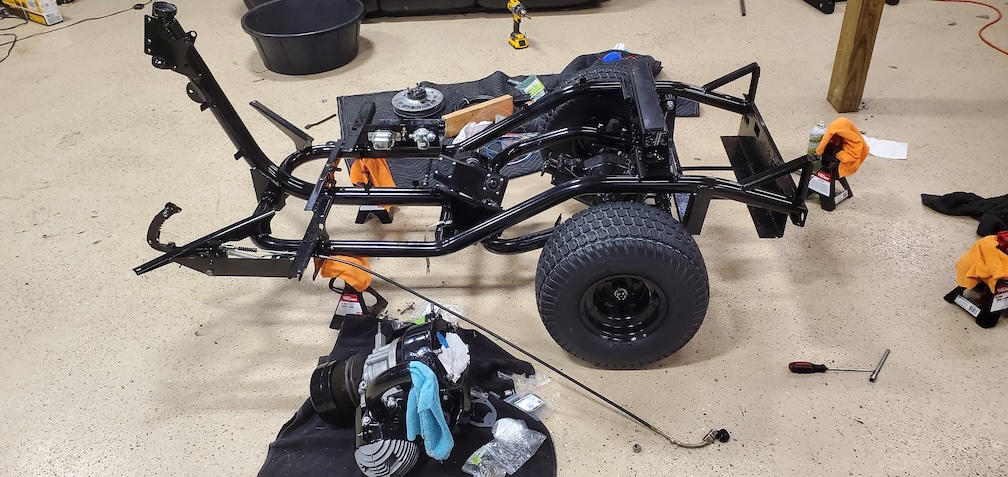
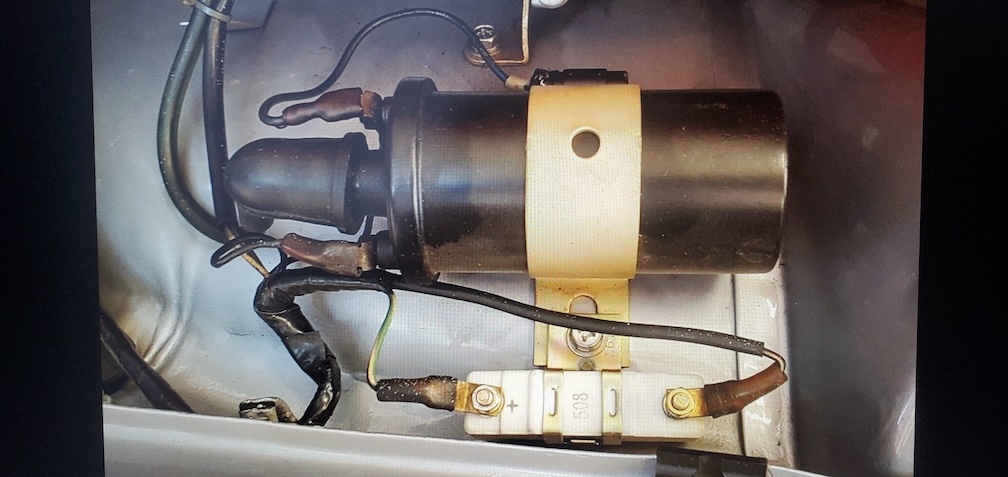
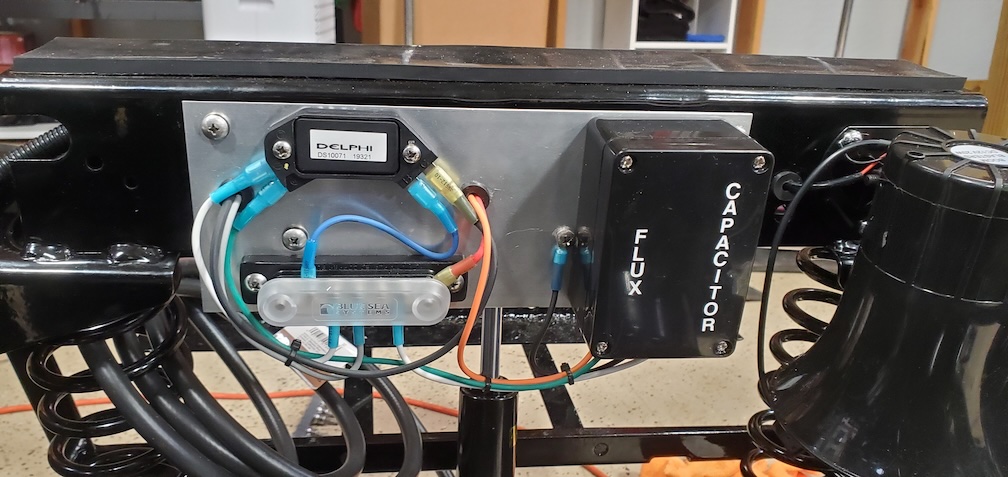
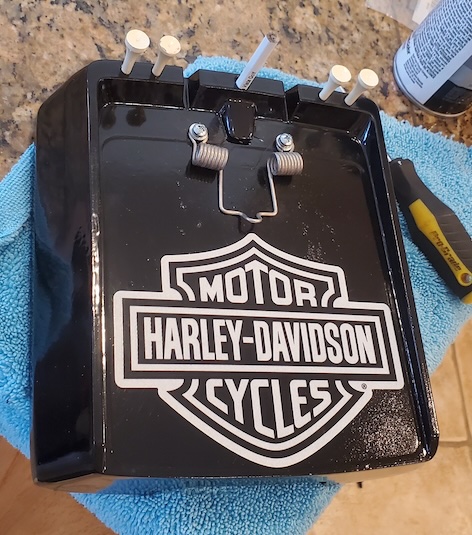
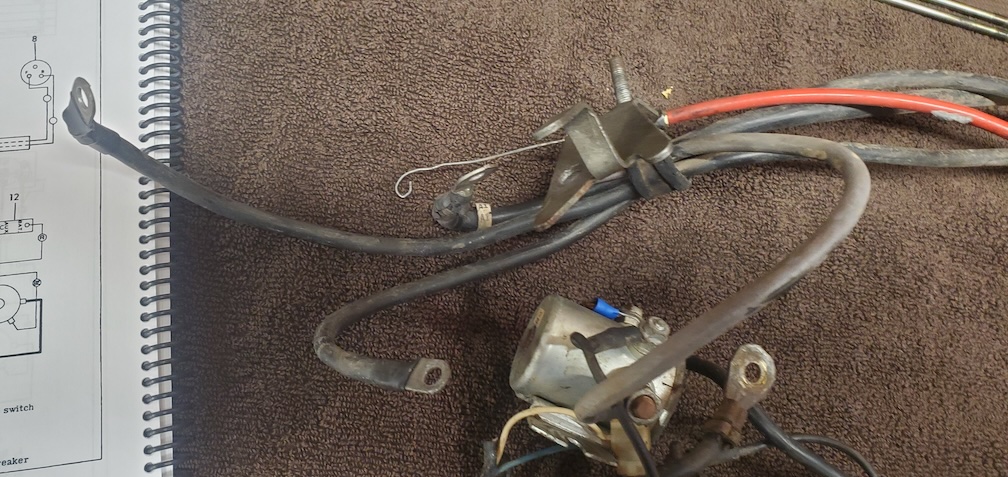
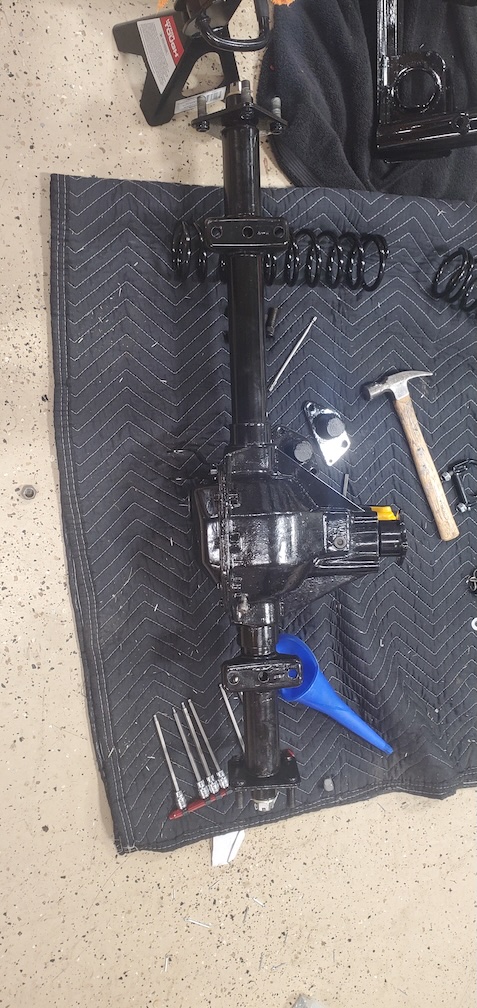
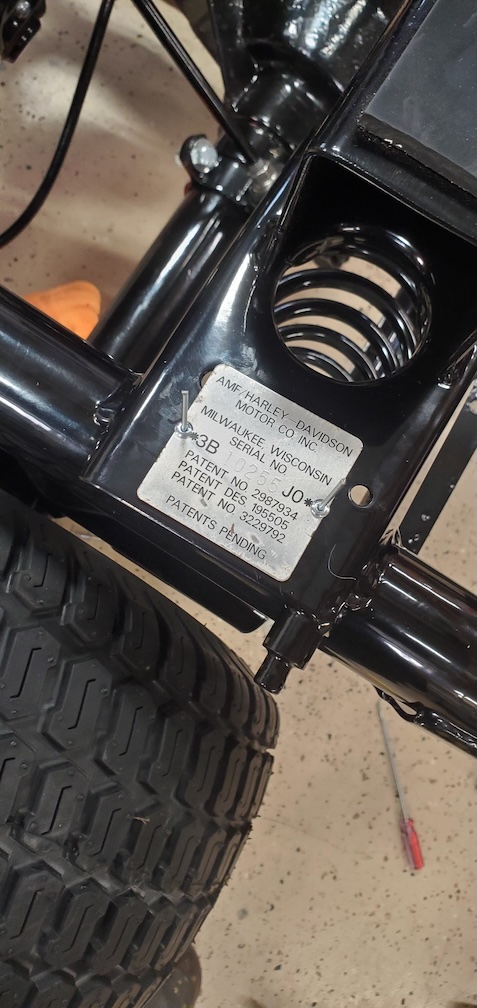
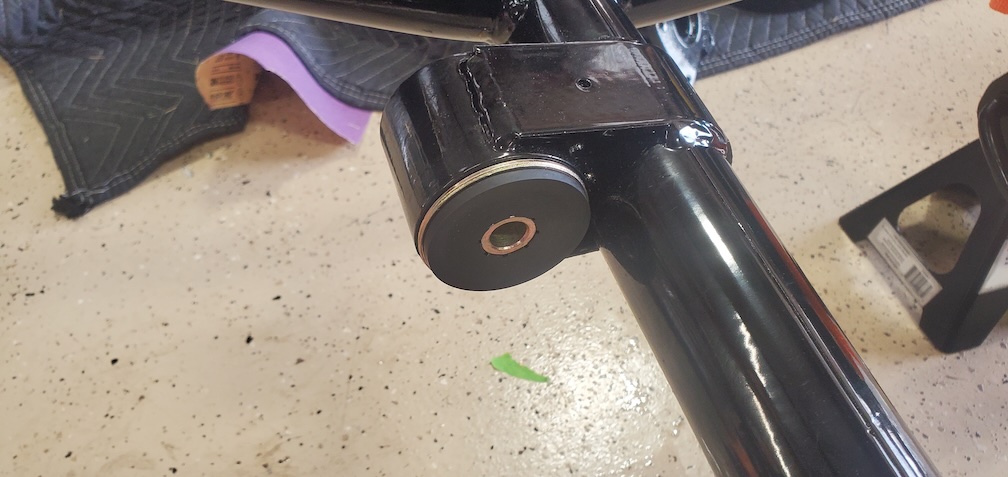
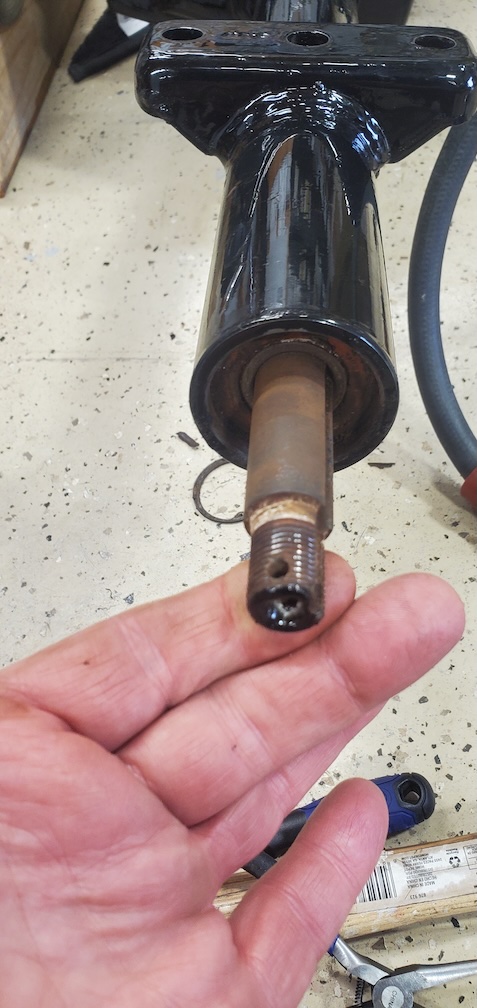
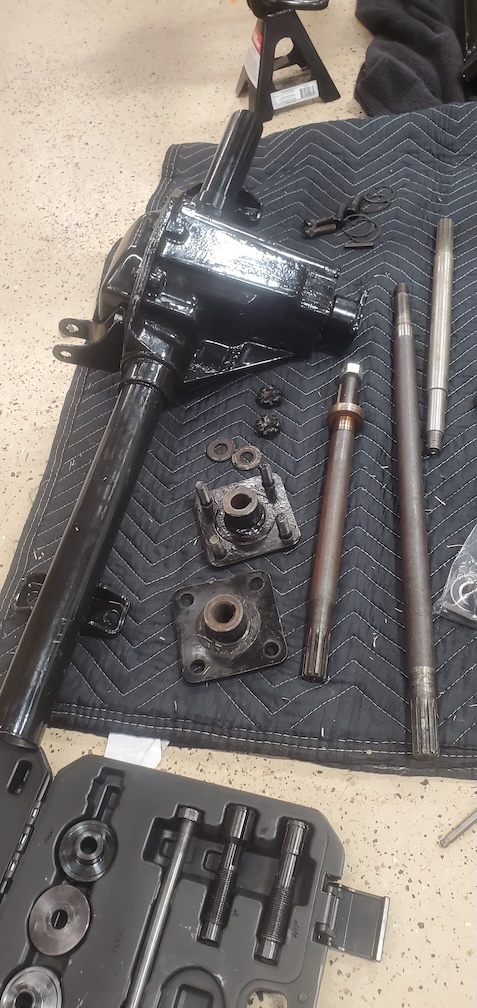
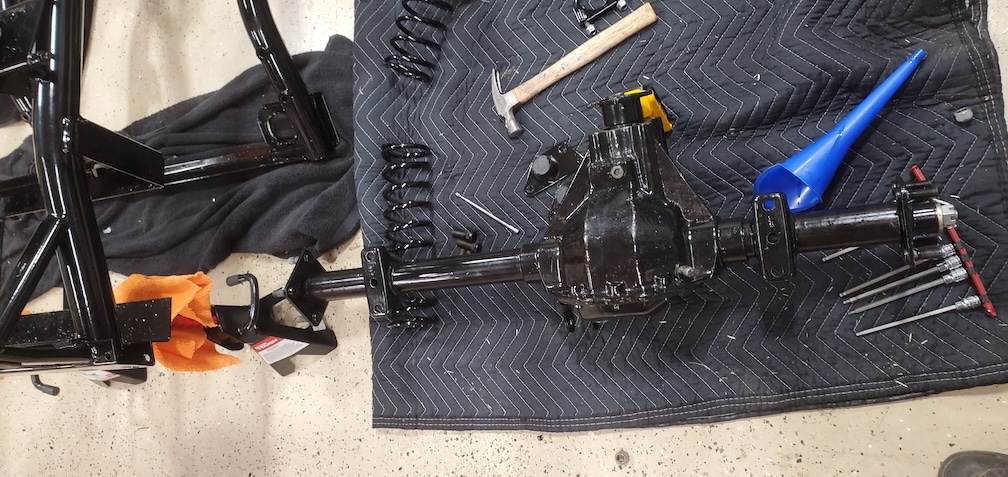
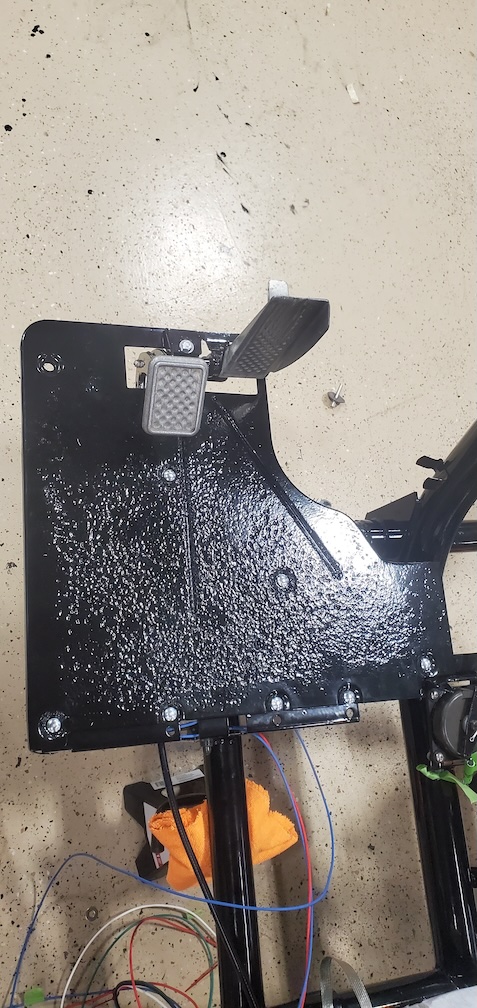
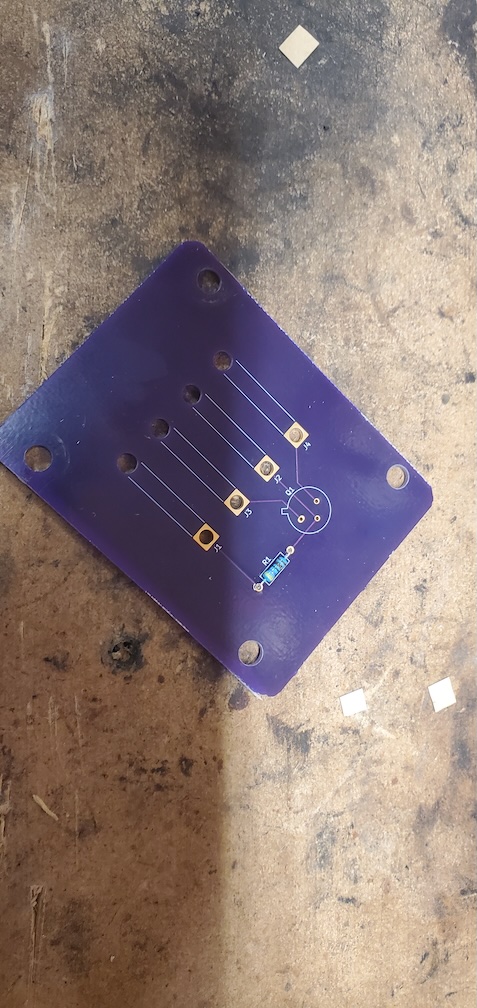
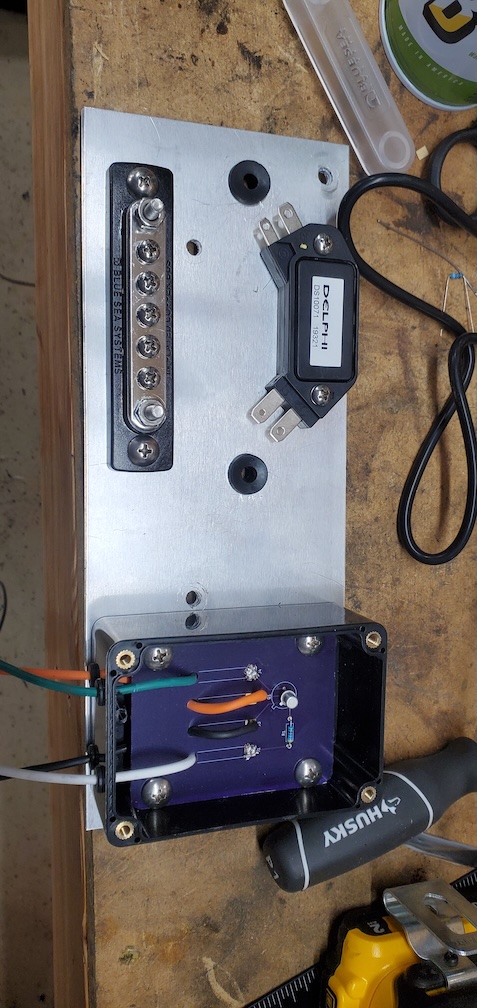
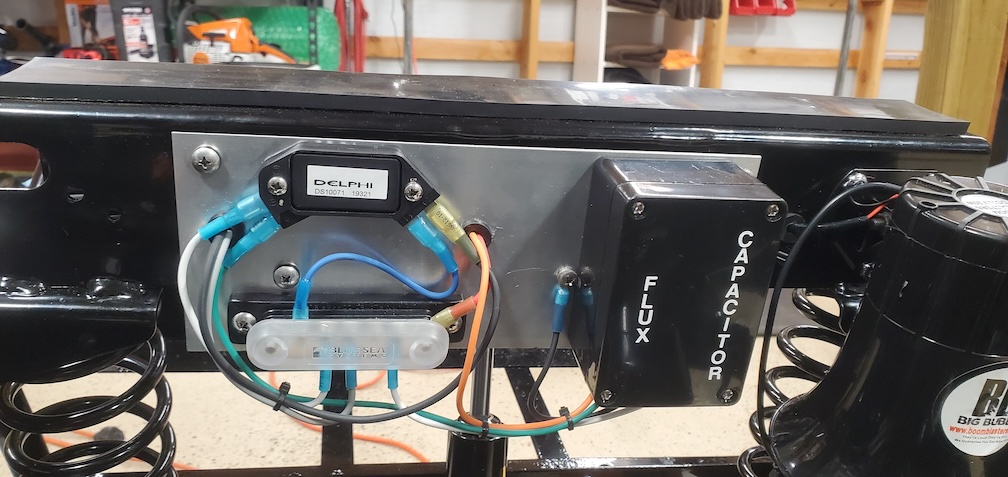
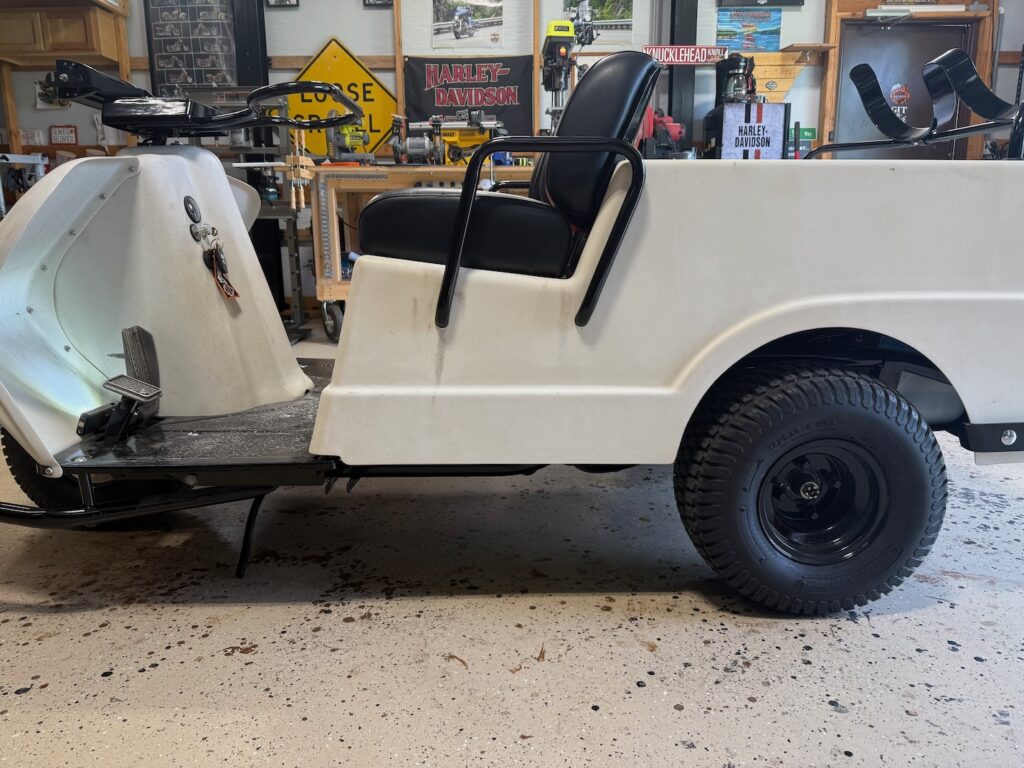
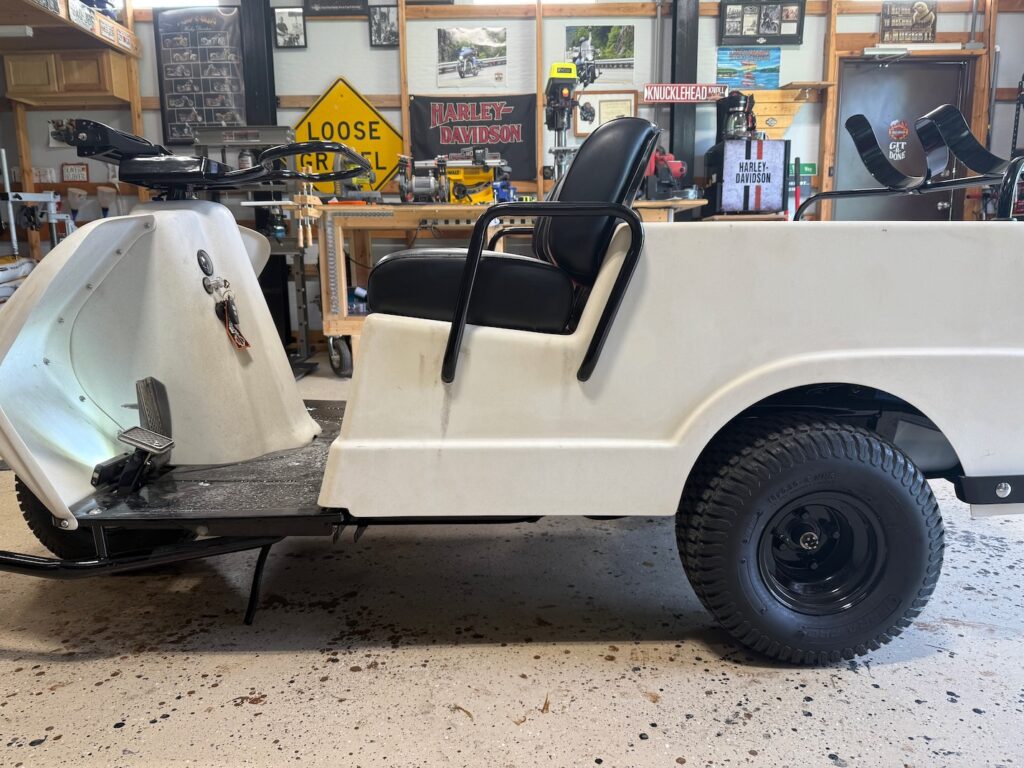
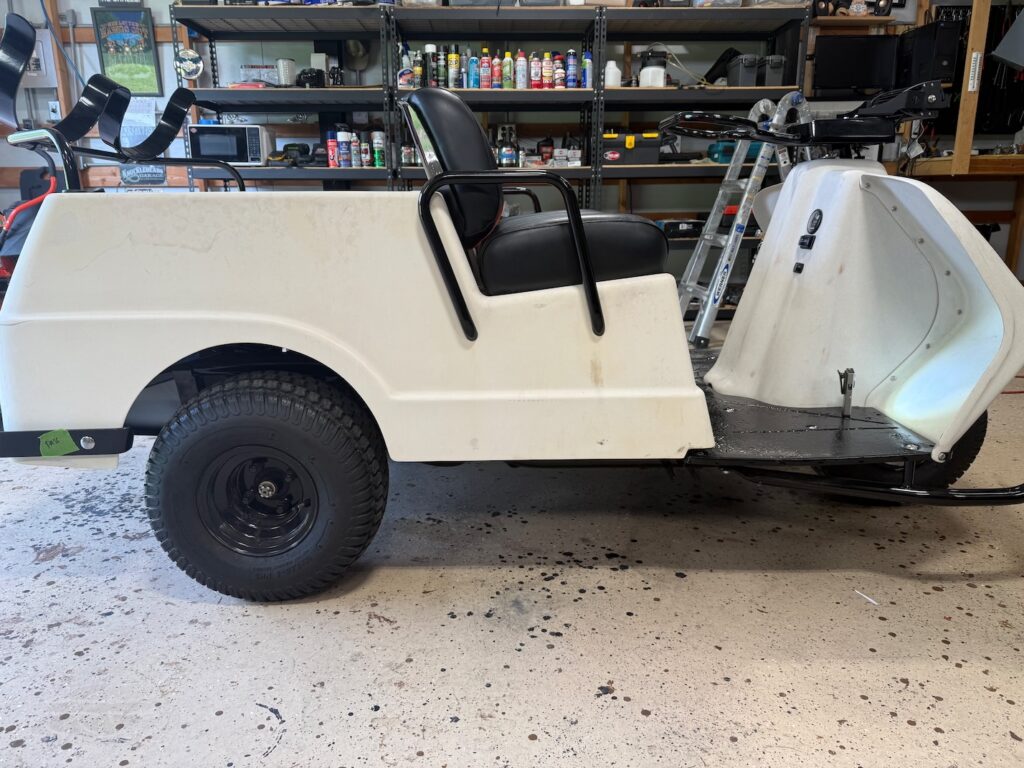
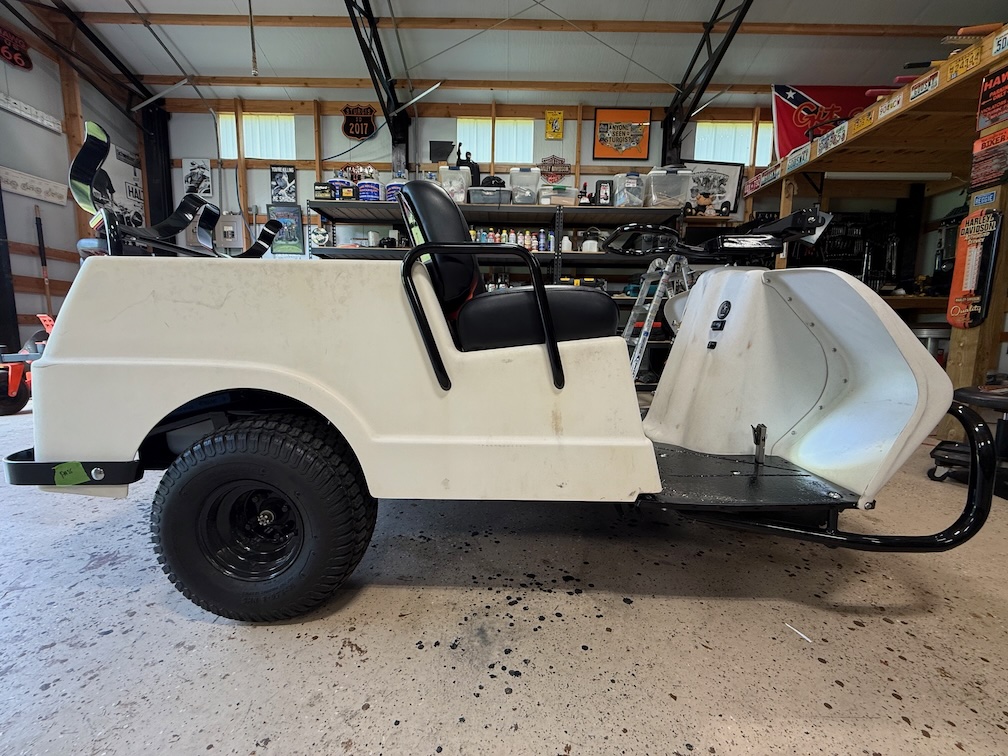
What you’re looking at now is a true ground-up rebuild. Every part was disassembled, cleaned, repaired, or replaced—even down to the frame bushings. Everything was powder-coated. I tried to stay as original as possible, but I did build a custom printed circuit board for an HEI electronic ignition conversion. I even labeled the waterproof housing the “Flux Capacitor”—it just felt right for an ’80s cart. After testing, I found the original points setup worked remarkably well, so I switched back to points for authenticity, keeping the HEI as a backup in case I get tired of adjusting them every season.
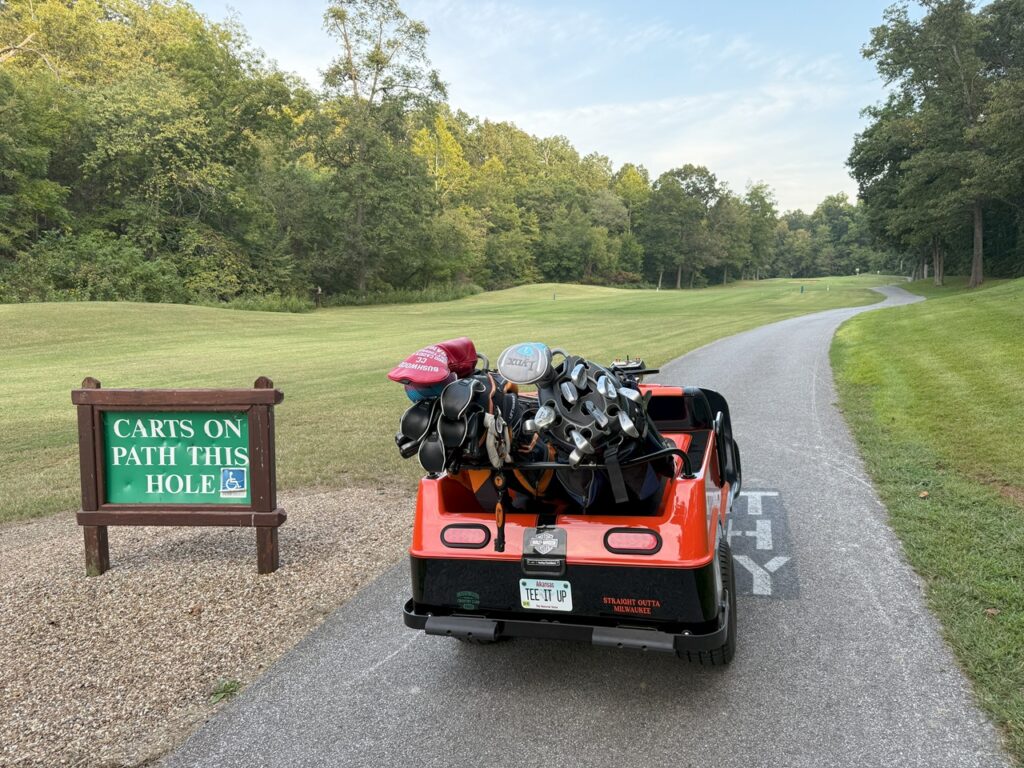
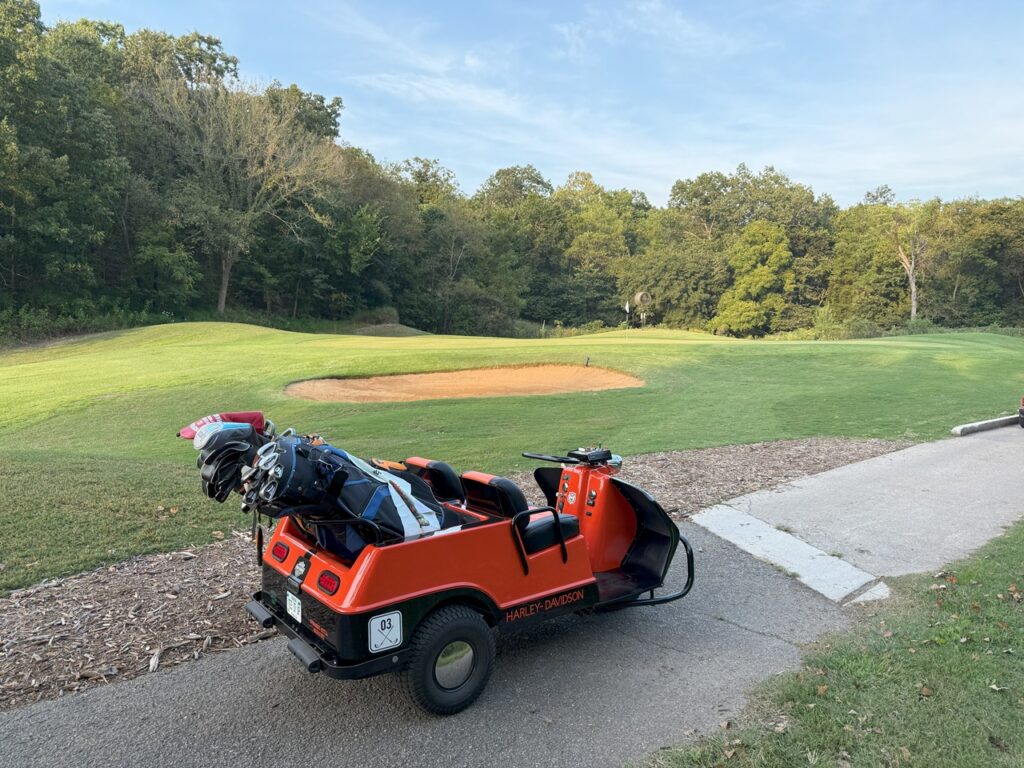
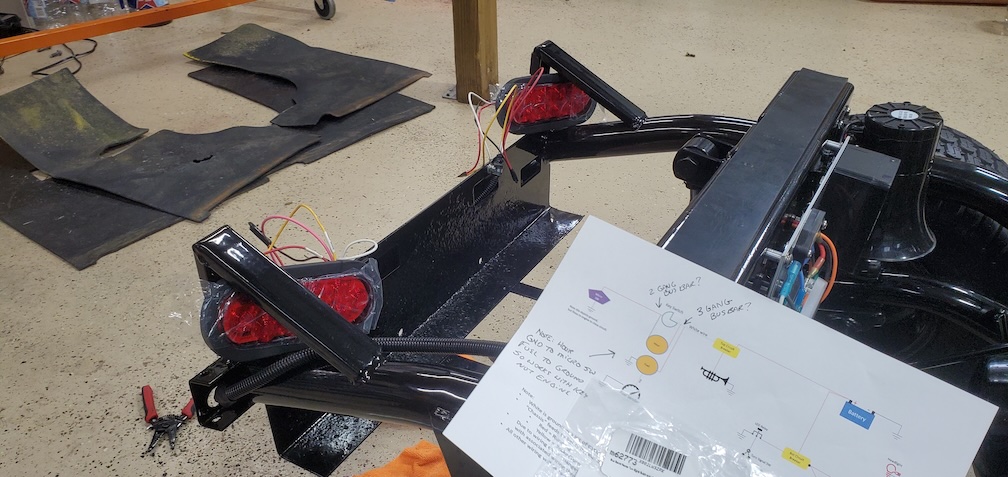
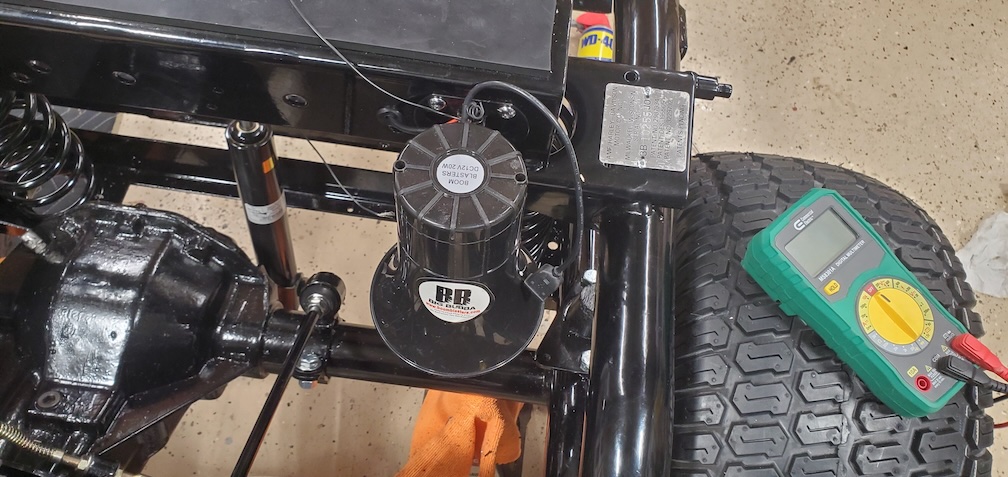
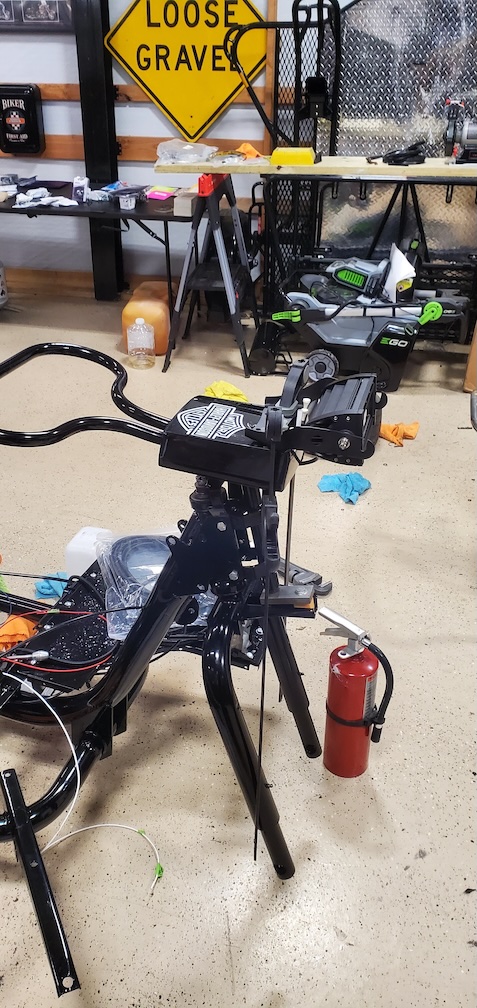
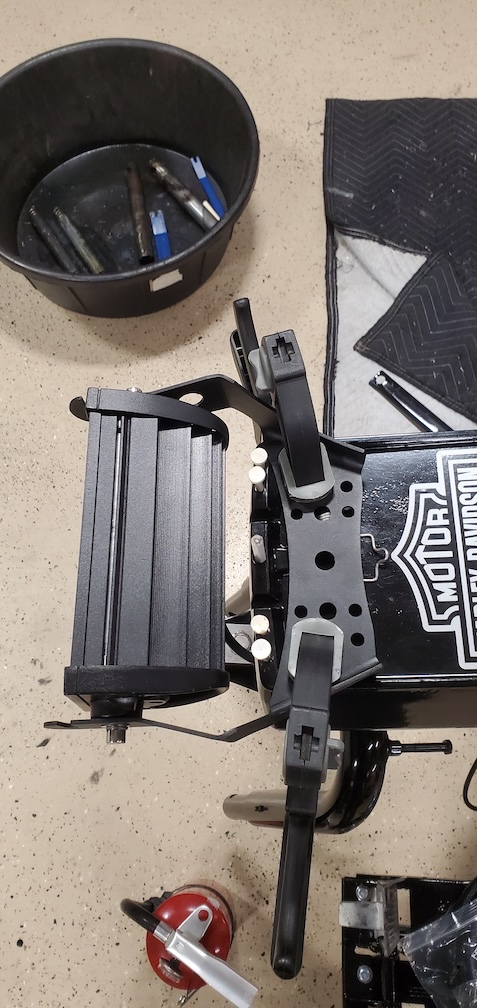
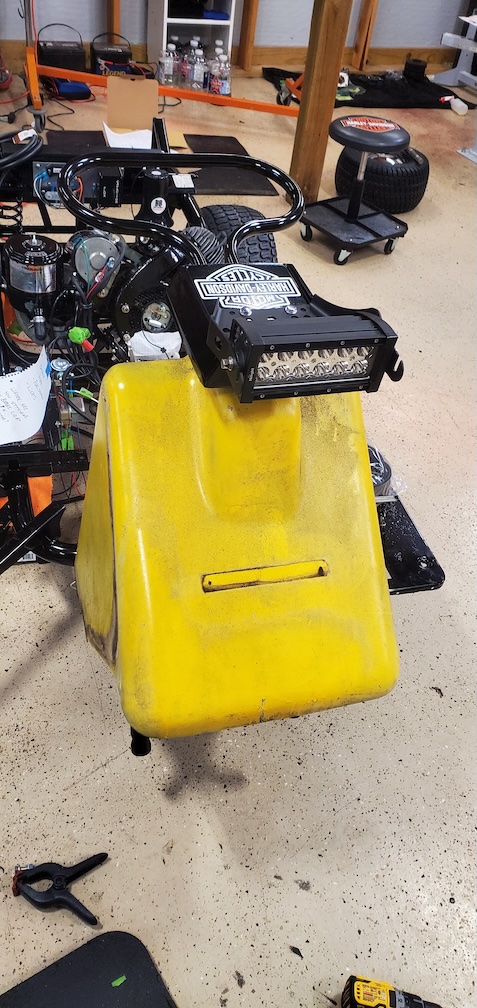
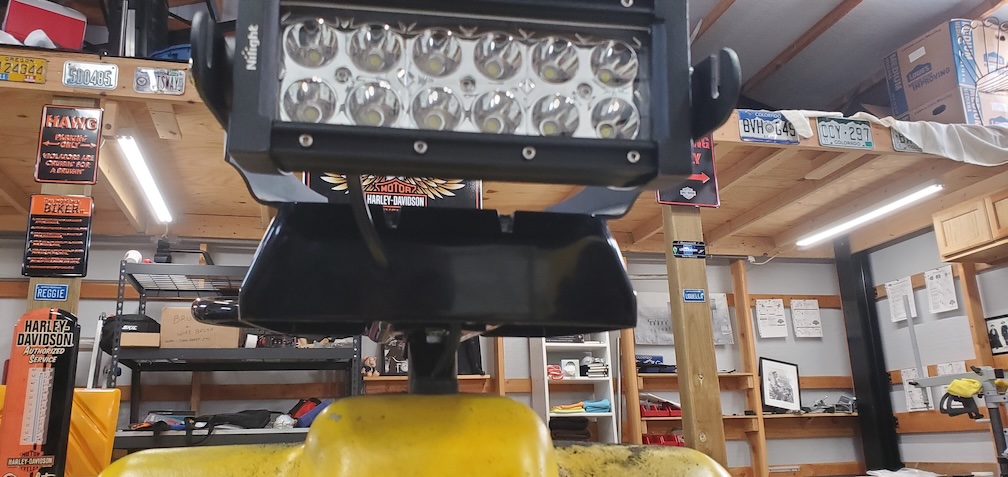
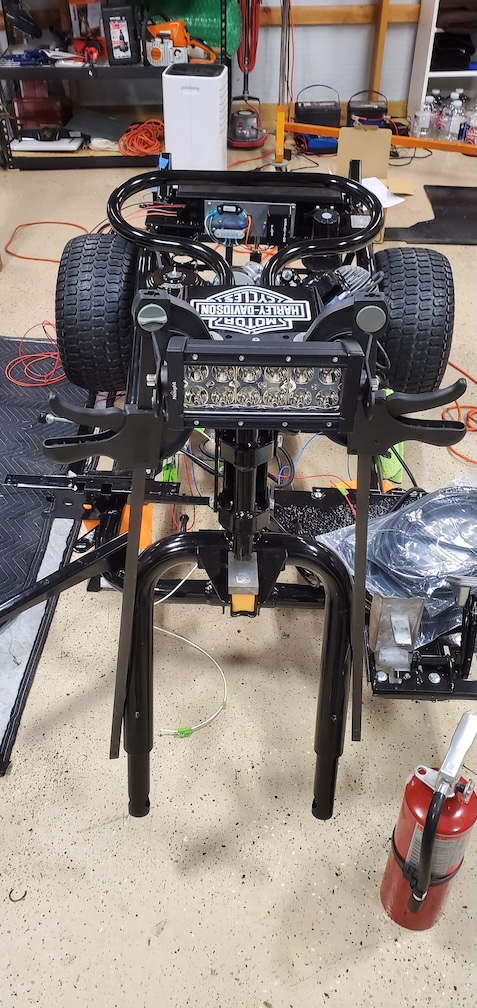
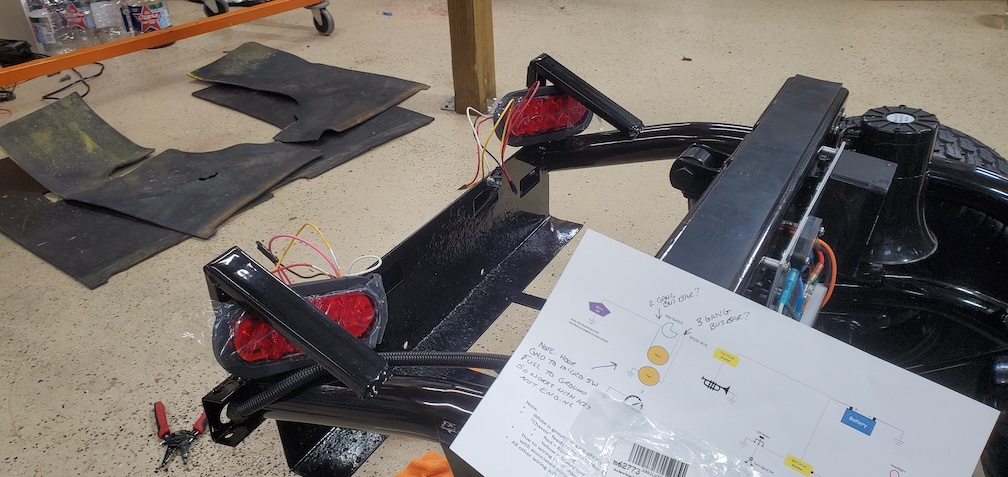
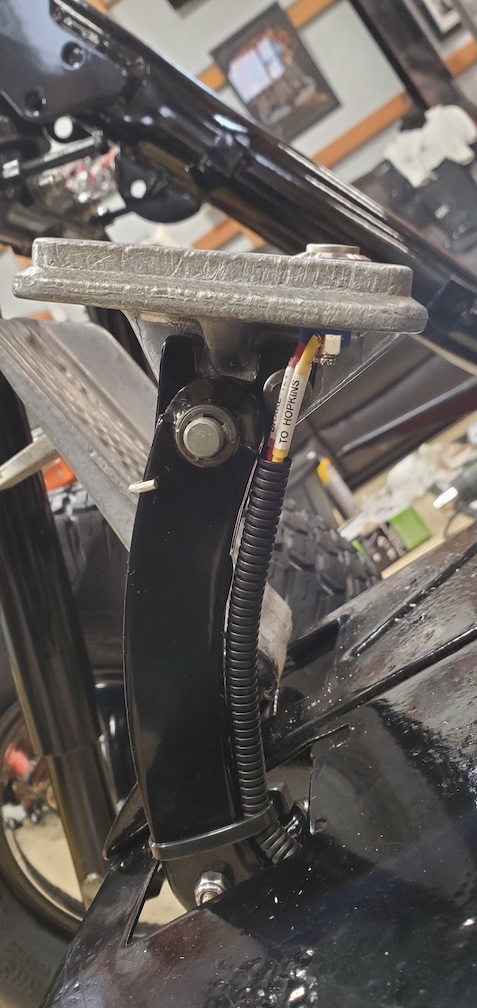
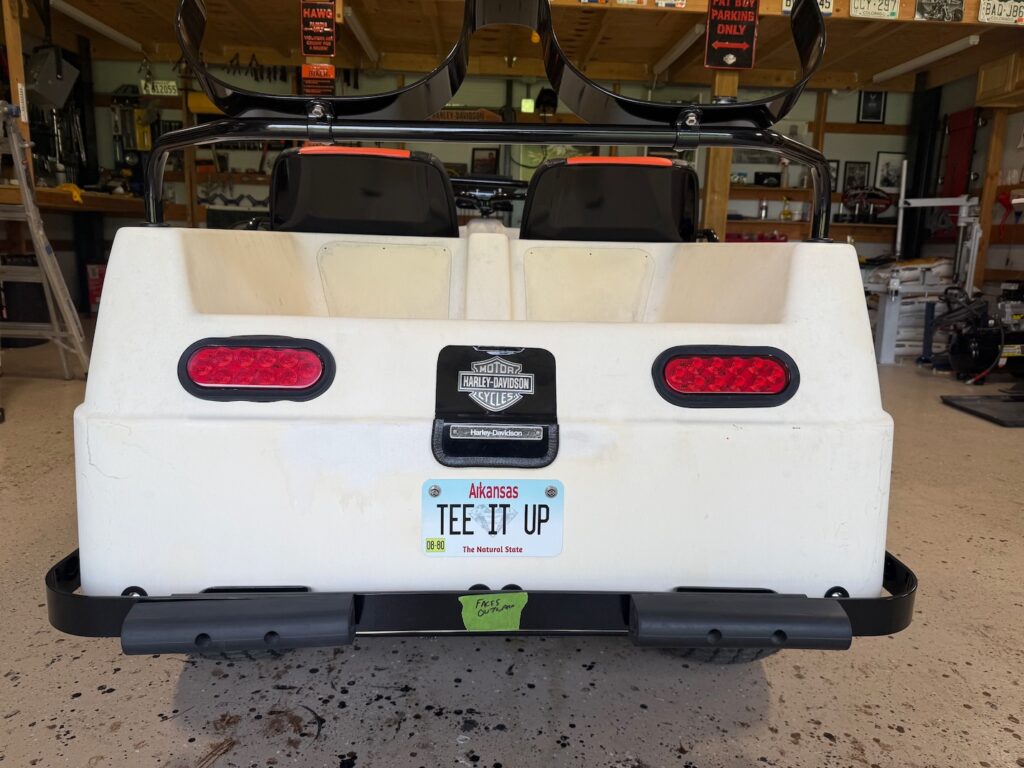
I also added a few modern upgrades: a fuel gauge, hour meter, and lights with turn signals. Who knows? I might even take it on the road one day instead of sticking to cart paths. And yes—I know the bumper isn’t correct for a 1980 model. That year didn’t have an external bumper, just an internal guard plate. But I fabricated a custom earlier-style bumper for better fiberglass protection and added rubber bump pads. All it takes is one golfer with a few too many beers coming in hot behind me at the tee box and forgetting to hit the brakes—and I’d rather be safe than sorry.
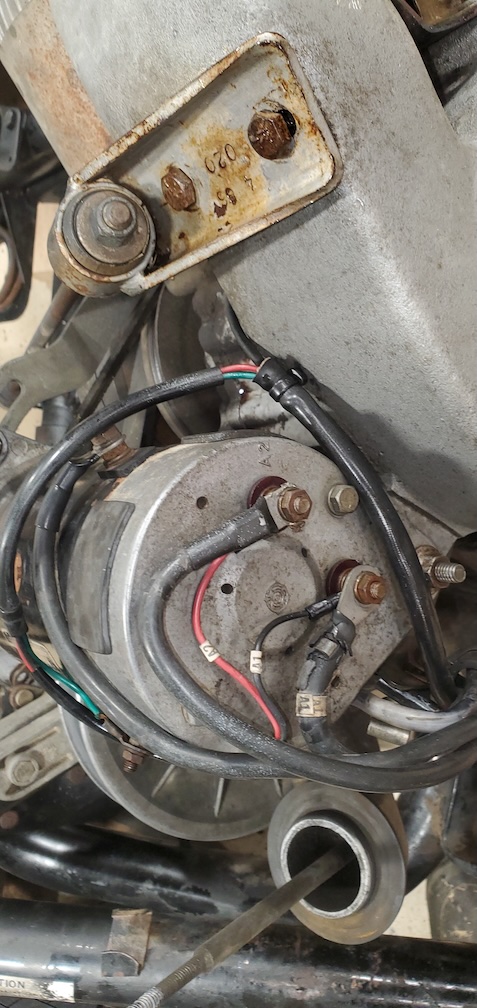
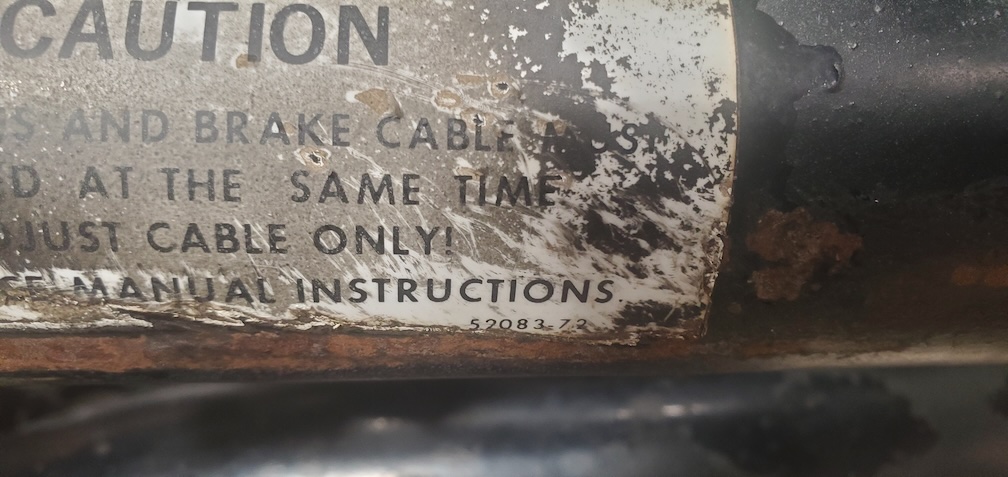
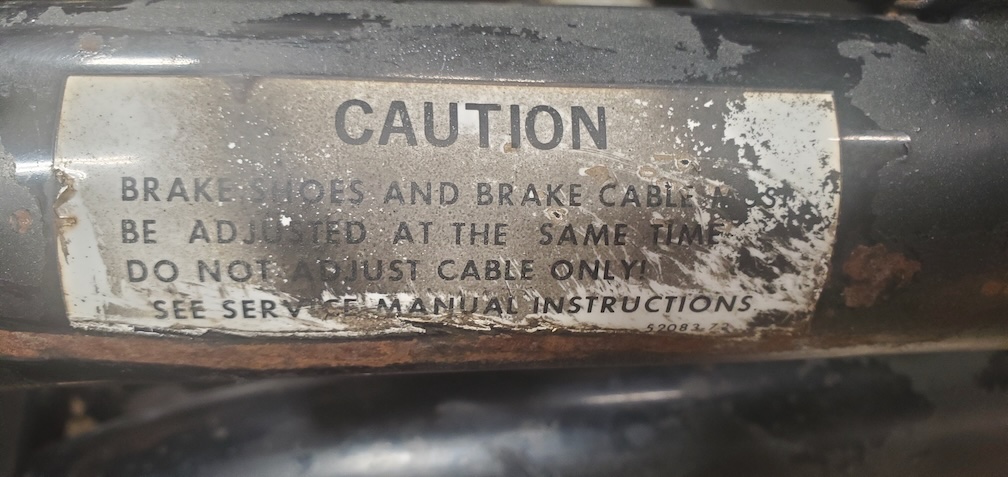
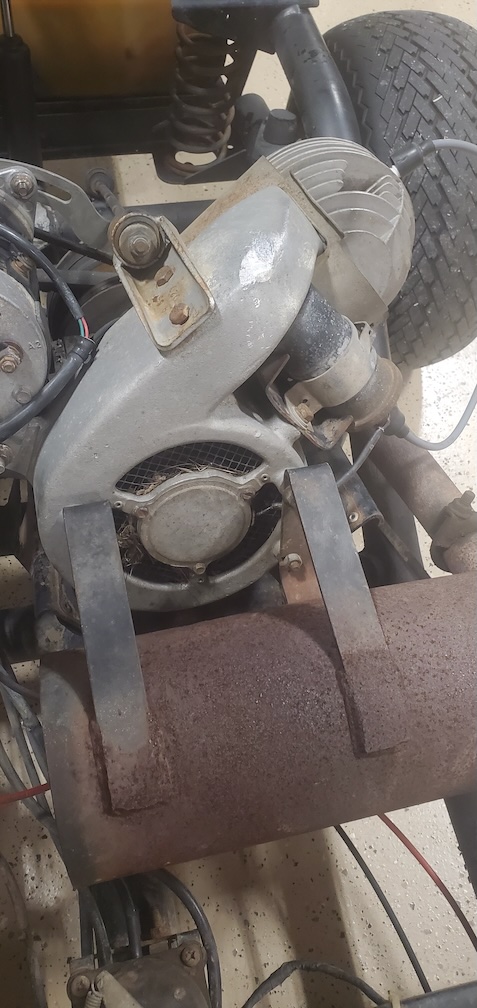
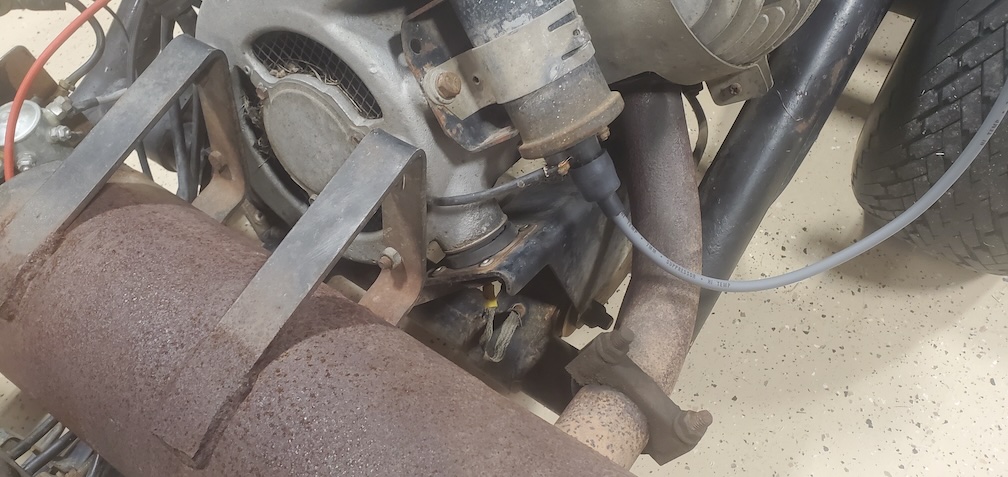
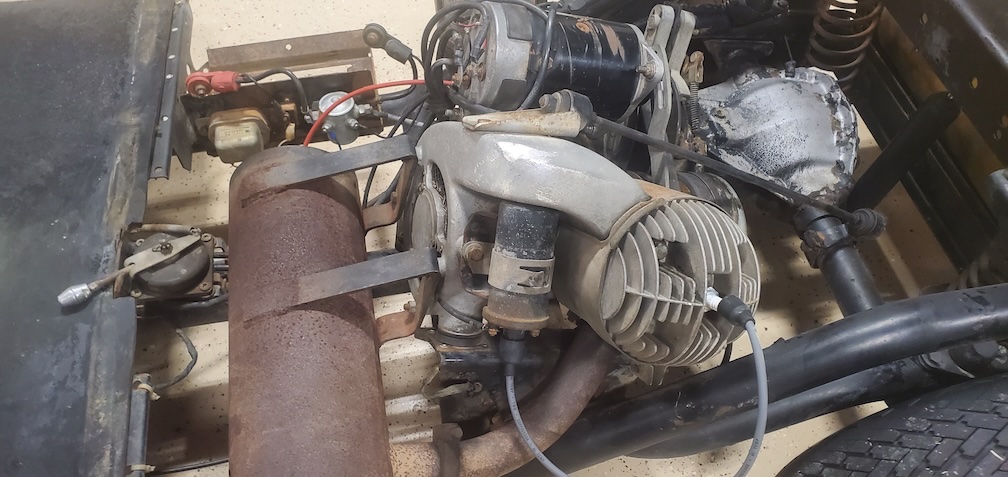
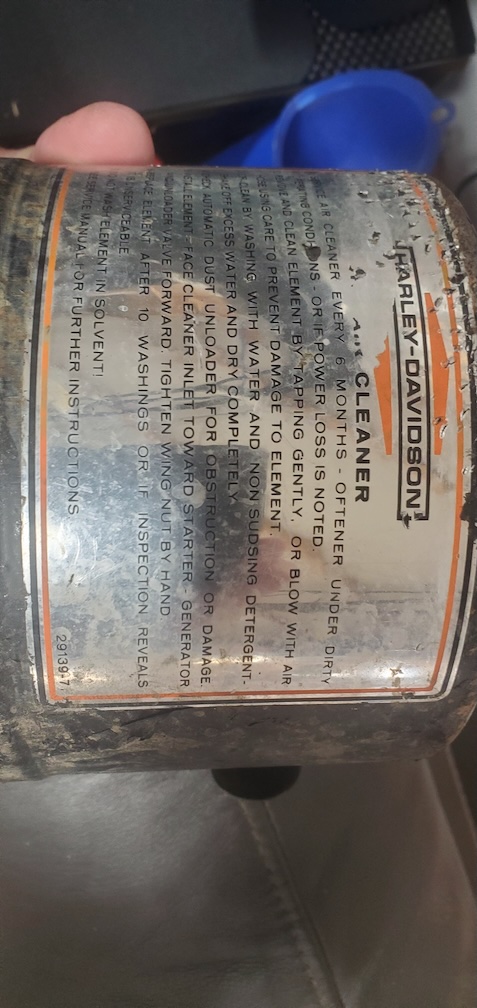
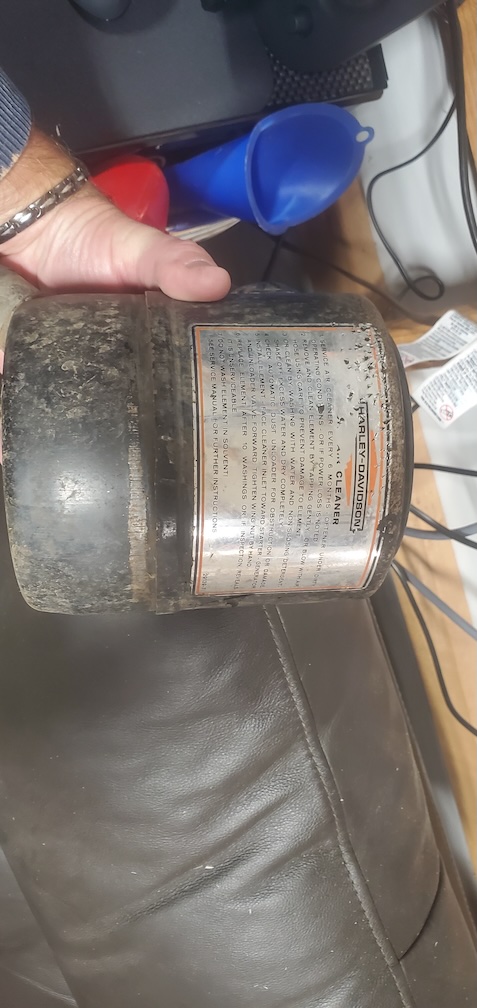
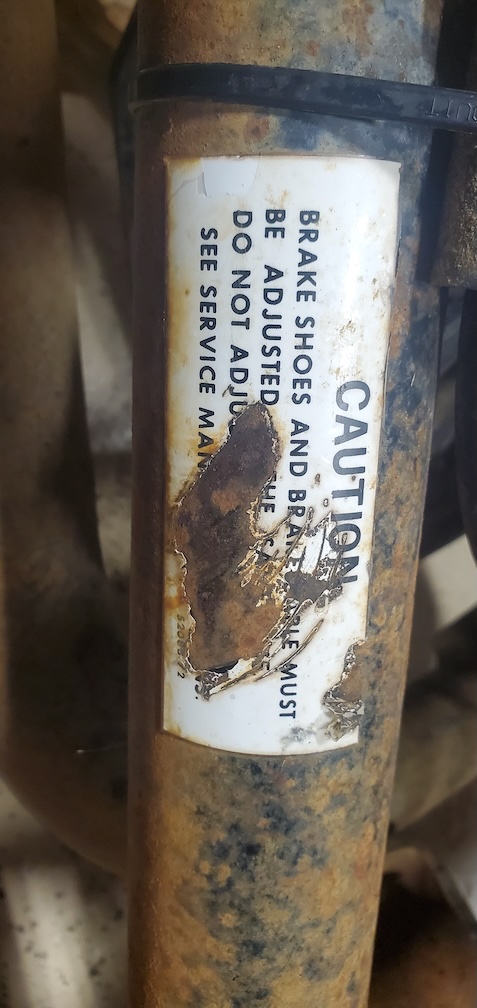
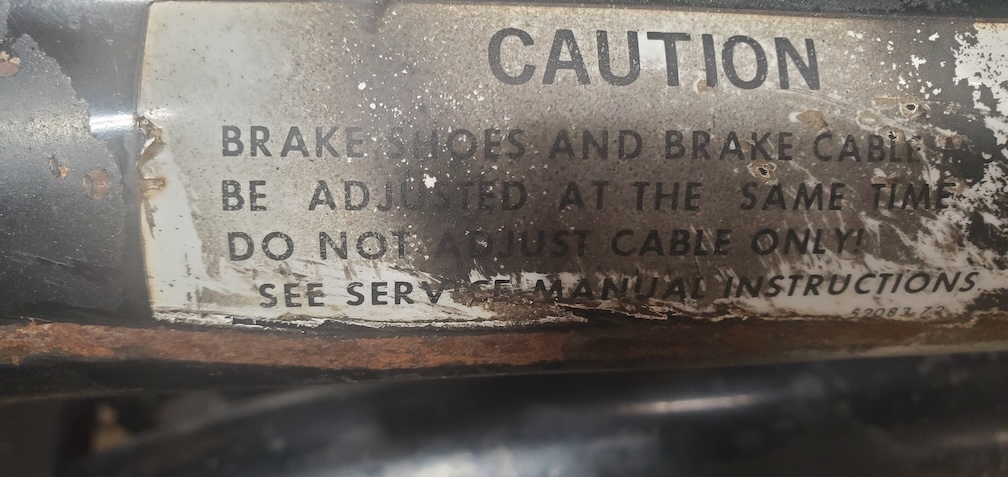
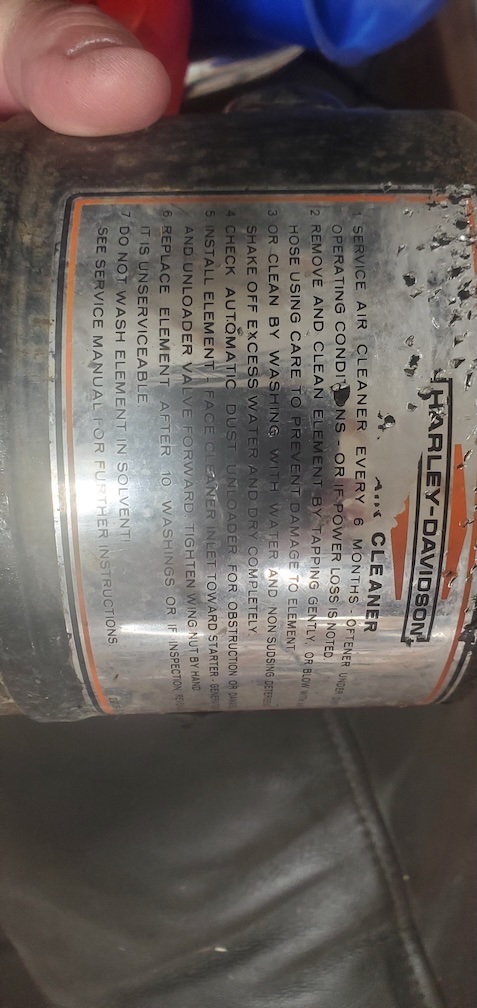
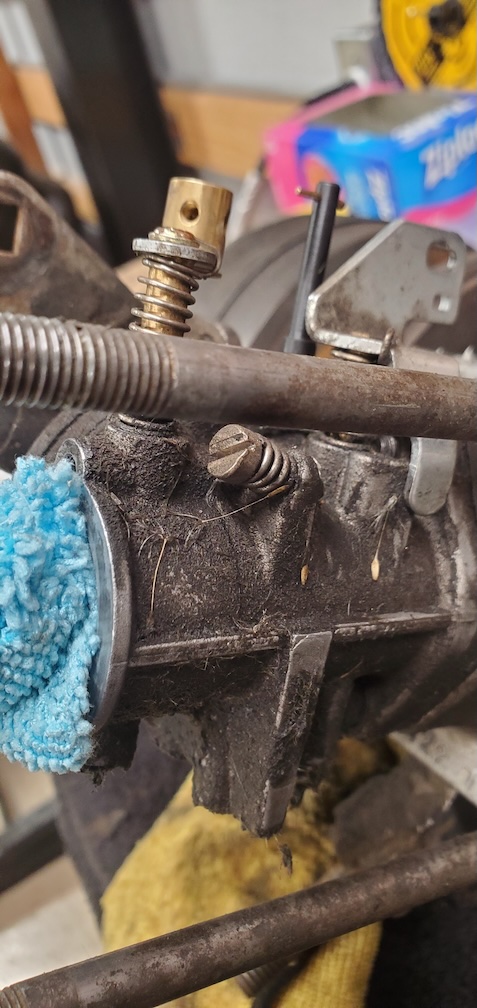
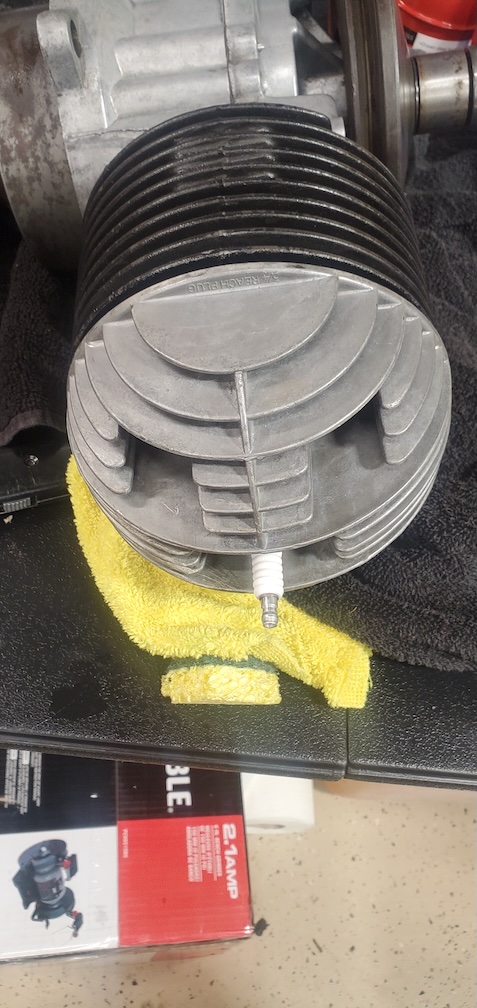
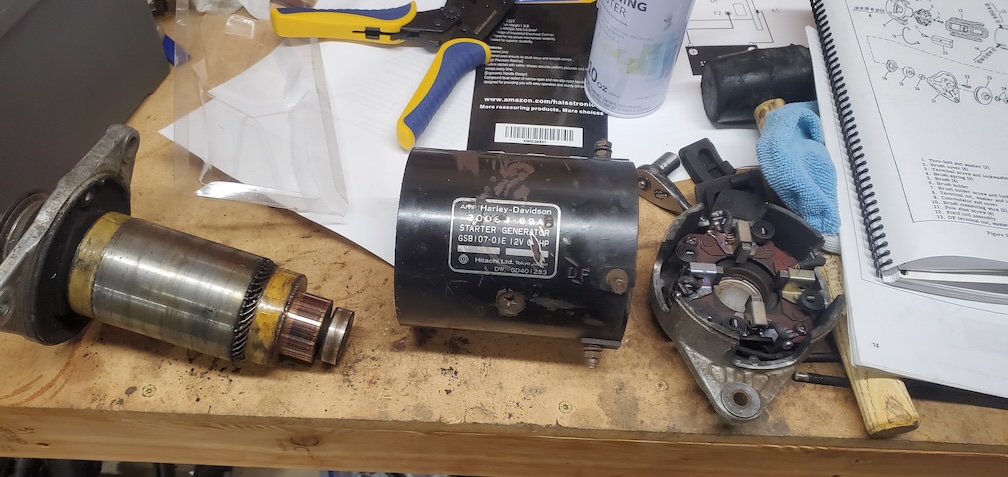
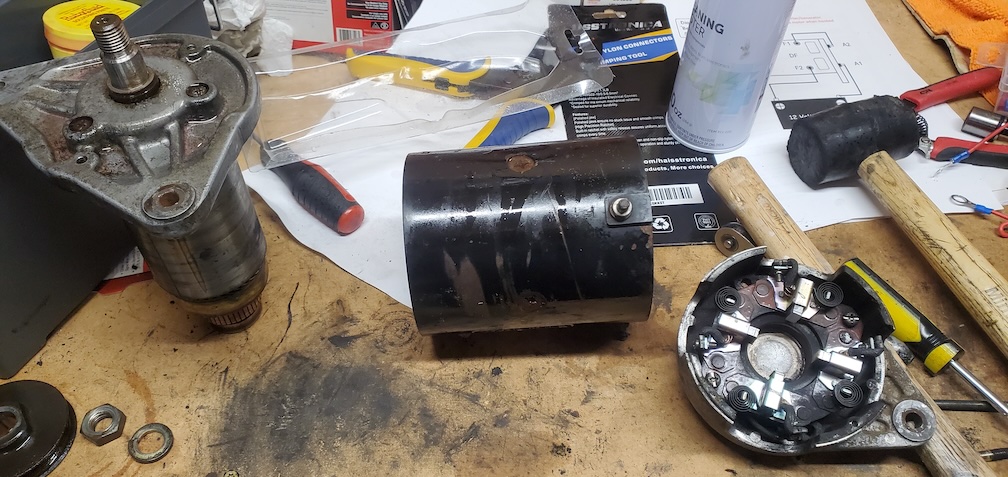
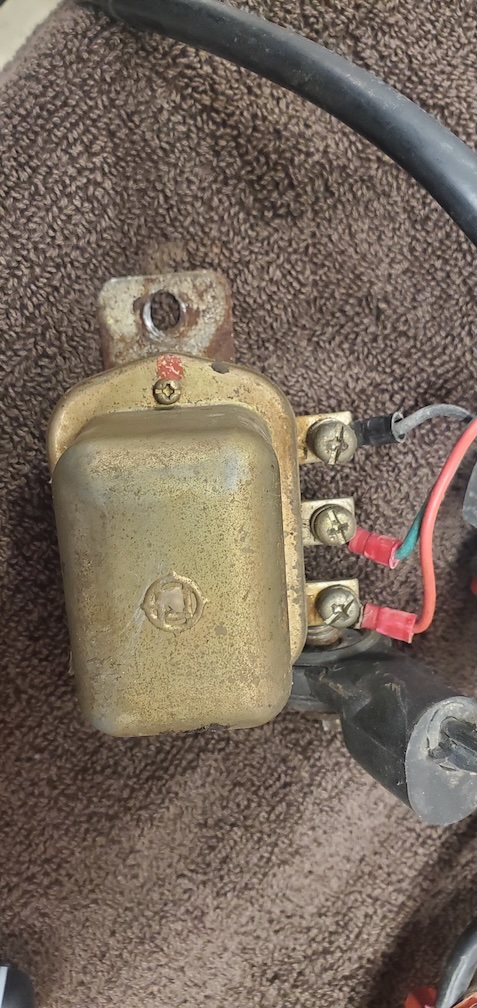
The engine was completely rebuilt, and I installed new brushes in the starter-generator. I sourced a brand-new Tillotson carburetor from Ireland because the Amazon knockoffs didn’t cut it. Some original parts, like the air cleaner, still had their original decals. I coated it with POR-15 but left the old, scratched-up decal intact. Not everything has to look brand new to be valuable—it adds character.
I did about 90% of the work myself, including most of the fiberglass repairs. Quick shoutout to Doug for the six-hour crash course he gave me on working with fiberglass. Back in the ’70s, Doug used to work on dune buggy bodies. These days, he fixes in-home bathtubs—so yeah, he knows a thing or two about fiberglass. When I reached out to him he said there was no way he would take on the job, but that I could buy six hours of his time to teach me how to do it.
The only major part I didn’t handle was the paint job. The painter specifically asked me not to mention his name or business. He said he was willing to take this one on, but after he finished, he made it clear this would be his last Harley cart. Can’t say I blame him. Honestly, if I ever mess with fiberglass again, it’ll be under duress—like, “at gunpoint” level. Getting it prepped and paint-ready took an insane amount of time and effort – 400 hours and that’s likely underestimating it.
While I’m handing out credit, I’ve got to give a big shoutout to Todd Cutchins—the go-to guy for anything Harley-Davidson golf cart-related. He’s not only the most knowledgeable person I’ve ever met on these old rigs, he also has a field full of them. Todd hooked me up with seat backs from a donor cart, which I had powder coated. Then I had a guy in Florida recreate the seats using the original design—I just couldn’t bring myself to slap boat seats on this build.
What really made a difference was Todd’s willingness to walk out into his field, snap photos, and show me exactly how things were originally put together. That kind of help was priceless. He’s also the only person I know who still has brand-new oil seals for the front forks. The guy’s a legend.
You can find Todd in the forums or on Facebook—he’s a great resource for hard to find parts.
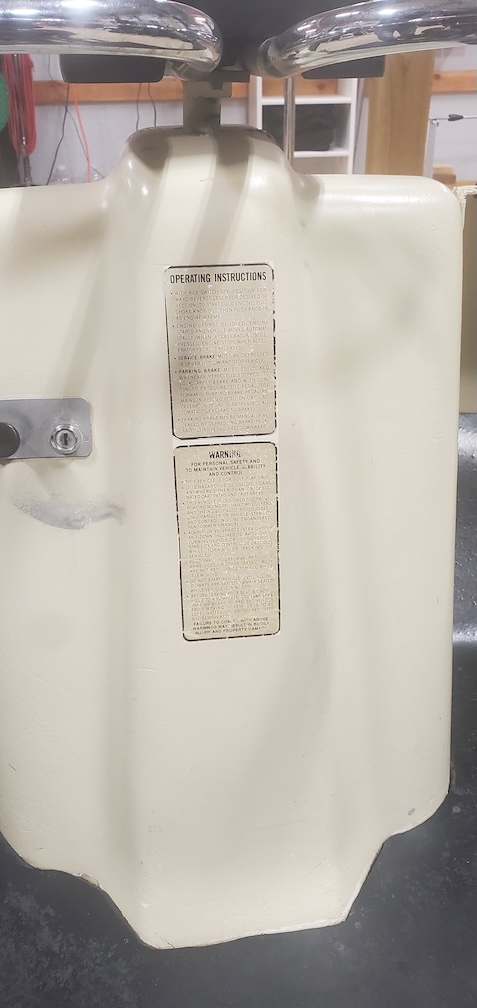
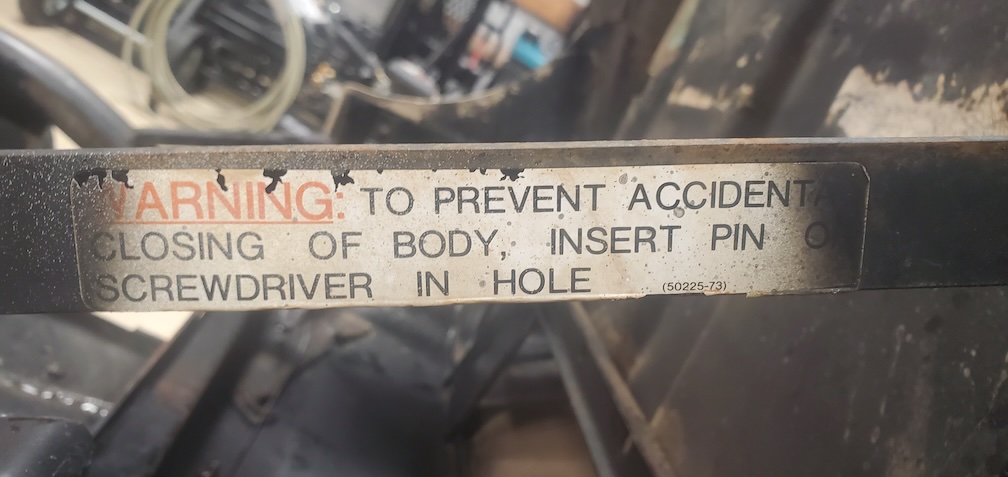
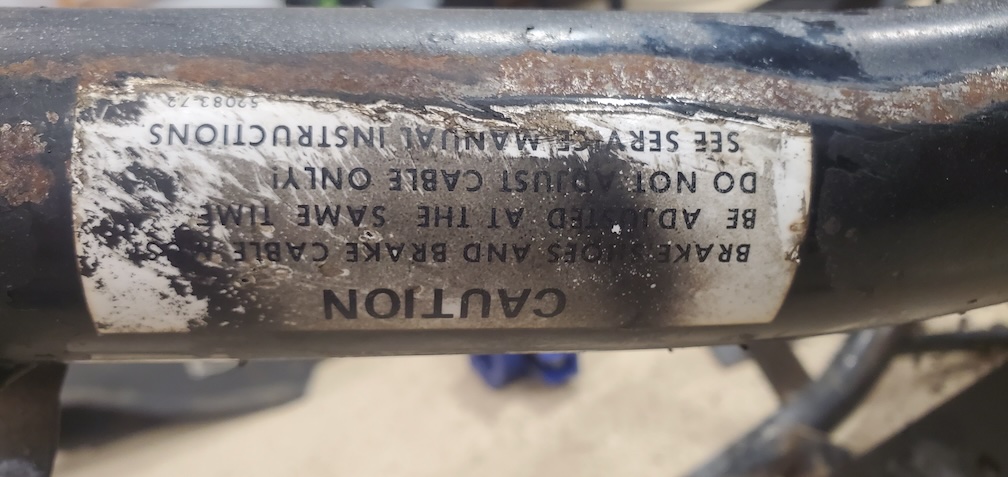
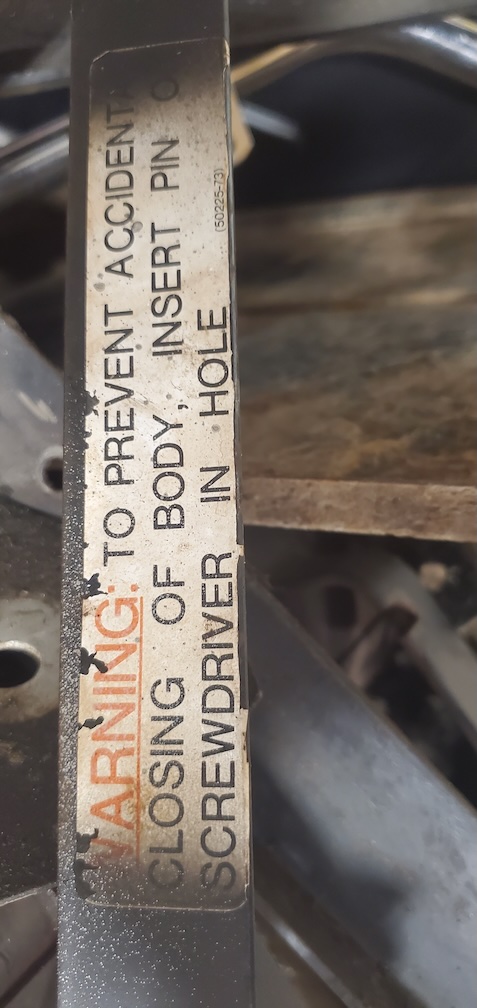
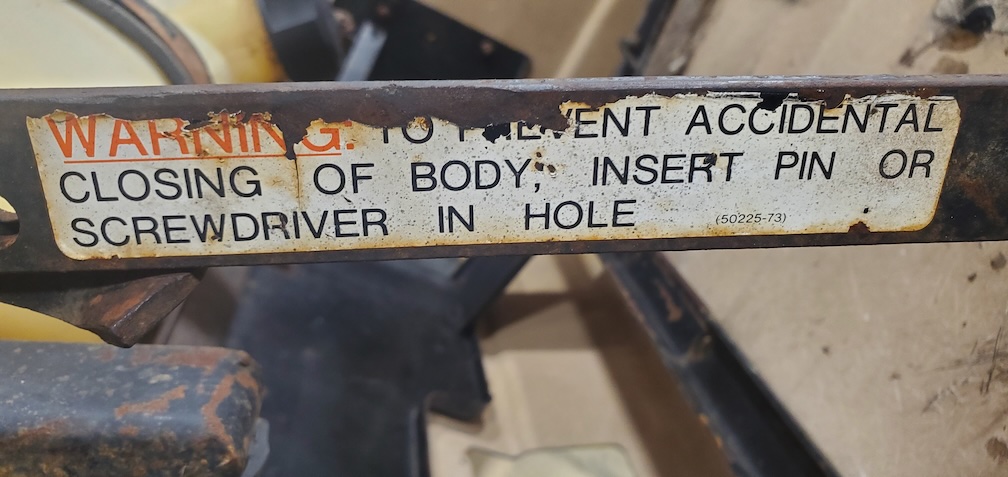
I paid attention to the little details too. Most of the factory decals are accurate reproductions placed in their original spots. One exception: the fuel door decal is NOS (new old stock). I actually have two fiberglass fuel doors—one perfect, one decent. Since they tend to crack over time, I had a fabricator recreate one in metal. It will stand the test of time.
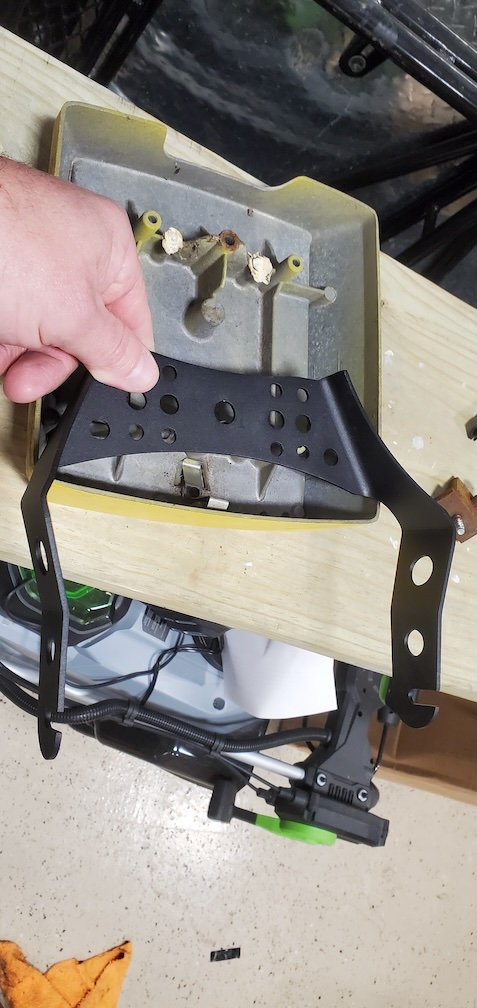
Believe it or not, it even has an original rear bag hoop —nearly impossible to find. I spotted this jewel in the background of a photo from a guy selling an older Harley motorcycle. My eye caught the familiar shape sticking out of the dirt in the background of the bike photo. These hoops are rare because once carts left the golf course and ended up on farms, the bag holders were usually ripped off to haul gear. Most were tossed or left to rust. Many carts got flipped over the years, cracking fiberglass and bending the hoops beyond repair.
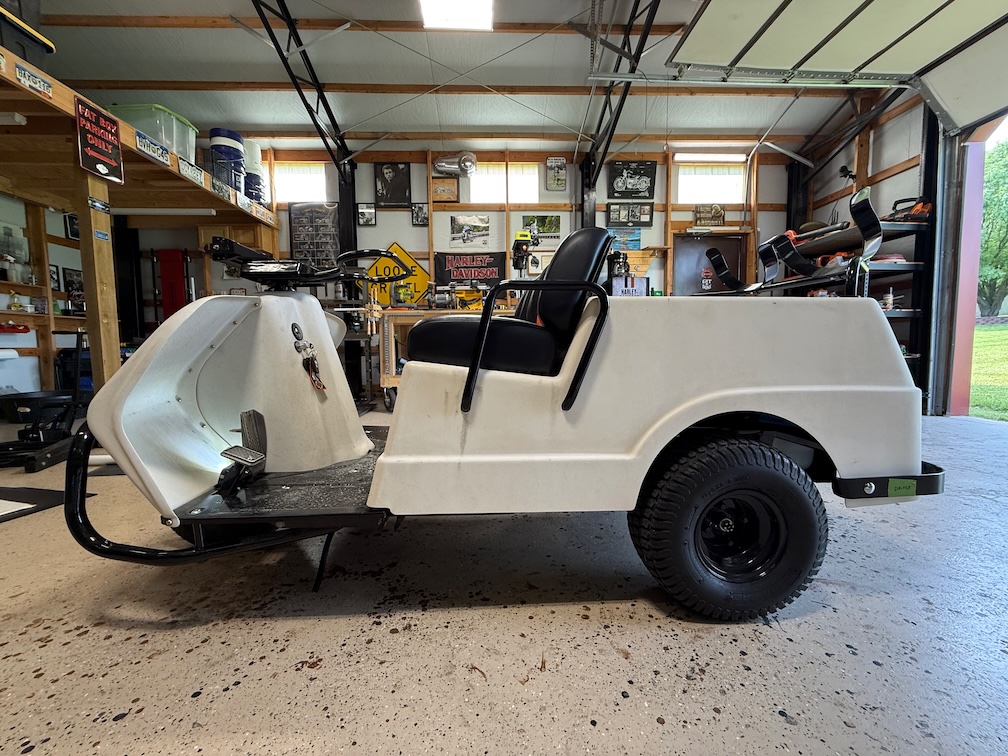
This project was a true labor of love. I’m proud to say this Harley cart is officially back to life—with the spirit of Milwaukee still rumbling underneath.
Tee it up!
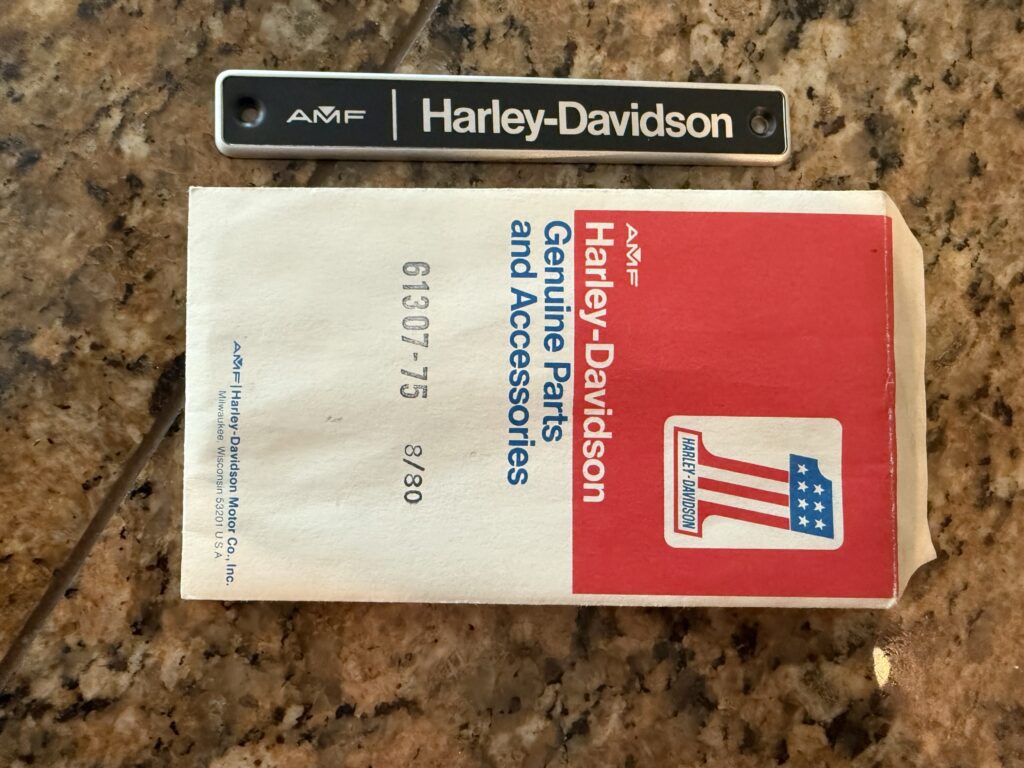
An Example of NOS (New Old Stock):
This is the plate that mounts on the fuel door—an incredibly hard part to find these days, but one that really adds the finishing touches to a build. I actually had one from what I believe was a ’76, but it didn’t have the AMF logo and was badly scratched and faded. This one, on the other hand, was made in August of 1980 and feels like the crown jewel of the build. Note the date on the envelope. August 1980 – the date I used on the faux Arkansas license plate!
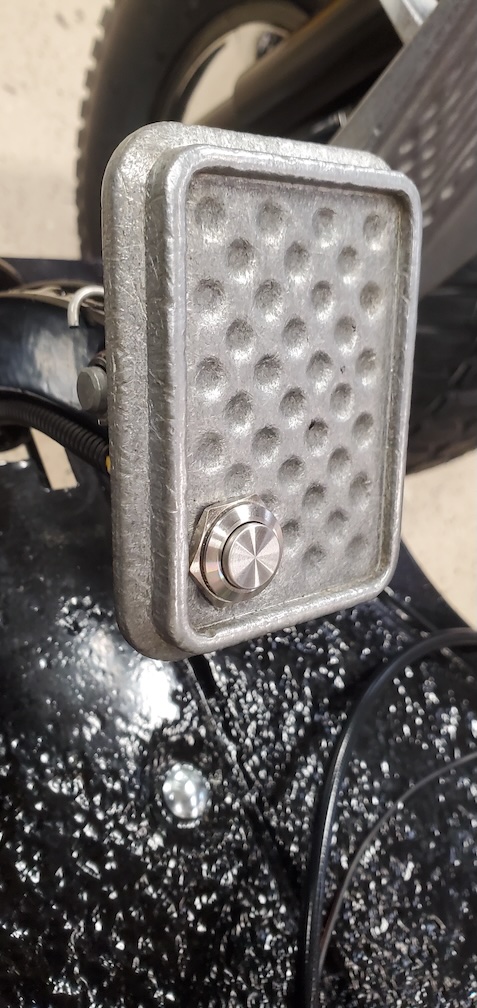
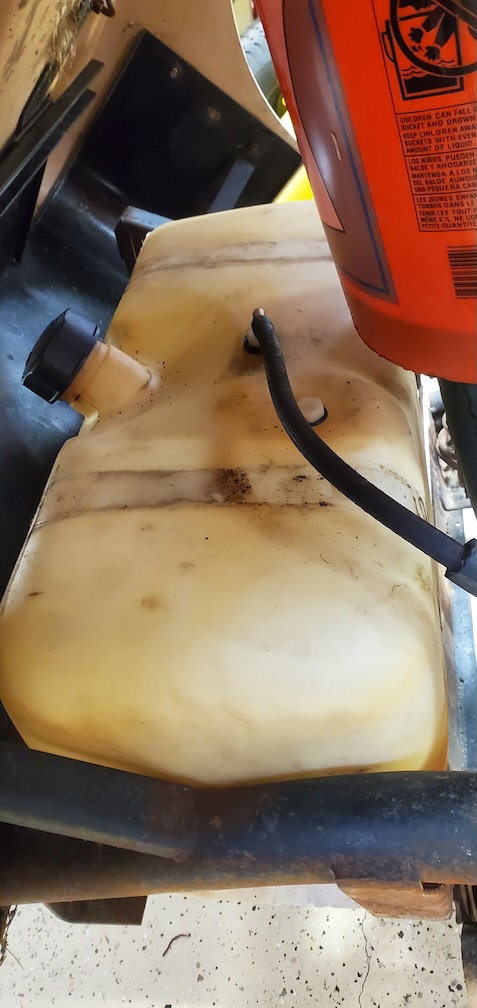
Before and After Gallery
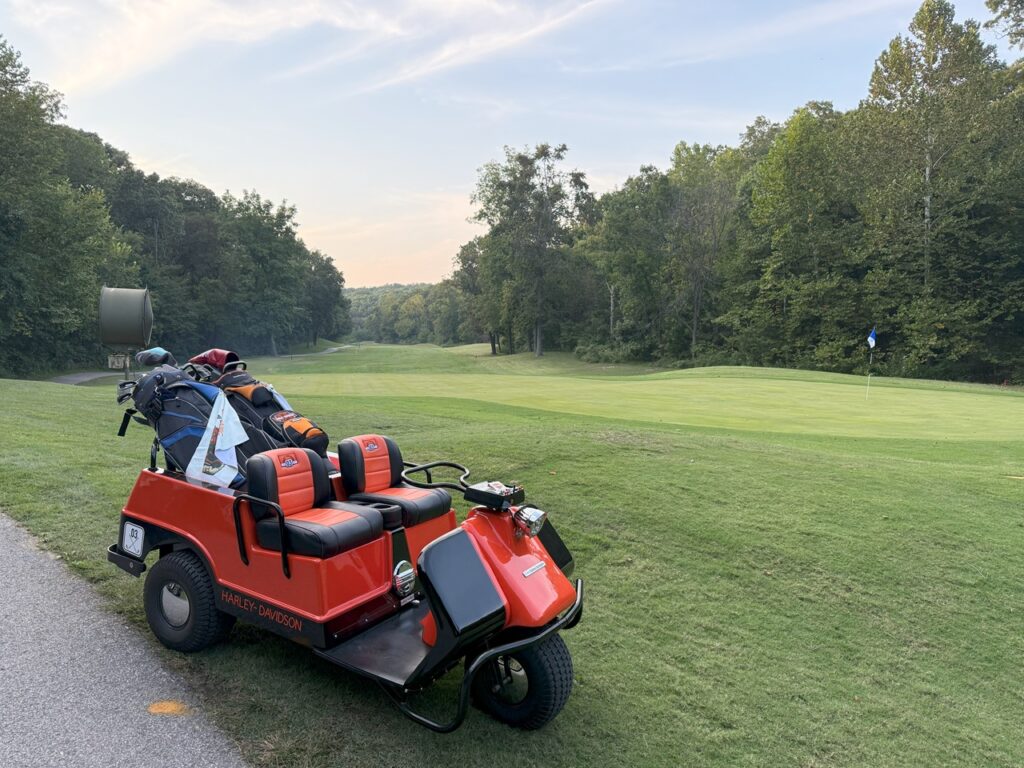
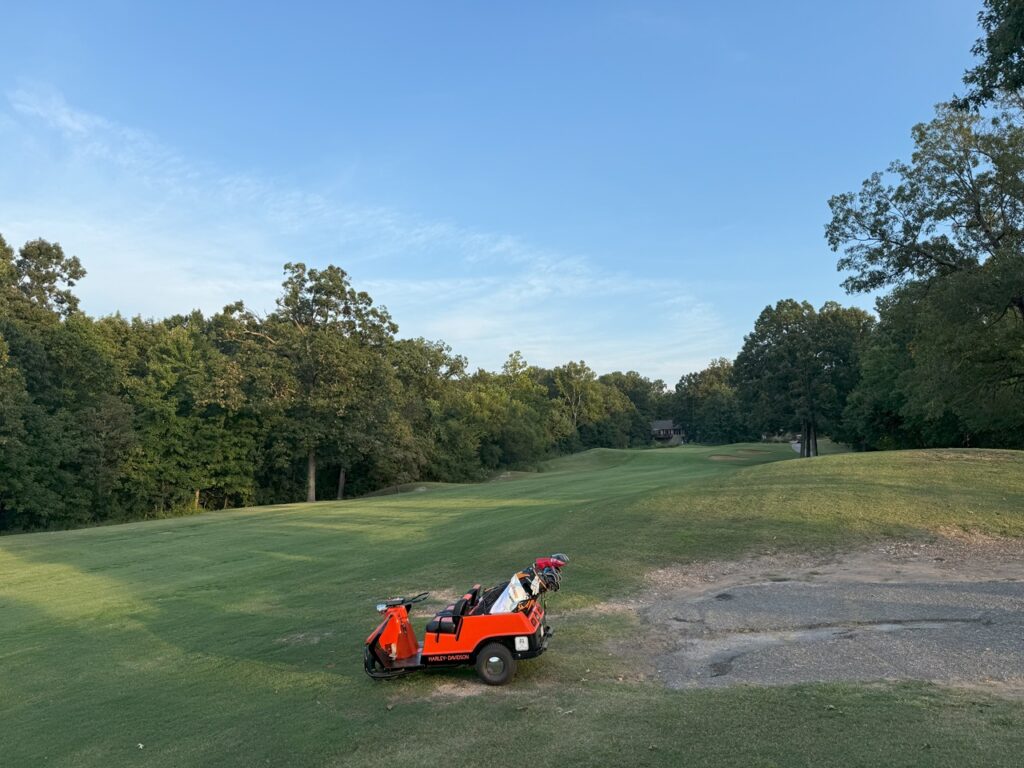
Finished:
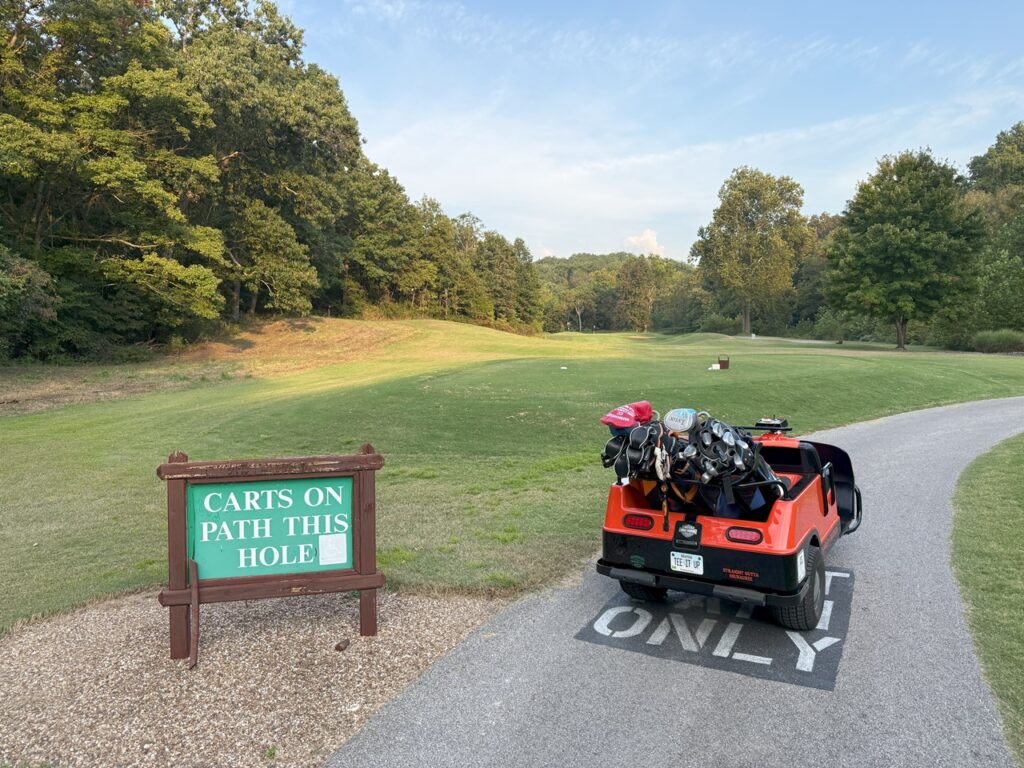
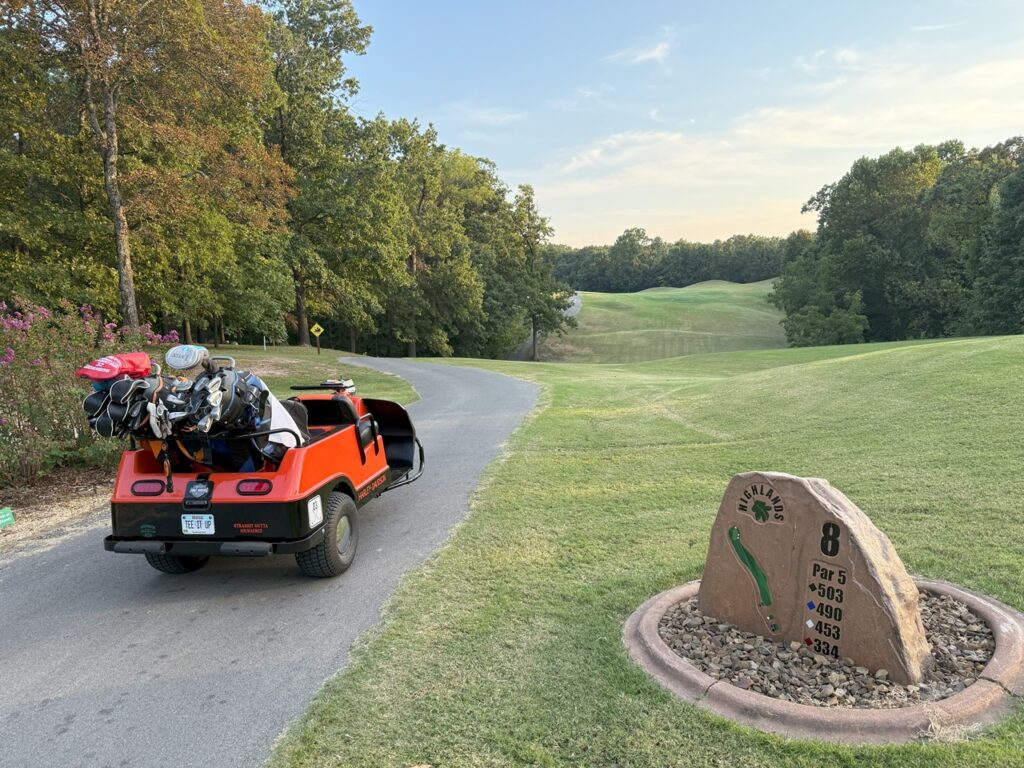
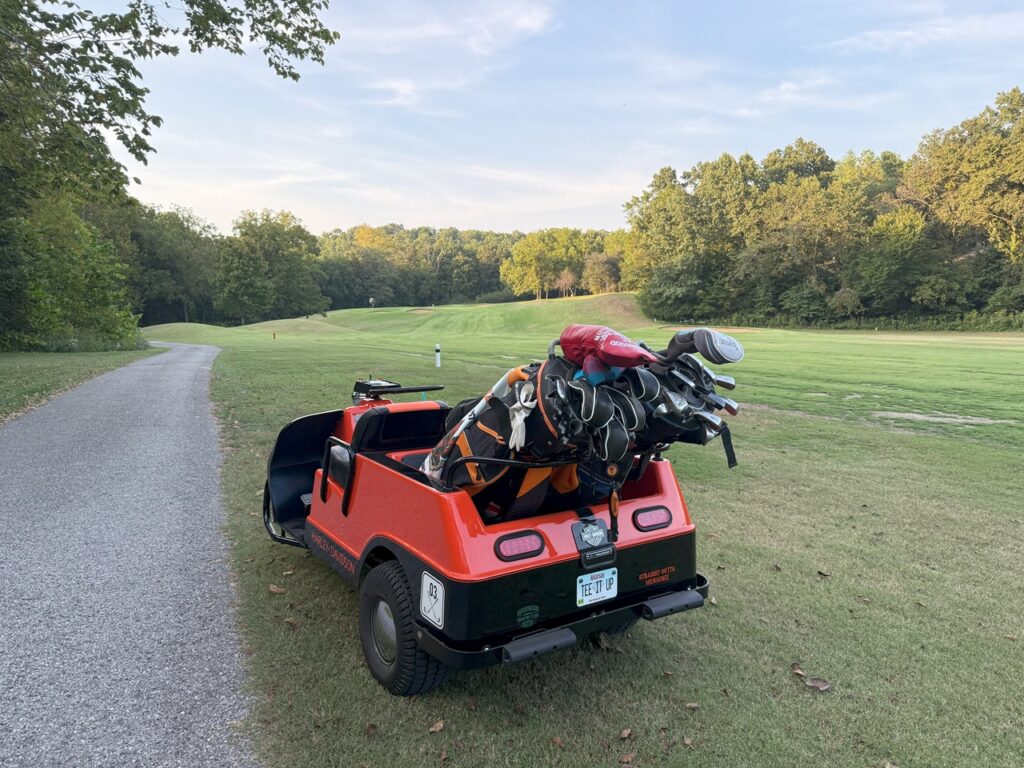
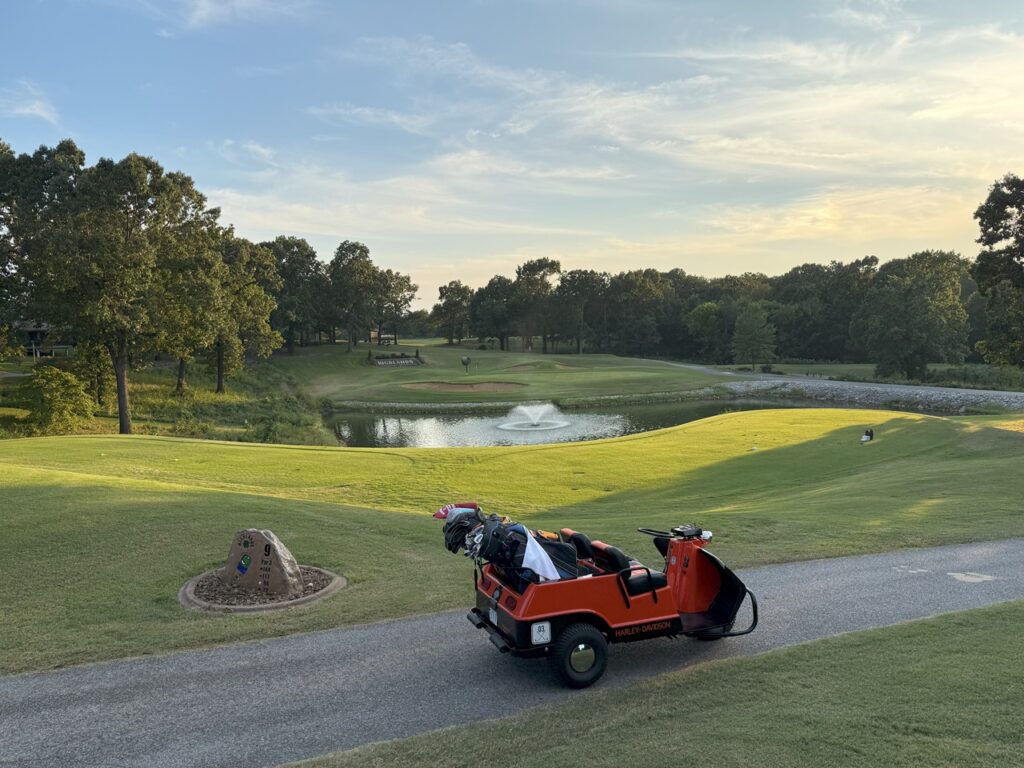
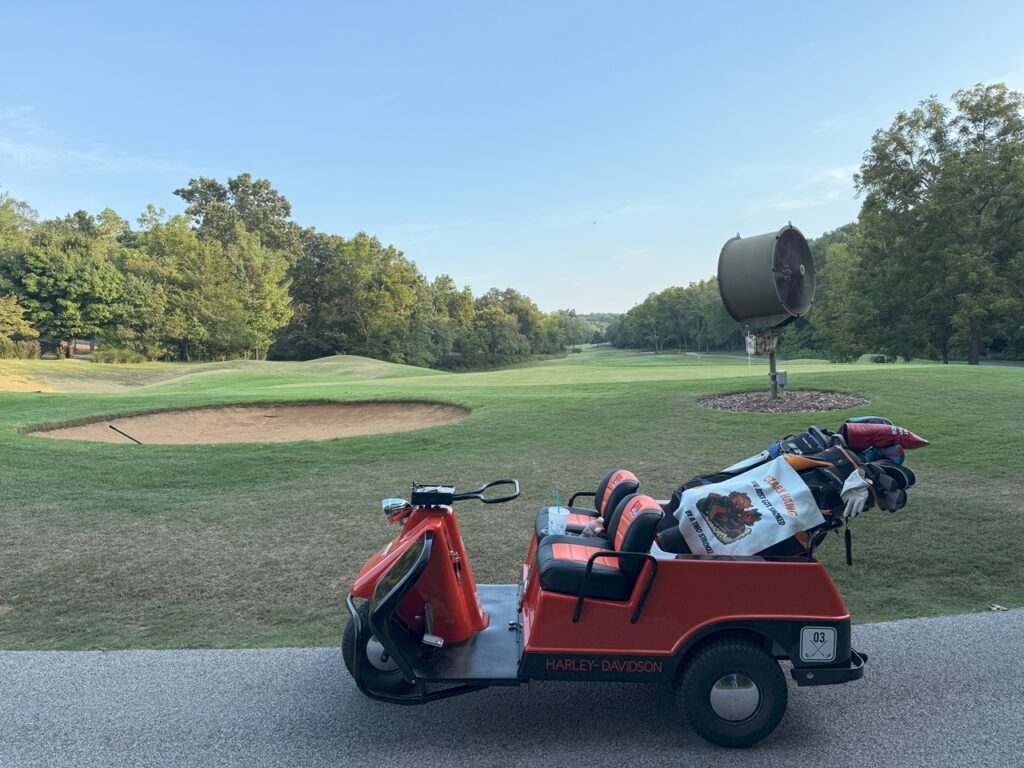
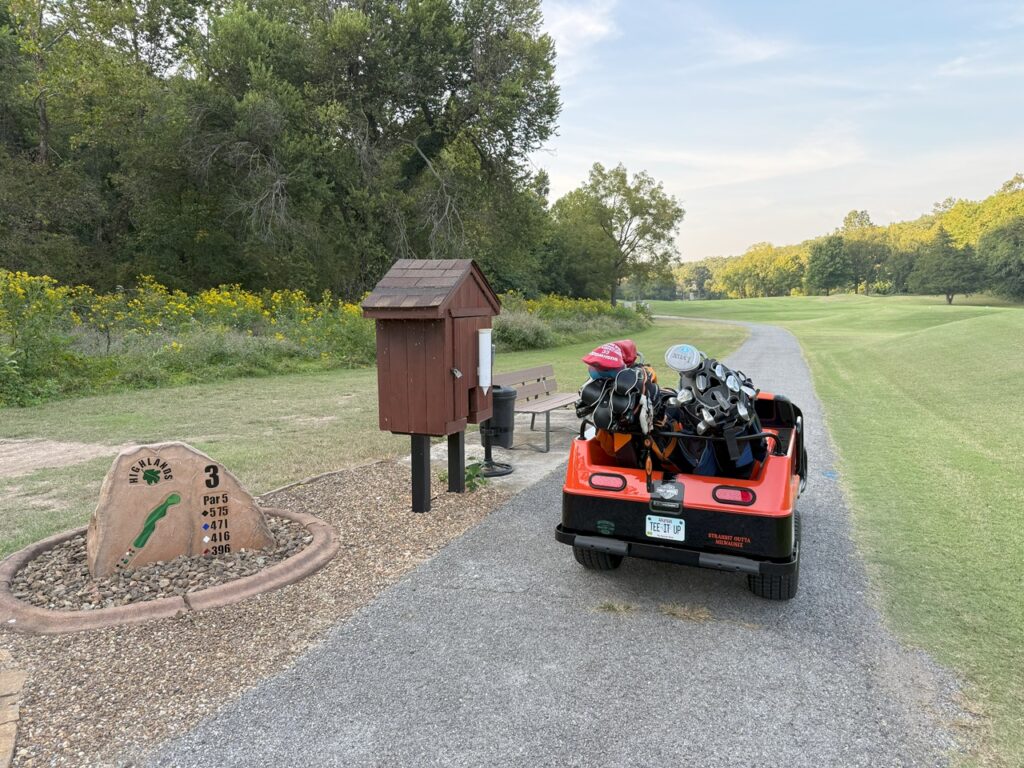
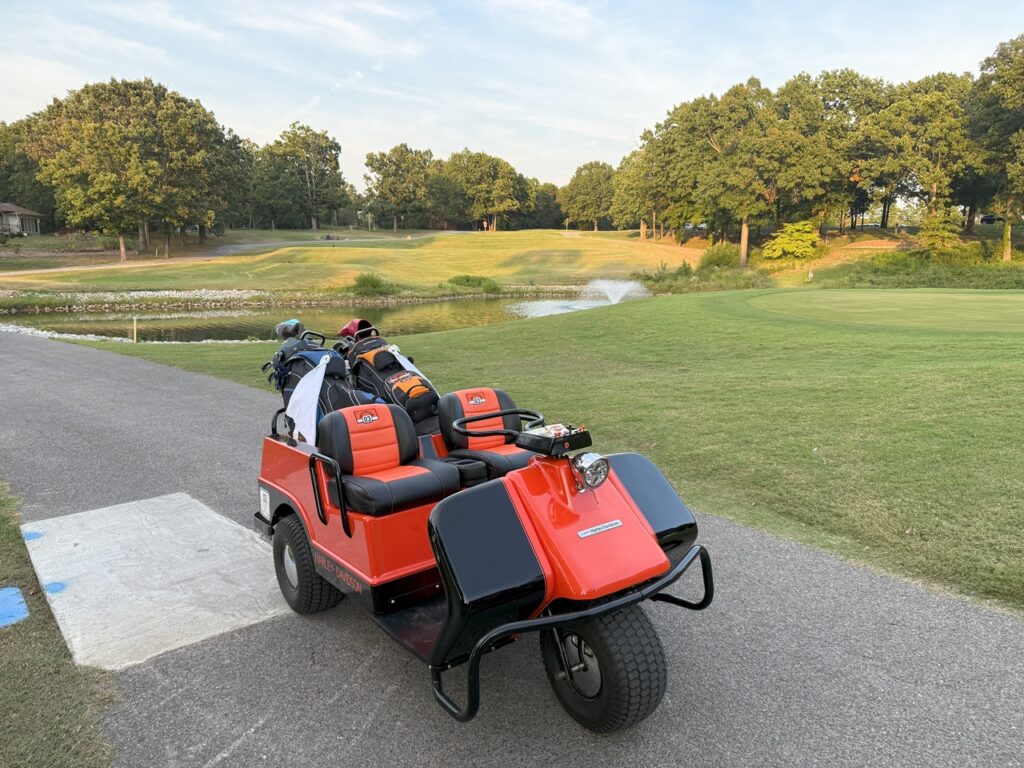
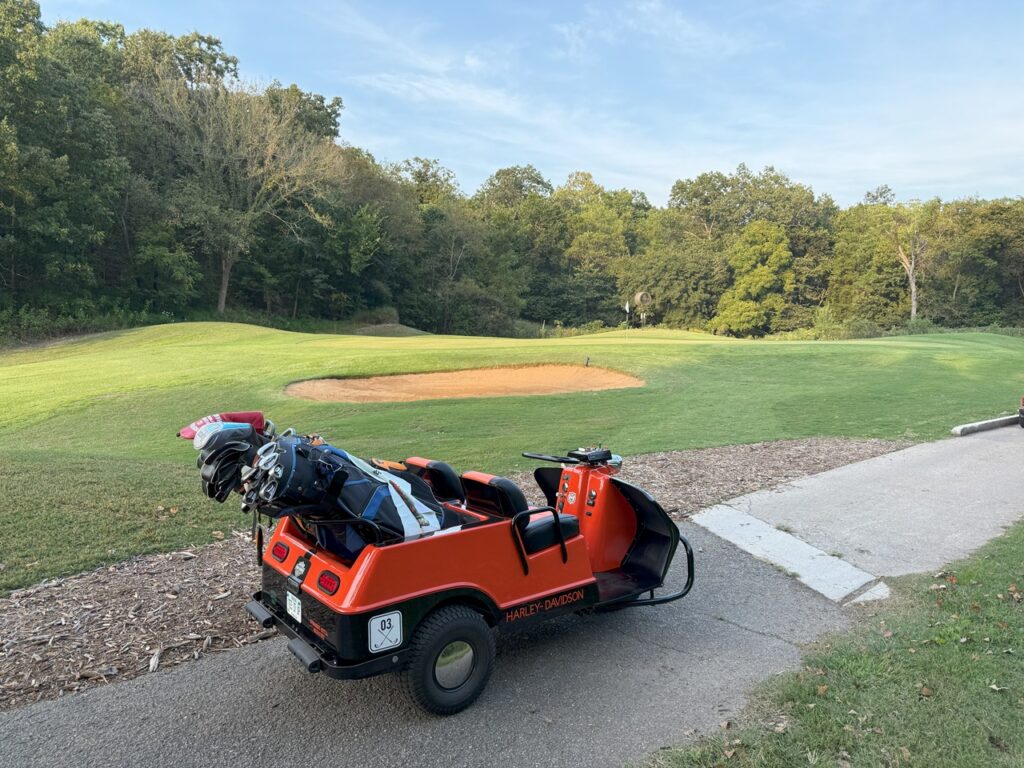
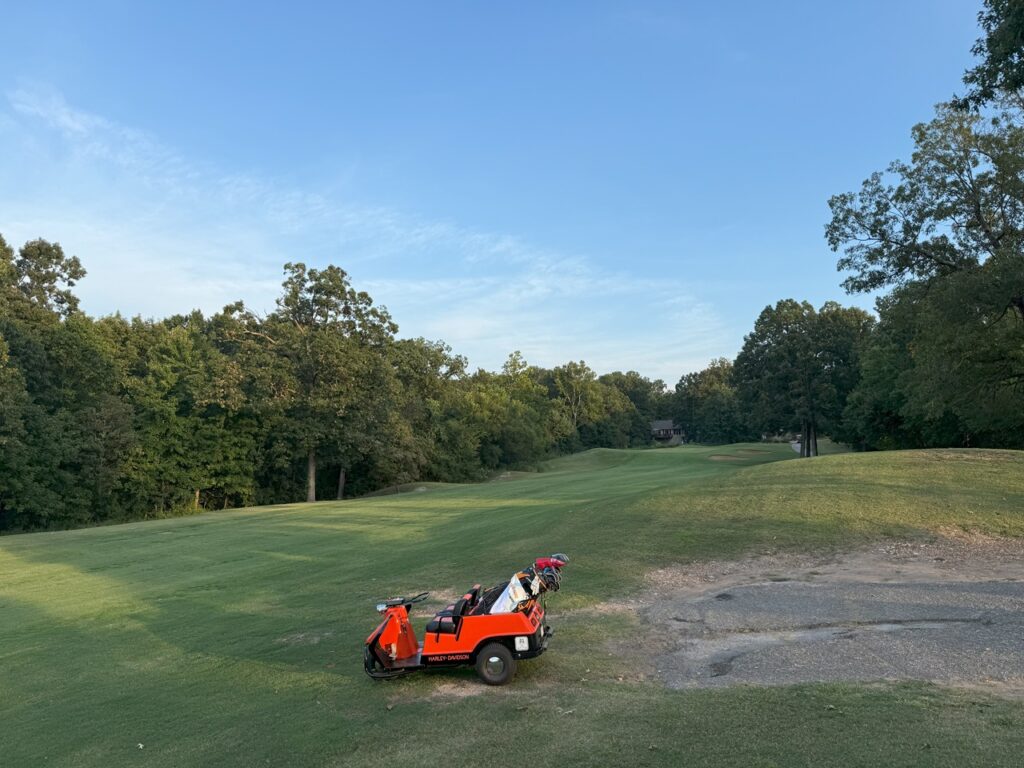
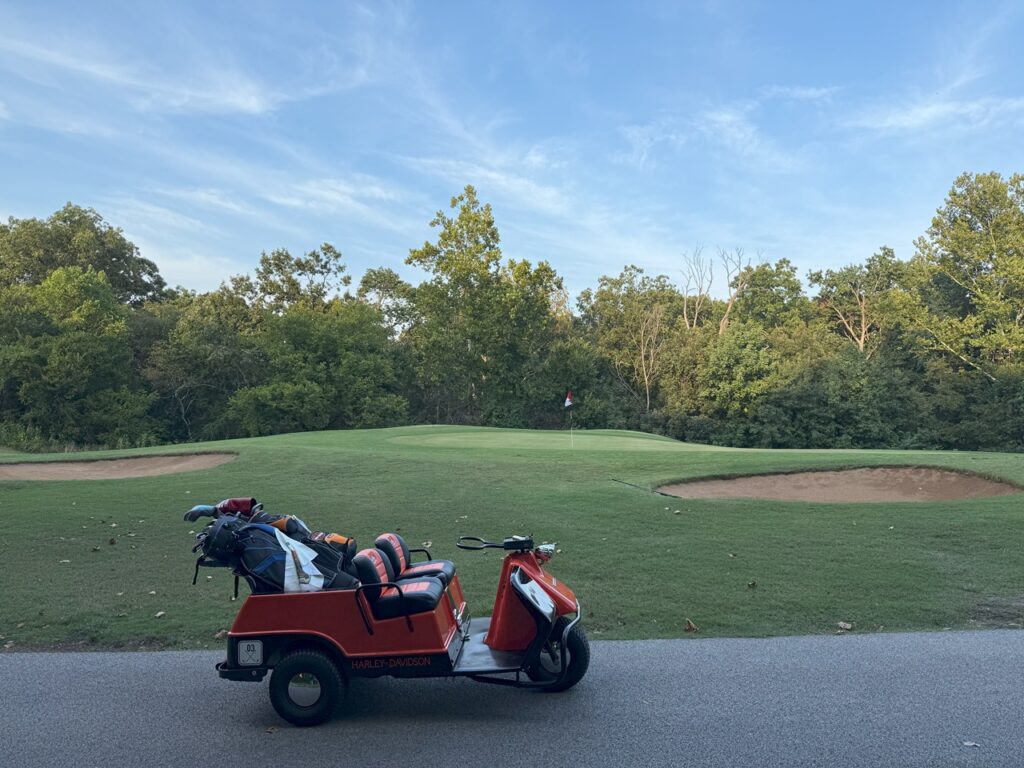
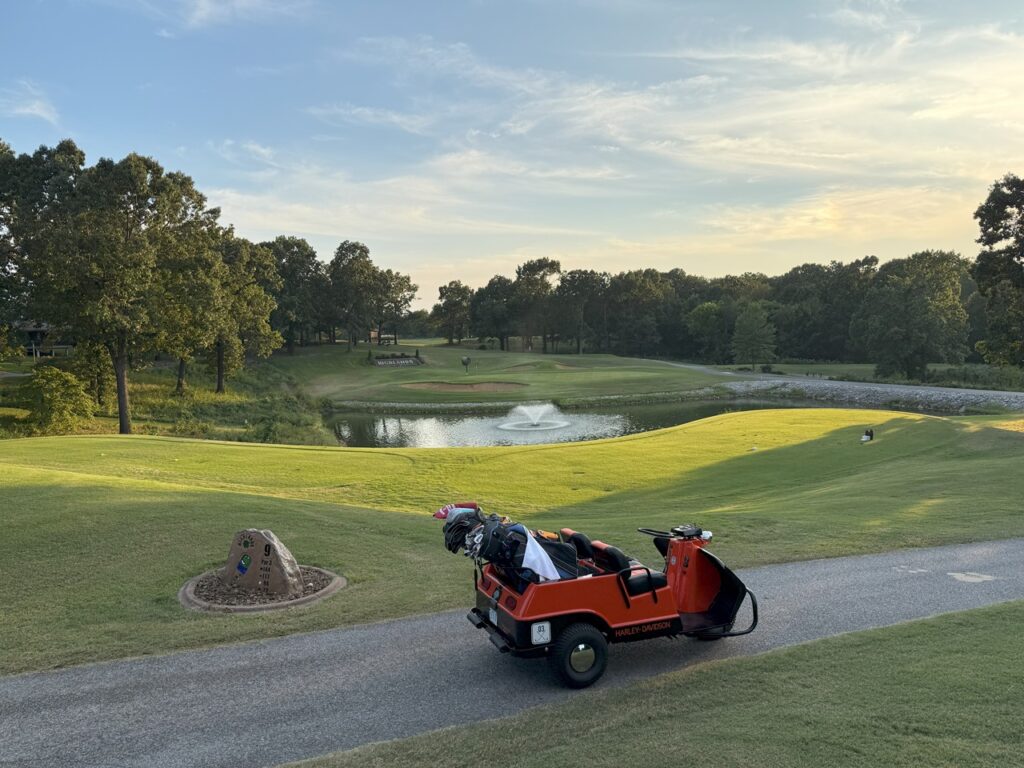
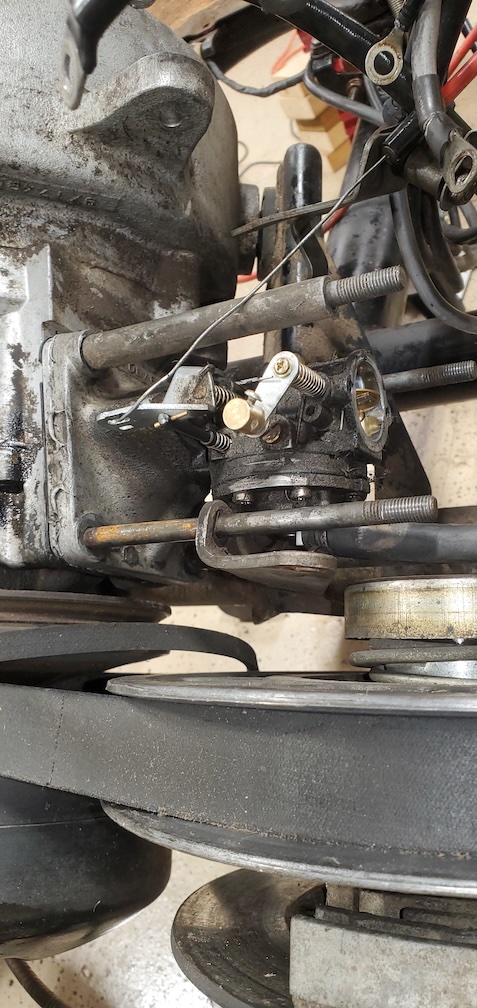
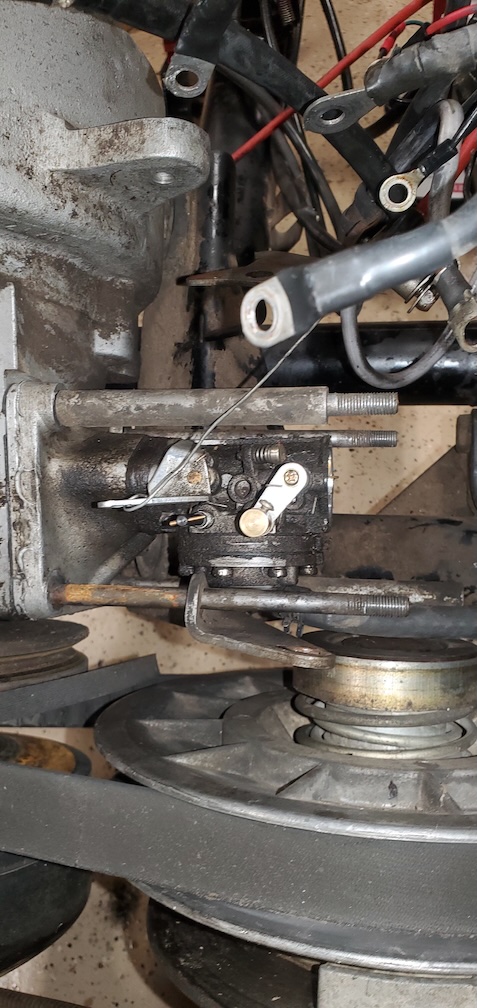
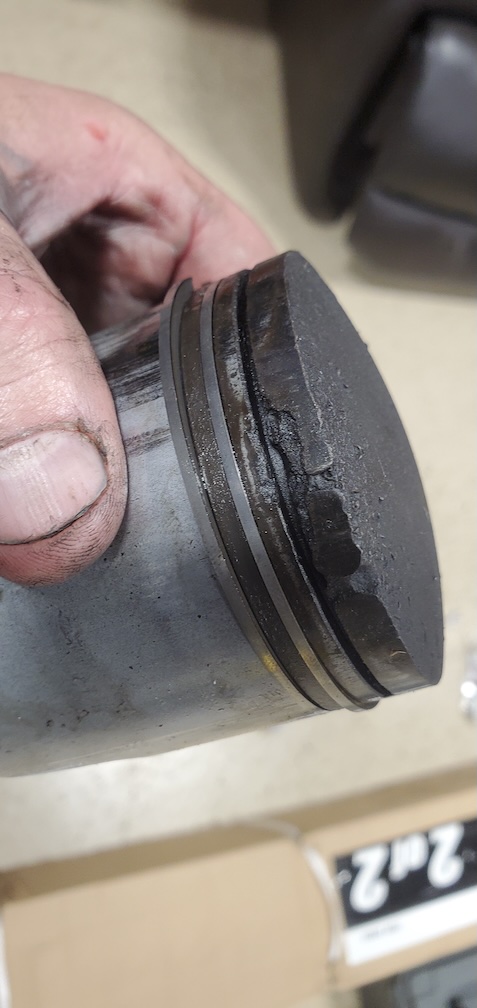
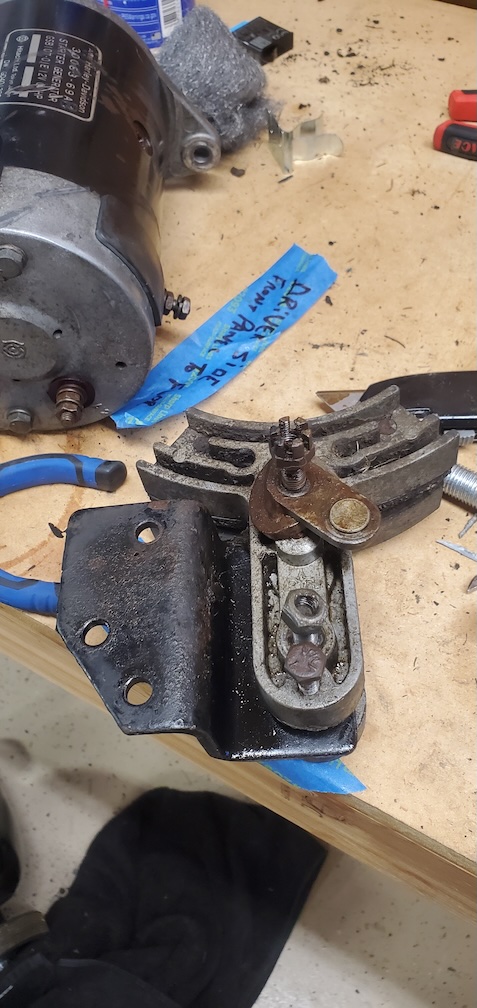
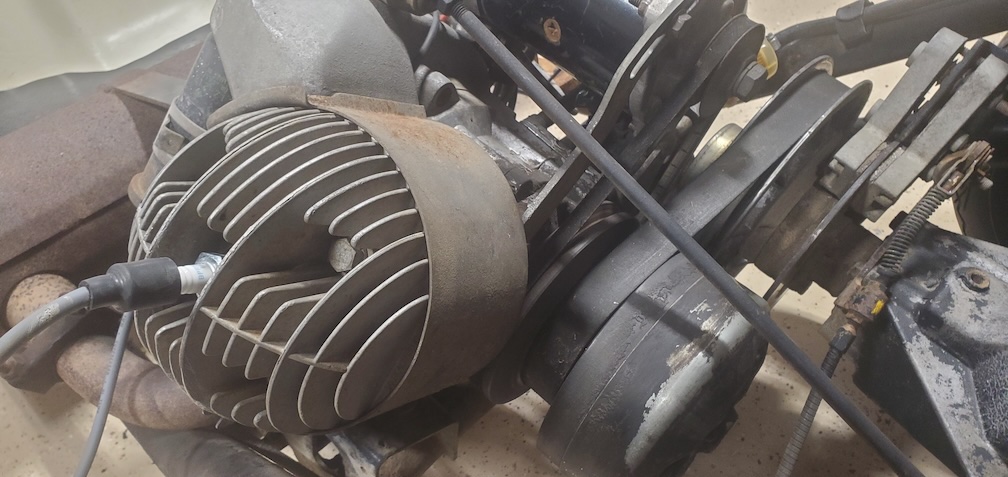
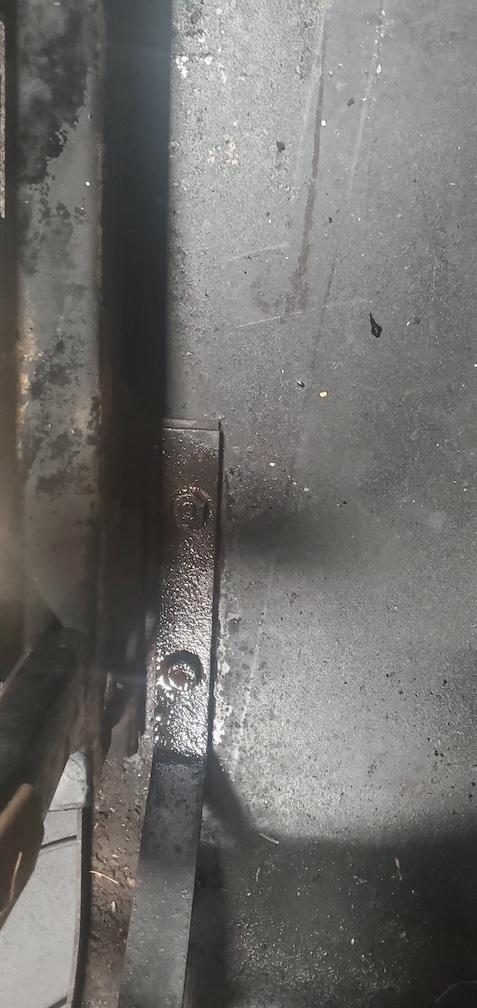
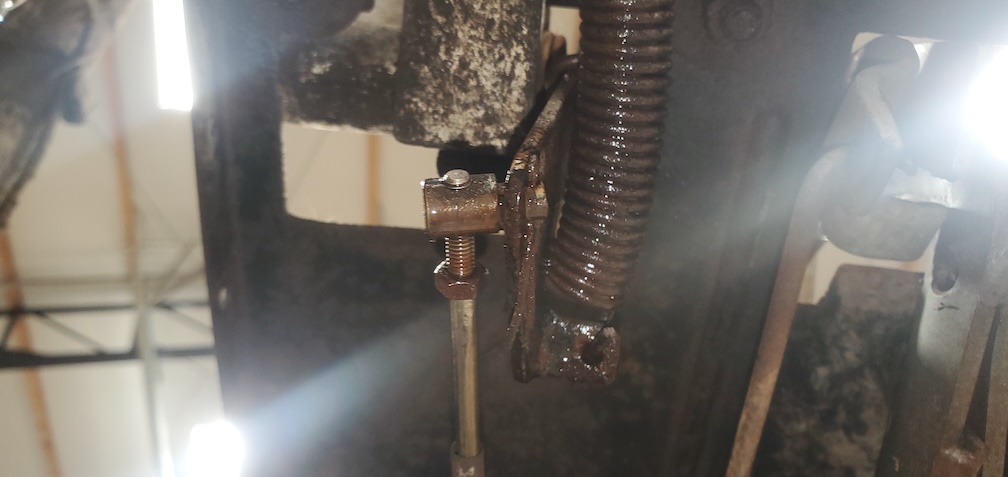
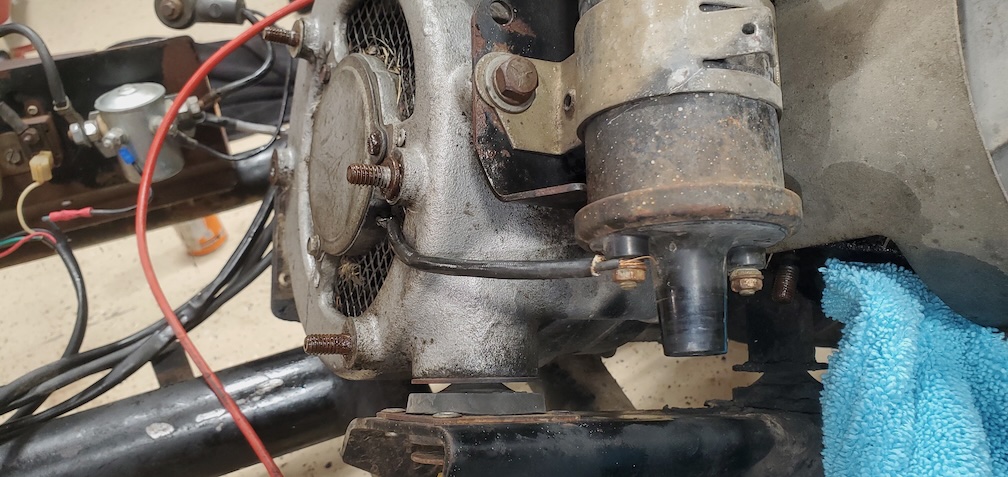
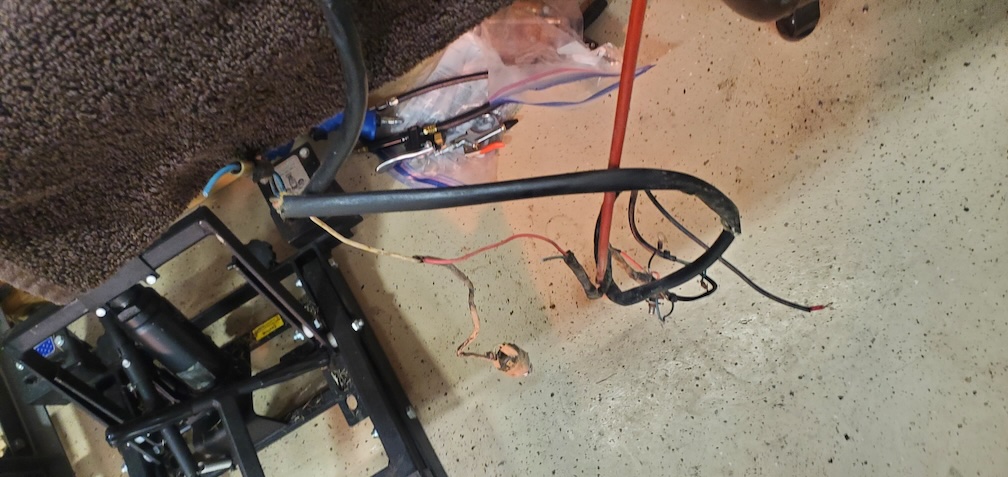
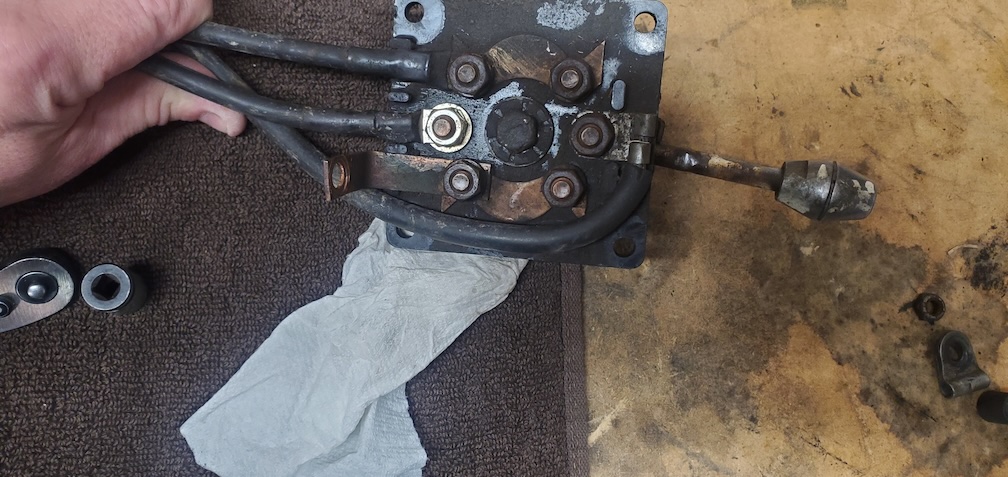
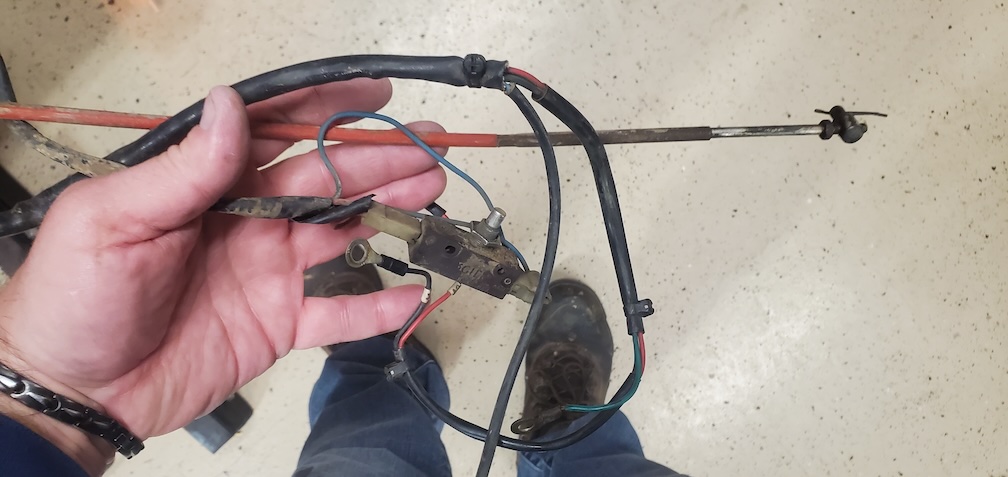
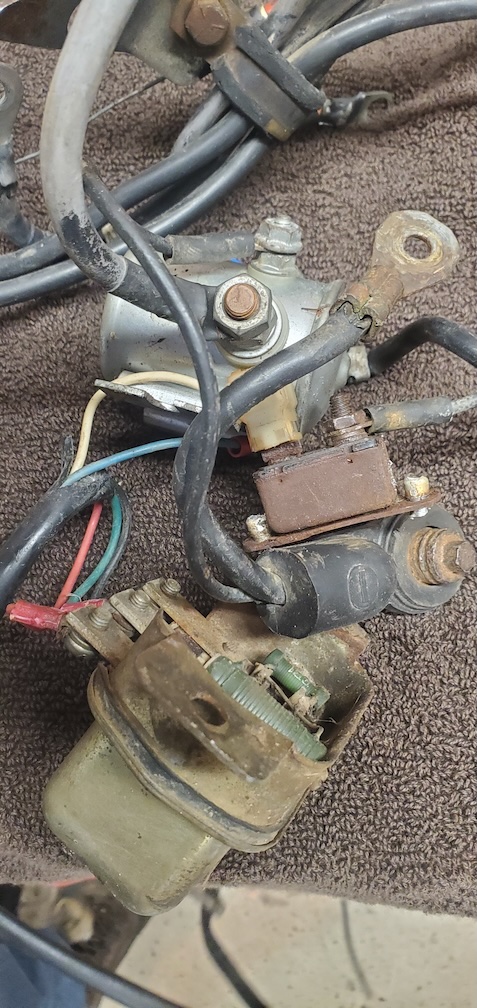
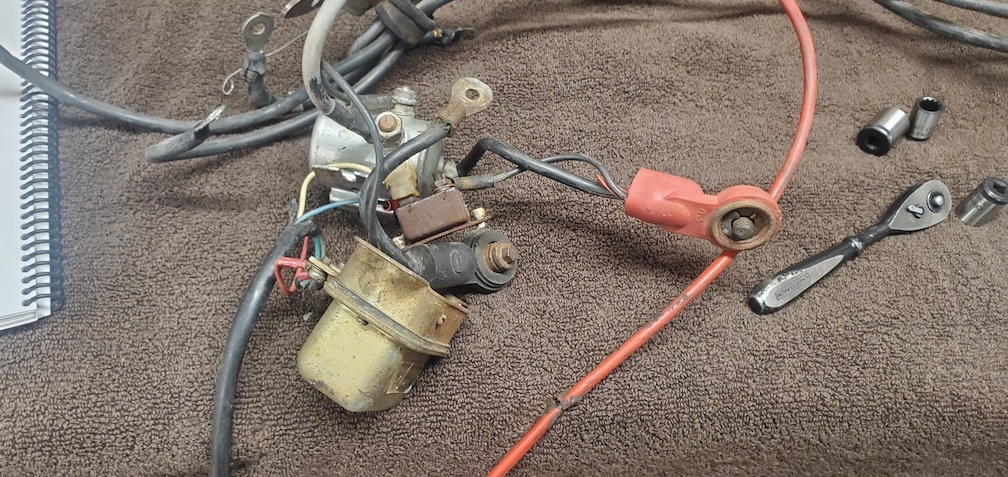
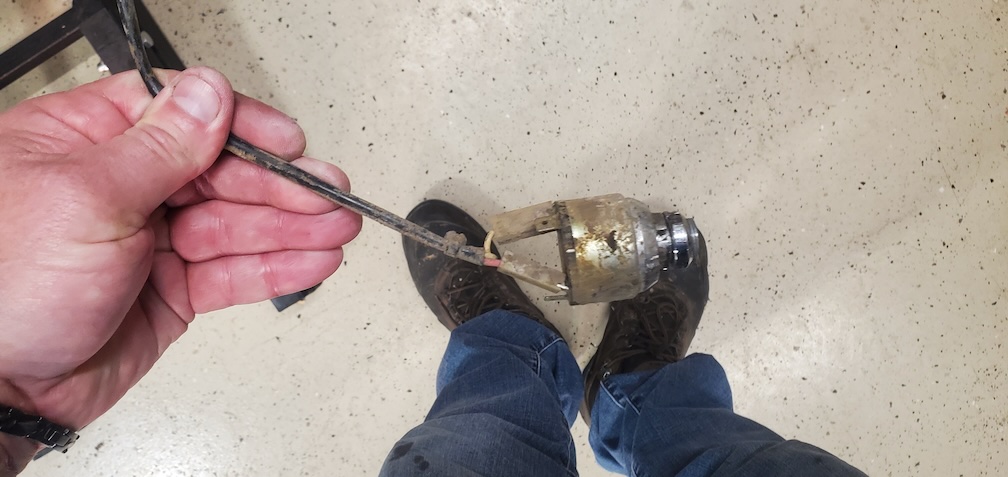
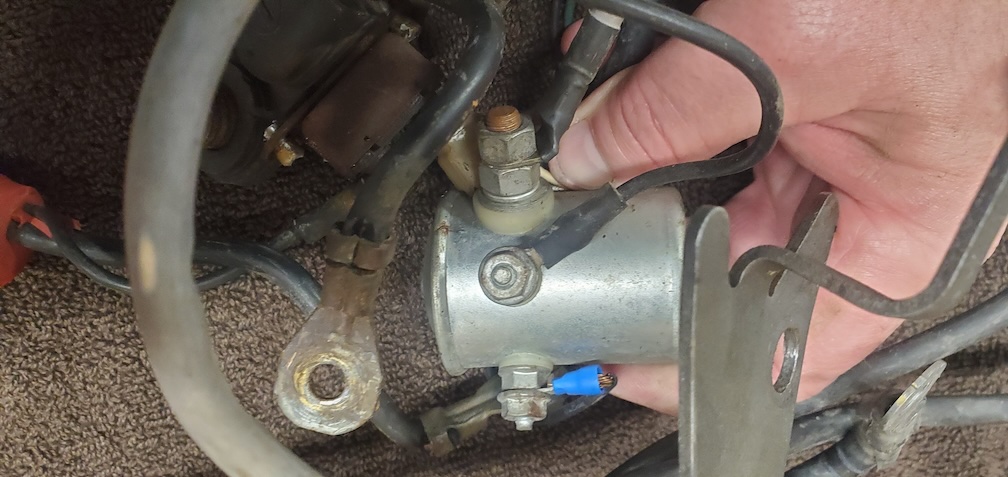
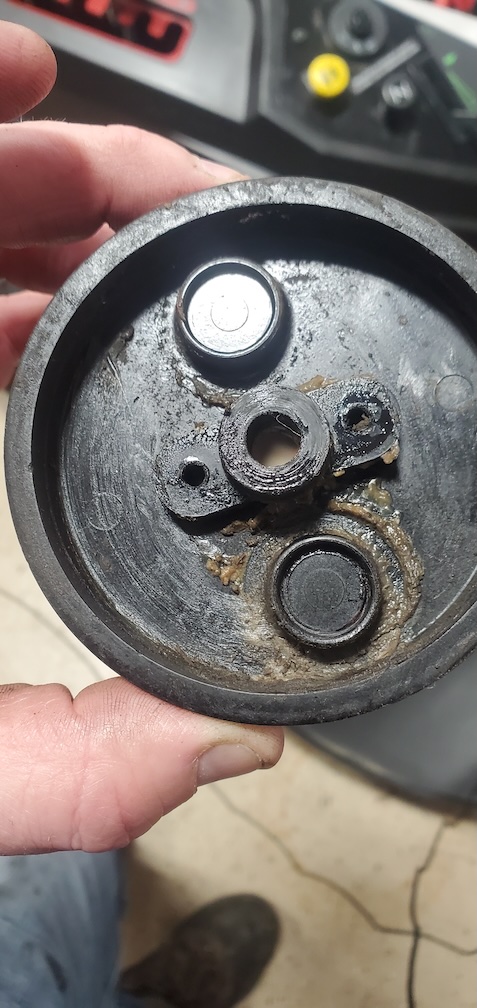
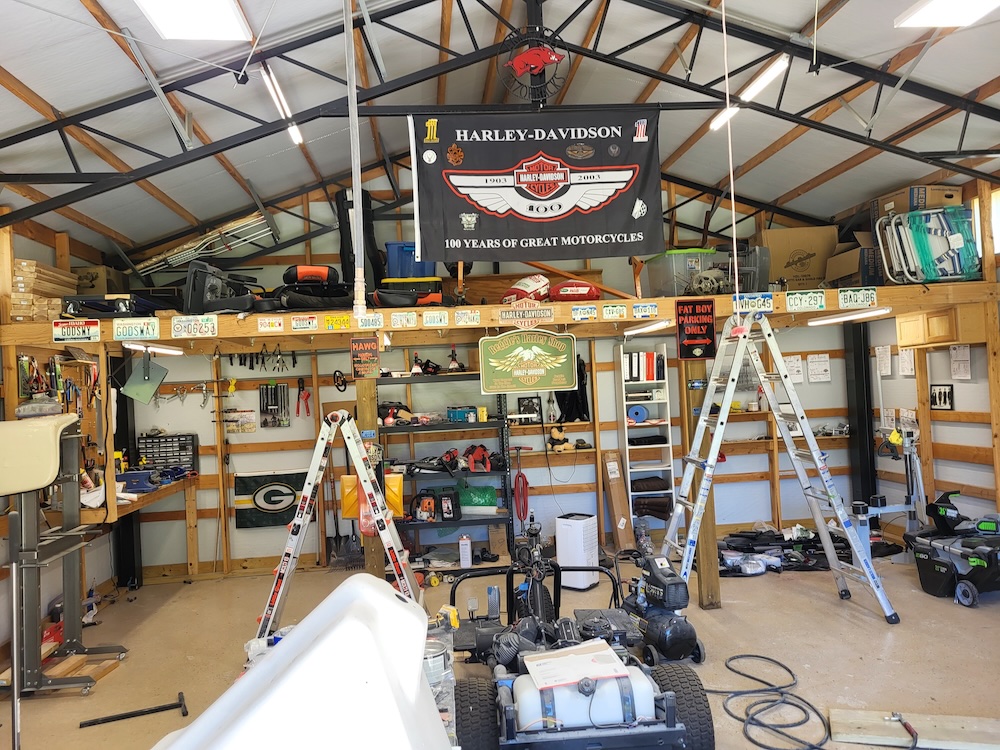
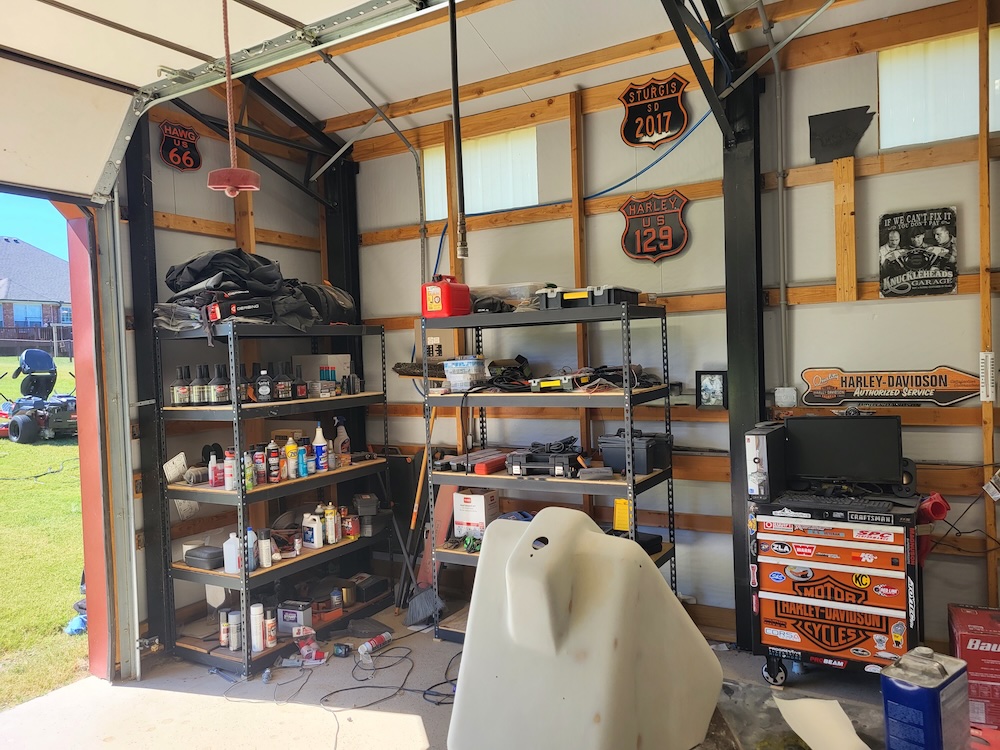
Before:
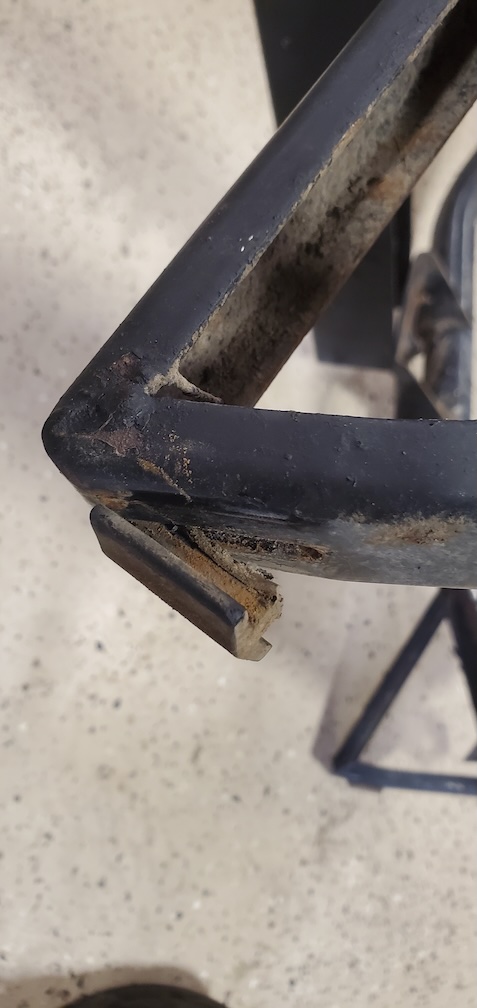
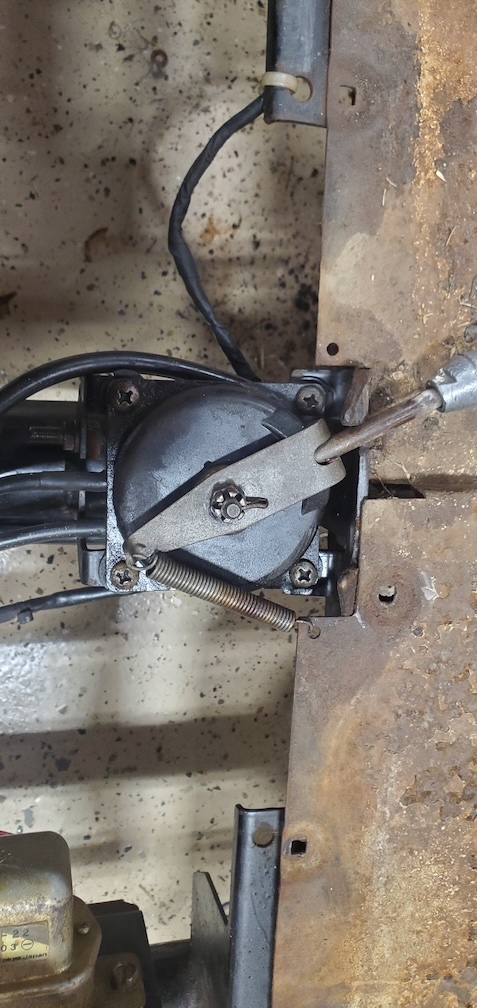
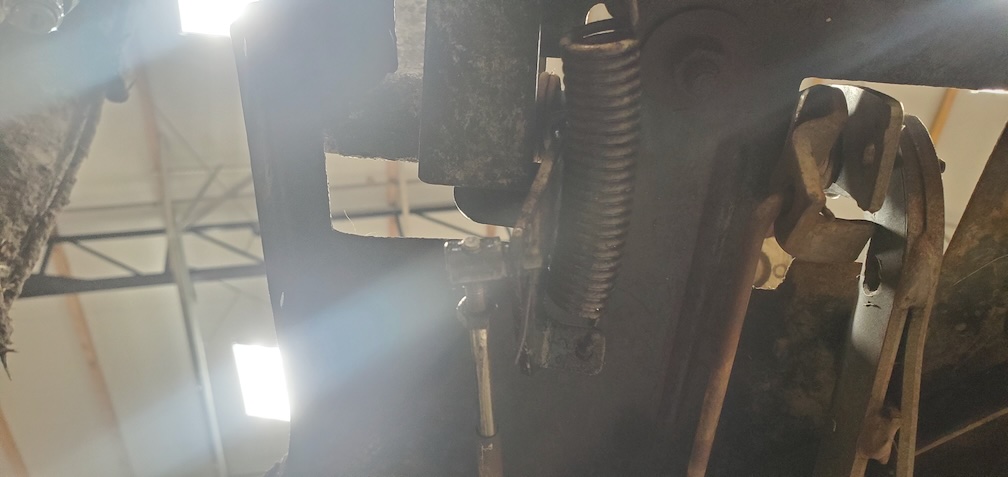
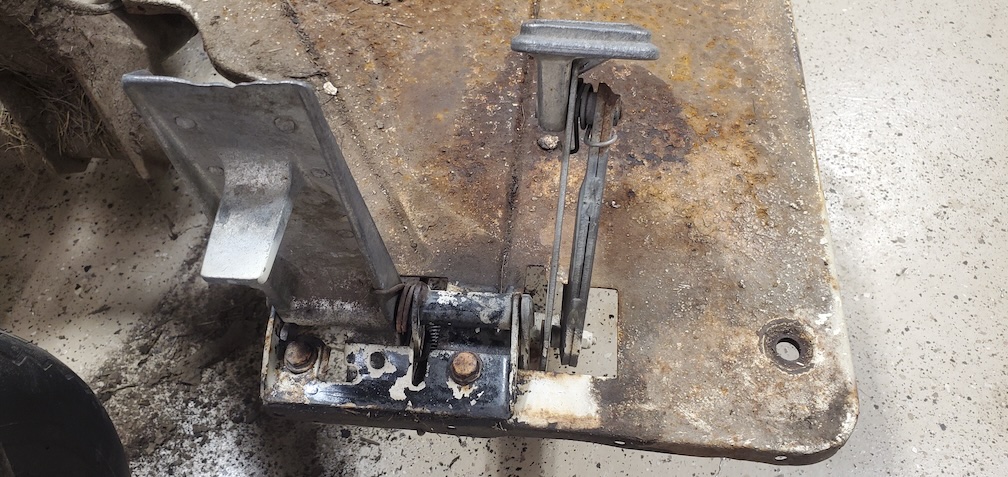
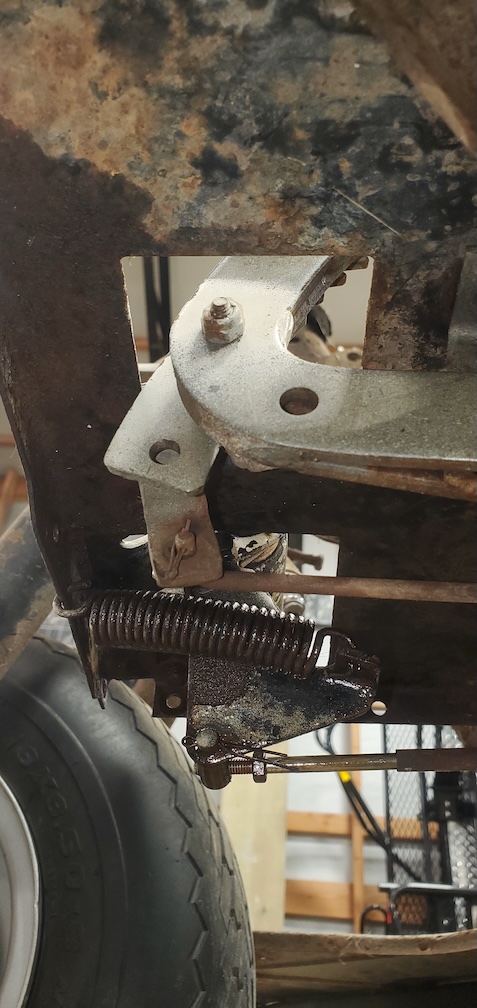
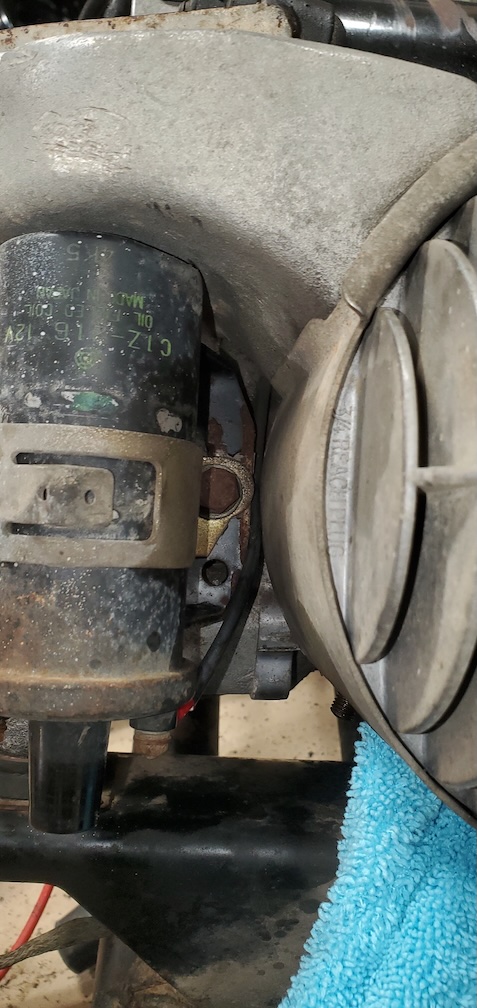
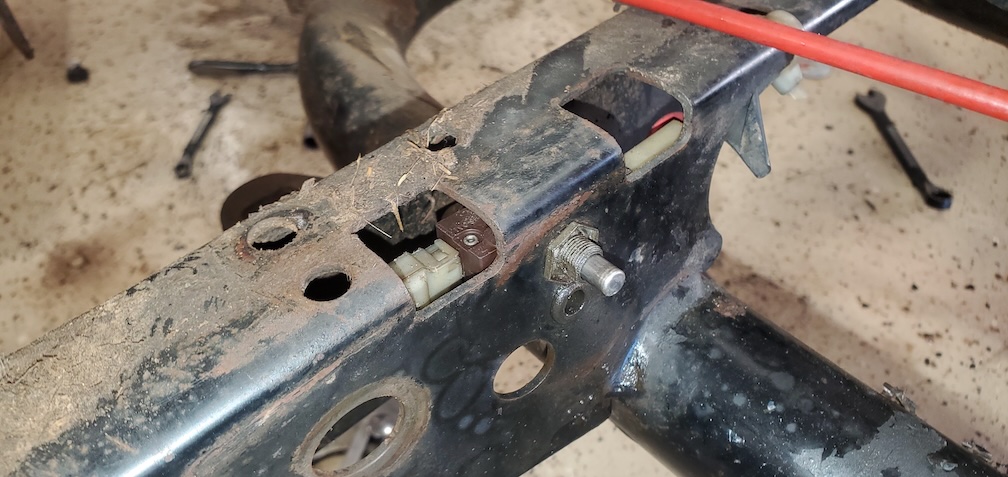
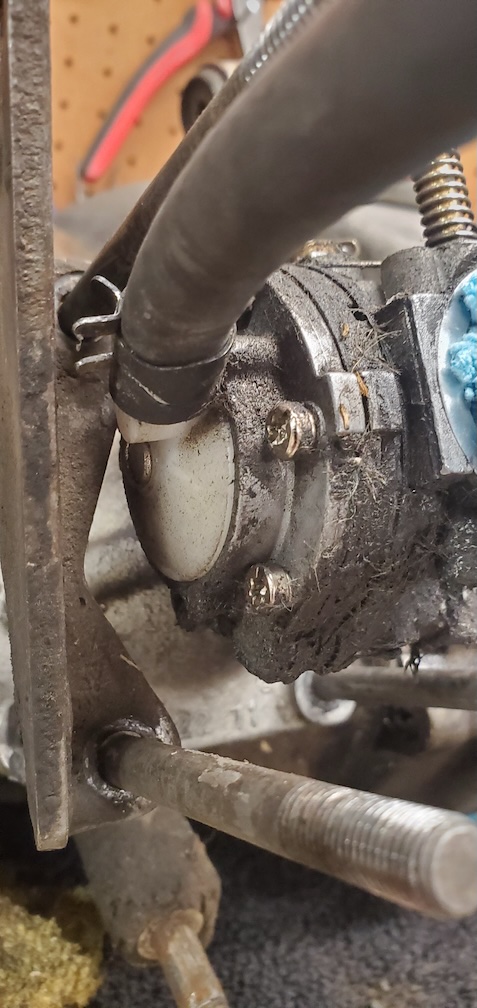
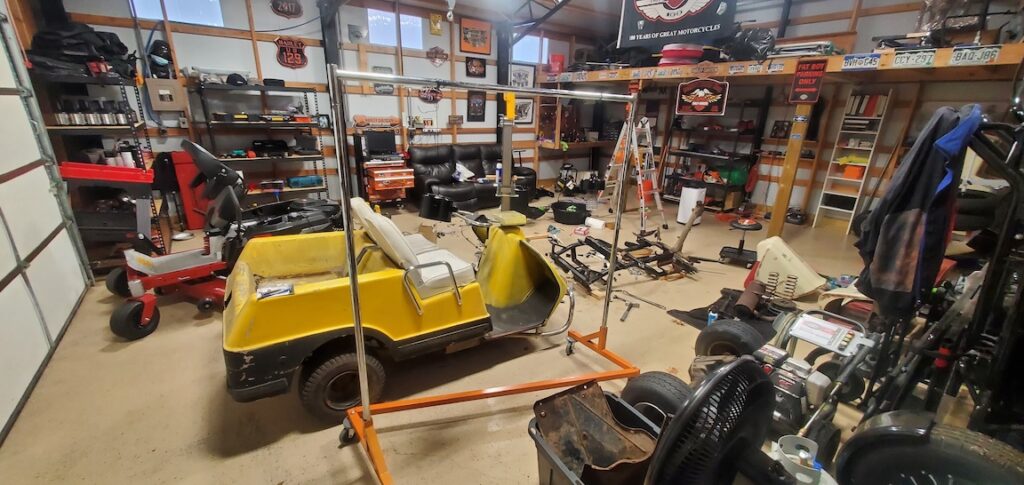
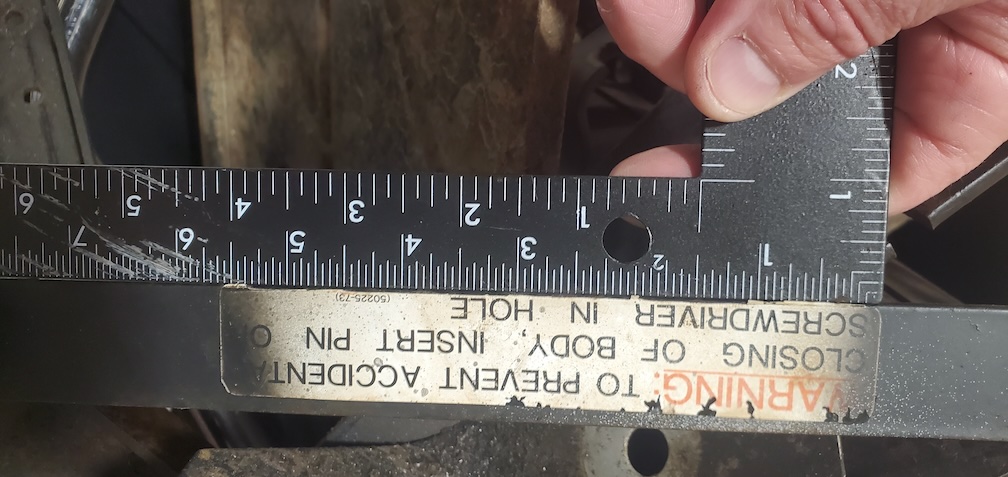
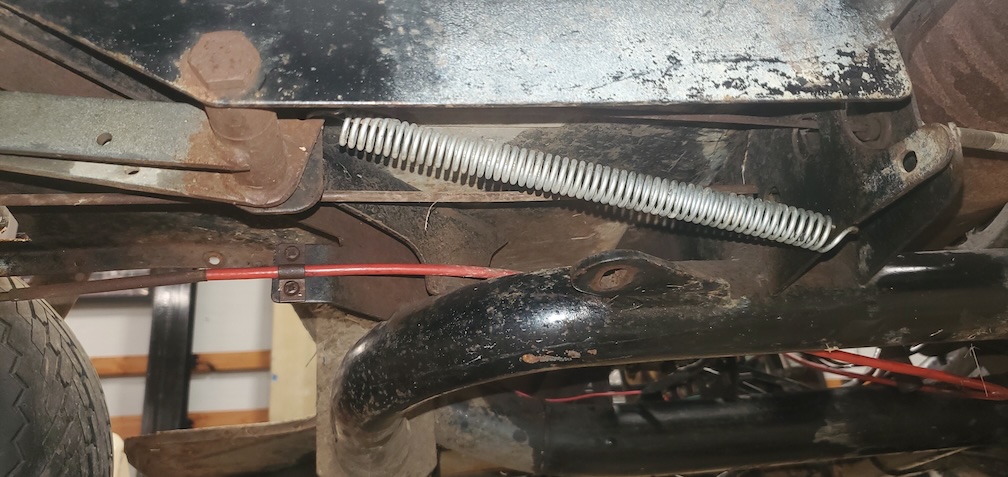
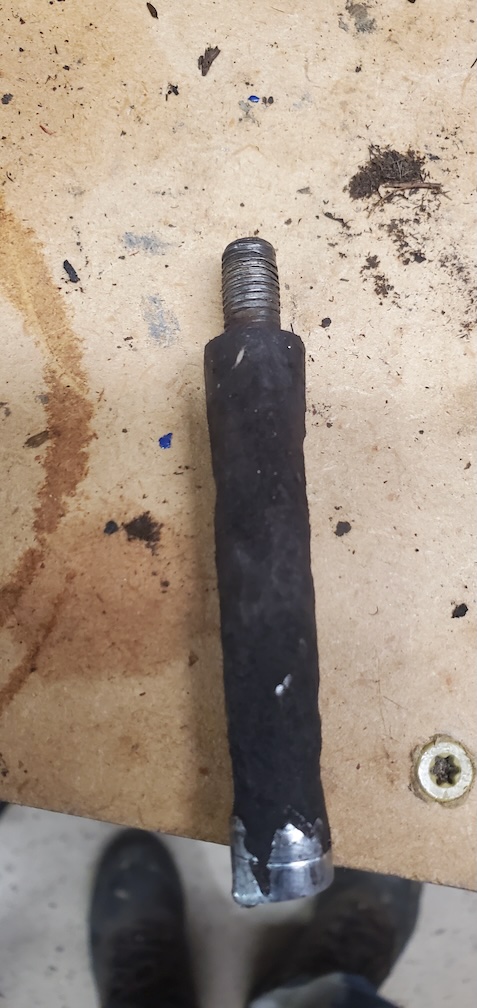
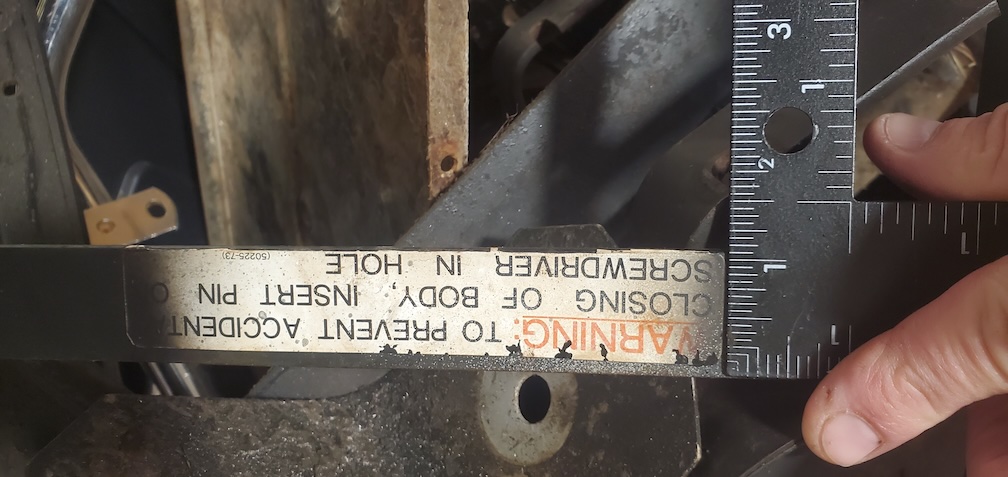
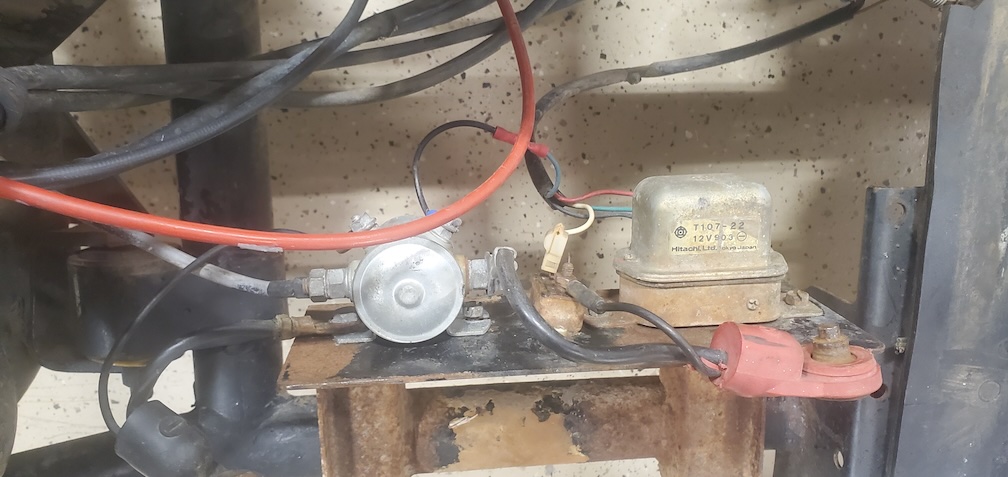
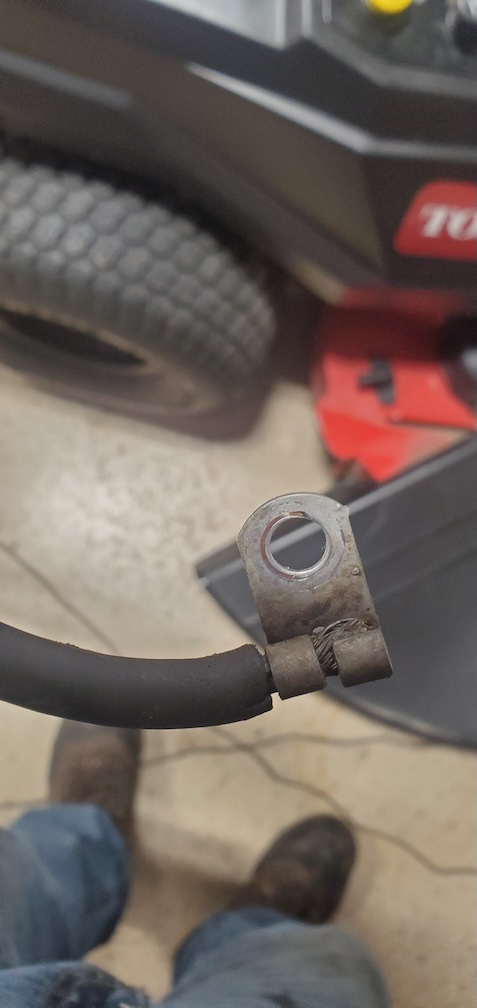
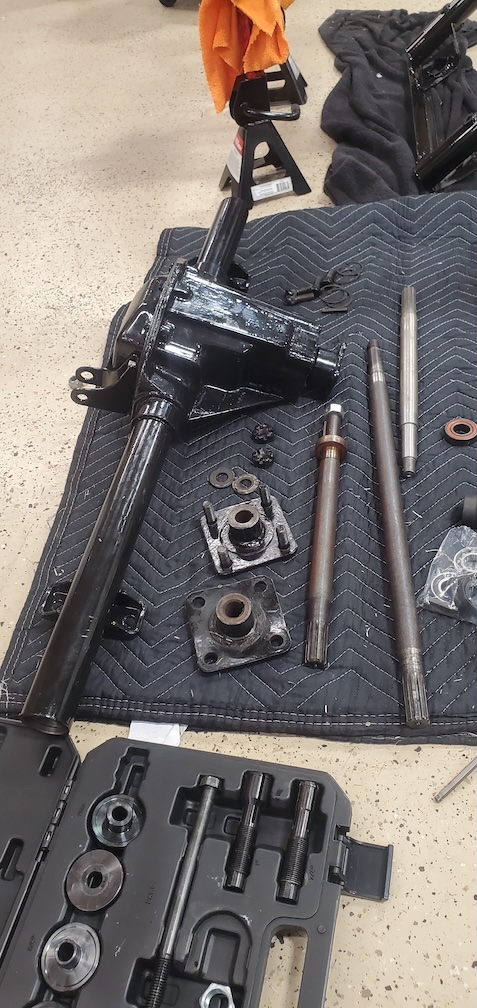
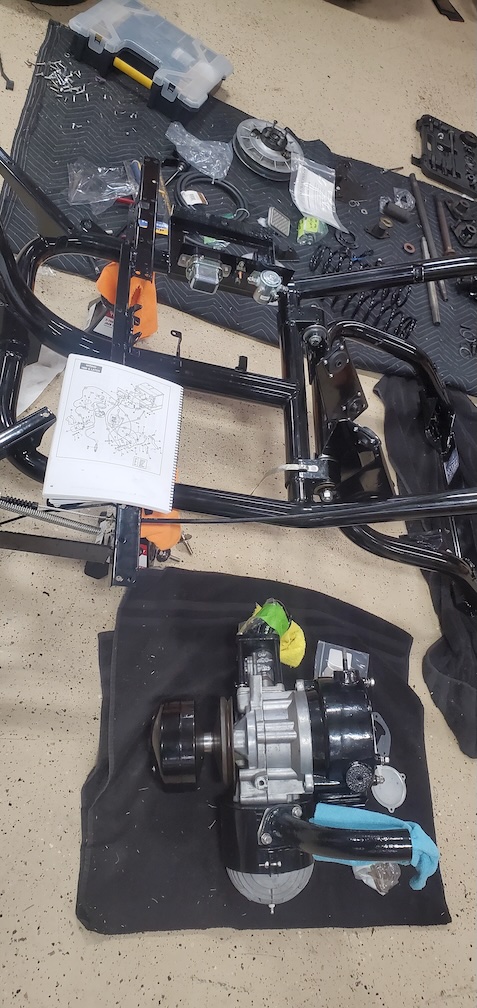
Click images below for a slideshow of ‘most’ before photos of the build
Video Showcase
Watch the embedded videos that document the build process and showcase the final results.